Isaiah 39:1-2
“At that time Merodach-Baladan the son of Baladan, king of Babylon, sent letters and a present to Hezekiah, for he heard that he had been sick and had recovered. And Hezekiah was pleased with them, and showed them the house of his treasures—the silver and gold, the spices and precious ointment, and all his armory—all that was found among his treasures. There was nothing in his house or in all his dominion that Hezekiah did not show them.”
 Imagine the scene in the ancient world where nation after nation had been defeated by the Assyrian army. No matter how strong their defenses were or who they allied themselves with, no one was a match for the that ruthless nation, who not only defeated their enemies, but humiliated, tortured, and displaced them as prisoners of war. Then suddenly a tiny little country not much bigger than a large U.S. county, struck Assyria with such a devastating blow that they retreated to their homeland, and their king was assassinated for his failure. This would certainly get the attention of the nations around Judah. It did not take long before word spread to Babylon and delegates were sent to king Hezekiah to see how they had accomplished such a feet. It is interesting that he takes them to the storehouses and shows off his treasures, instead of taking them to the temple and showing off his God.
Hezekiah’s failure is a very common one. We often find ourselves aided by God, yet failing to give Him the credit or the glory. We don’t want others to see our weakness, and at times, desire to be held in high esteem. The reality is, we deserve no more credit for the successes in our lives, than Hezekiah did for the victory of Assyria. I am reminded of the words of the apostle Paul who wrote in 1 Corinthians 4:6-7,
“Now these things, brethren, I have figuratively transferred to myself and Apollos for your sakes, that you may learn in us not to think beyond what is written, that none of you may be puffed up on behalf of one against the other. For who makes you differ from another? And what do you have that you did not receive? Now if you did indeed receive it, why do you boast as if you had not received it?”
“What do you have that you have not received?”
A proper view of life is to see things through the filter of the grace of God. Instead of boasting or exalting ourselves above one another, we should humbly exalt God for His goodness, guidance, care and provision. Why not take a few minutes to thank God for all He has done for you?
Pastor Jim
 When Hezekiah heard the report that his condition was terminal, and death was knocking at his door, he immediately began to pray. His prayer recounted the way he had lived his life in commitment to the Lord. All that was left was to beseech the mercy of God, for an extension of days.
 As this chapter opens, Judah is a on the brink of destruction. The Assyrian army, who had conquered all of Judah’s enemies, was encamped against the city of Jerusalem. The small army of Judah was no match for the Assyrian forces. It looked as though the nation would fall and the people would become prisoners of war. In the midst of this, Hezekiah saw what seems to be a universal struggle. The people who had made an initial decision to follow the Lord seemed to lack the power to walk it out. They had experienced the power of conversion, but were now facing obstacles bigger than their faith. Hezekiah poetically declares,
 Judah was facing their darkest hour. Isaiah records that Sennacherib’ king of Assyria, came up against all the fortified cities of Judah and took them. One by one the cities of Judah fell to the all consuming Assyrian forces. Now that same army had surrounded the city of Jerusalem and threatened to take it by force. Before sending armed men, Sennacherib sent his chief of staff to warn the people of the folly of resisting. His rationale was that since other nations had trusted in their gods, resisted Assyria and fell to the sword, Israel would suffer the same fate if they trusted in the Lord. It is understandable that the unbeliever thinks all gods are the same, the problem arises when the child of God fails to realize that YHWH is above all others.
 Isaiah is speaking of something that only God can do. Even today, we face physical and natural difficulties that all of our human resources are unable to solve. Many who are bound by these things find that life is more like a barren wilderness than a running spring. Some have tried all sorts of techniques and programs only to find they are powerless to change. What we need is more of an encounter with the God, who can make lame men walk and bring water to a parched and arid land.
 This verse contains an exhortation followed by a promise. The exhortation is to search the book of the Lord. Webster defines search this way, “to look into or over carefully or thoroughly, in an effort to find or discover something” My wife and I look at some things quite differently. When an item is misplaced I become frustrated, thinking that if it is not where it belongs, there remains an unlimited number places to look. She on the other hand begins to search. I think she sometimes enjoys the challenge. Inevitably, in a matter of minutes, she has located that which is lost. We should approach the Word of God the way an explorer or a excavator approaches life. We must understand, there are precious treasures tucked away in the Bible, and if we are diligent, we will find the ones that are designed for our present condition. I once heard of a man in search of gold. He spent years working his claim only to come up empty. Finally, in a moment of discouragement he sold the rights to his land and moved on. The new owner, within a few days, struck it rich. The first man had given up only inches away from the mother lode.
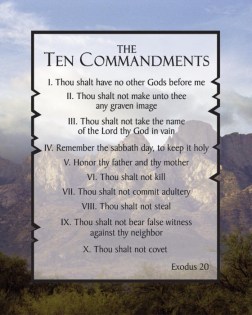 Israel, in Isaiah’s day, was in dire straights. The Assyrians were on a rampage, overthrowing any nation that stood in the way of their desire for global dominance. Israel watched as their neighbors were defeated and enslaved to the most bloodthirsty nation the world had ever known. In the midst of these threatening conditions, people began to offer solutions. The most common was to make an allegiance with Egypt to withstand the Assyrian invasion. Isaiah offered an entirely different remedy. He encouraged the people to understand, it was God who could save them. But in order for this to happen, they would have to look at Him very differently than they had been doing. He used three words to describe a proper relationship with God.
 “Oh yeah, what’s in it for me?”
 Isaiah prophesied of a day when a nation would come against Judah, and the Lord would defend His people. This happened at the end of the 8th Century BC when the Assyrian forces besieged Jerusalem, and were supernaturally defeated. In light of this, Isaiah calls people to return to the Lord. I find it interesting, that he couples coming to the Lord, with the laying aside of idols.
 At the time of Isaiah’s prophecy, Israel was resisting the Lord. They decided following God restricted them from really moving forward, so they began a quest pursuing the gods of other nations. Sadly, their pursuit not only left them empty, but at odds with God. Part of the Prophet’s ministry was to remind the people of the blessings that would become theirs once they returned to the Lord. One of the greatest of these benefits was experiencing grace.
 Jim Gallagher