Ezra 10:7
“And they issued a proclamation throughout Judah and Jerusalem to all the descendants of the captivity, that they must gather at Jerusalem”
 Imagine a scene where the leaders of the nation call its citizens to gather at the capital with the purpose of repenting from evil and seeking the Lord. Imagine the National mall filled, not with people outraged because they feel somehow neglected or mistreated by the government but because they have realized they are guilty before God and are there to plead with Him for forgiveness. Imagine what a powerful impact a revival of that magnitude would have upon the very fabric of society. That is exactly what happened in Ezra’s day. The people realized they had turned from God and were ready to make whatever changes necessary in their lives and families to restore right relationship with God.
What strikes me about this is how it started. We read that Ezra saw the condition of the nation, fell on his face, fasted, prayed, confessed his sin and sought the Lord to bring revival to the land. He prayed, “give us a measure of revival in our bondage.” All that followed stemmed from one man crying out to God and making the necessary changes in his own life. Before a family, nation, society or culture can experience revival it must begin in the heart of an individual. It has been said if we want to see revival we need to draw a circle on the ground, step into the circle and pray for God to revive the heart of the person within the circle. When that heart is revived and that person’s life begins to honor God we are well on our way to seeing revival break out across our land.
One man wrapped in the garments of sorrow over personal sin, crying out God for forgiveness can spark a work of God that will transform the face of a nation
Jim
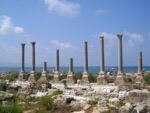 Predictive prophecy is one of the greatest evidences of the inspiration of Scripture. Peter explained, it was like a light shining in a dark place (2 Peter 1:19). Scripture is filled with two types of predictive prophecy. The first have already been fulfilled. They were future in the life of the prophet, but are in our past.
 After some initial reforms, the remnant, who had returned to Jerusalem from captivity, soon began to drift from the Lord. The ways of the world are always tempting for the child of God; as such, many of the people began to pick up the customs of the day. Soon, it was difficult to see any difference between believer and unbeliever. News of the people’s behavior devastated Ezra, and he began to cry out to the Lord. His prayer reveals what to do when we find ourselves overwhelmed by our own failures.
 Ezra and his company were traveling hundreds of miles without a military escort and carrying the equivalent of hundreds of thousands of dollars in gold, silver and bronze. Had word got out of their precious cargo, they would no doubt be the target of thieves, and their lives would be at risk. Caravans have been attacked and lives taken for far less than they were carrying. In their desperation, Ezra made a calculated decision not to ask the king for protection, but to gather the people, proclaim a fast and seek the Lord. In the end, they not only made it safely to their destination, but they were able to see God accomplish the miraculous. This story reminds me of a statement made by Gideon when he was hiding in a cave from the Midianotes. He said,
 Webster’s dictionary defines an adjective as, “a modifier of a noun to denote the quality of the thing named… or to specify a thing as distinct from something else.” I wonder what adjectives would be used in a biography of my life. Would I be described as tall or short, grumpy or friendly, rich or poor? It fascinates me that when Ezra’s life was all summed up, he was described as a priest, a scribe, and an expert in the Word of the Lord.
 Not long after returning to Jerusalem, the people became greatly discouraged in the work of the Lord. Things were moving slowly, and they were facing a great deal of opposition from those around them. Soon, the work of the Lord ceased all together. It is worth noting what encouraged the people to resume the work, and finish the task to which God called them. We read simply, “the prophets of God were with them, helping them.” The help was provided in the form of exhortations to the people to continue in the work of God.
 Central to returning to the Lord, was the Altar. With it, sacrifices could be offered in accordance with the Law of God. Without it, man would still be striving on his own, attempting to build his way to God. The altar, tragically, involved the sacrifice of the innocent in place of the guilty. This method of atonement was offensive to some; not because of the death of the innocent, but because of the declaration that those offering the sacrifice are guilty.
 Ezra tells the story of the children of Israel returning to Jerusalem, at the end of seventy years of captivity in Babylon. We find that while hundreds of thousands were taken captive, less than fifty thousand returned. I am relatively certain that many should have returned that didn’t, but we are also given insight into the ones that were willing to leave all and take up the challenge of engaging in the work of God.
 There are times when the promises of God seem unlikely, and other times when they seem impossible. The scene in which Ezra is set is one of those, “it looks impossible”, kind of times. Judah had been defeated, the city of Jerusalem destroyed, and the people scattered throughout Babylonia. To complicate matters, the Babylonians were defeated by the combined forces of the Medes and Persians, led by King Cyrus. Set against these conditions, was a remote and seemingly impossible promise. Years earlier, Jeremiah the prophet, predicted a king named Cyrus would rise to power, and give a decree, allowing the Jews to return to their land and rebuild their city. I am sure, for the average Jew this promise seemed remote at best. I love that we read “in the first year of Cyrus.” God wasted no time in bringing His promise to fruition.
 Jim Gallagher