Psalms 9:10
“And those who know Your name will put their trust in You; For You, Lord, have not forsaken those who seek You.”
 A few years back I was teaching in a Bible school in Ghana on the subject of trust. I invited one of the students to come forward and asked him to put his arms at his side, close his eyes, and face the class. He had no difficulty doing what I asked until I added, “now remain stiff as a board and fall backwards.” He immediately opened his eyes, turned around, and looked at me as if to say, “No way!” I assured him that I would catch him, and asked him to face the class again. I counted to three and told him to fall back. To his credit, he tried, but once he began to lean, he stepped back to catch himself. The remaining students erupted in laughter as their friend was afraid to fall back.
The simple fact was, he did not trust me. He did not believe I was able to catch him when he fell. He was not my first victim in this twisted experiment. I had done it many times before with my children. They would close their eyes and fall back without hesitation. There were even times when they stood on a table and fell back. They looked forward to the opportunity to entrust their lives into the hands of Dad. Why would my children trust me and this young man be so frightened?
I believe the simple answer is, my children know me a whole lot better than he. David is declaring that same truth here, “And those who know Your name will put their trust in You.” Trust is something that grows out of relationship. The longer you walk with God, the more you get to know Him, the more you know Him, the easier it becomes to trust Him. If you are having a difficult time trusting the Lord in your current circumstances, the key is to spend time getting to know God better.
Paul wrote. “So then faith comes by hearing, and hearing by the word of God.” Romans 10:17
In other words, our faith in God will grow as a result of reading about Him. The Word of God is filled with examples of people who are facing trials much too big for them to handle; yet they find God is completely trustworthy. We read of God parting the seas, providing water from rocks, knocking down walls, defeating giants, curing diseases, and even raising the dead. God has not changed, He is still in the business of providing aid to those who trust Him. If He was able to calm the seas with a word, don’t you think He is able to deliver you from the trial you are facing? Instead of cursing or questioning God, perhaps it would be better to follow the example of David and seek Him.
“For You, Lord, have not forsaken those who seek You.” After all, David knew what it was to face difficulty. We are told this Psalm was sung to the tune of “The Death of a Son.” I cannot imagine a trial greater than that, yet,even then, God proves that He will catch us when we fall.
Pastor Jim
 Saul was first chosen by God, then equipped for service. This seems to be a pattern. Saul, along with Moses, Jeremiah, and Peter, all resisted the idea of being selected for service by God. Their objections stemmed from a realization of their own shortcomings. What they failed to realize, was God would equip them for whatever He called them to do.
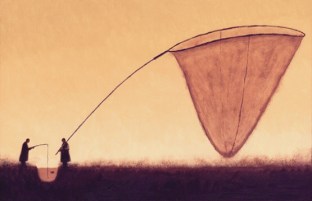 The intersection where Samuel and Saul meet is a crossroad between two fascinating story lines. Saul, the son of a wealthy and loving father, was commissioned to search out three stray donkeys. As they wandered through the land, they were divinely directed to the land of Zuph where they encountered Samuel. Meanwhile, the day before, while Saul was seeking donkeys, Samuel’s day was interrupted by the voice of God. We read,
  Webster defines glory as “Great beauty and splendor, even magnificence.” David is declaring things about the magnificence of God. It seems this Psalm was penned as a result of looking at the beauty of creation, in light of the Creator. He realizes that as glorious as creation is, it pales by comparison to the Creator.
 Israel faced a constant threat from the Philistines. They had come into the territory promised to Israel, taken land, and threatened the people. Earlier in 1 Samuel, the nation mustered all its strength to drive the Philistines out of their territories, only to suffer a devastating loss. In that earlier battle, the people gathered around a religious artifact, went forth in all the strength they had, and were defeated. Now, some years later, we find them once again facing the same threat. This time, however, their efforts resulted in a great victory. What was the difference? How were they able to defeat an enemy which had plagued them for so many years?
 On a regular basis, how would you describe your mornings? Do you wake up grumpy, dreading another day? Or late, rushing to get your responsibilities done? Or perhaps you arise and rush to get the morning paper, check the news, or peruse Facebook, or the web.
 Tucked away in the story of the Philistines return of the Ark to Israel, is this powerful exhortation regarding the danger of hardening our hearts to God. We are reminded of the difficulties Pharaoh endured because of his refusal to humble himself and obey the Word of God. The lessons from this exhortation are twofold.
 The Philistines mustered all their courage as they confronted Israel on the battlefield. They soon overpowered the Israeli army and took the spoils of war. In this battle, the spoils included the Ark of the Covenant. Upon returning to Ashdod, the Philistines placed the Ark in the their temple, and found themselves facing an interesting predicament; they now had two gods. As night fell, so did Dagon the Philistine god. When morning’s light appeared, they discovered the image of Dagon had fallen before the Ark of Jehovah. Their reaction was to help Dagon back to his feet. However, the next morning, they found Dagon had once again fallen, and this time, been destroyed. Realizing Jehovah would not share His position as God, the Philistines had a decision to make. Which God would they serve? Sadly, they rejected the true and living God and selected a man-made god.
 As A child, I spent a lot of time on the ocean. My dad loved sailing and we would spend time every summer living on the boat. I can remember times when the seas were so rough that we had to put anything breakable on the floor of the cabin, so it would not be knocked down and broken. In seas like that, it became very difficult to walk. I can remember grabbing hold of anything solid to keep me from falling overboard. When we reached the shore, even the solid ground seemed to move under my feet. Emotions are like that. They often seem like a turbulent sea; when we let them control us, we find that life is a pretty unstable place.
 Long before Jerusalem was established as the capital of Israel, Shiloh was the ancient location of the Tabernacle. It was at Shiloh, where the High Priest would meet with the LORD on the Day of Atonement. It was there, where the glory of the LORD would fill the Holiest place like a cloud.
 Jim Gallagher