Psalm 22:1
“My God, My God, why have You forsaken Me?
Why are You so far from helping Me,
And from the words of My groaning?”
 Although David wrote this Psalm as an expression of the experiences he was facing, it has a much bigger application than he ever could have conceived. It was on the cross that Jesus uttered the opening words to this great Psalm.
“And at the ninth hour Jesus cried out with a loud voice, saying, ‘Eloi, Eloi, lama sabachthani?’ which is translated, ‘My God, My God, why have You forsaken Me?’” Mark 15:34
In order to speak from the cross, Jesus would have to endure unimaginable pain. He would have to straighten Himself up by pressing against the nail driven through His feet, and breathe in deeply to force any words out. When His silence was broken by these words, His followers would have been immediately drawn to the words of Psalm 22. After watching the crucifixion, there could be no other conclusion; David was speaking prophetically of Christ.
This Psalm, written almost one thousand years before Christ, gives a vivid picture of the events of that dark Friday. David speaks in advance of the ridicule that Jesus would endure. We know that the religious leaders, the crowd, the soldiers and even the thieves all mocked Jesus; calling for Him to prove that He was God and break free from the cross. David also describes the way Christ died with amazing detail. He speaks of His tongue clinging to His mouth in thirst, His hands and feet being pierced, His bones being unbroken, yet out of joint, and his heart melting like water within Him. This Psalm gives undeniable proof of the inspiration of the Word of God, and of the claims of Christ.
That being true, the cry of Christ from the cross does more than draw our attention to the prophetic words of David. It also reveals something of the suffering Jesus endured on the cross. While on the cross, Jesus was giving His life as a substitute for ours. He was bearing the penalty of our sin, so we would not have to. Paul put it like this;
“For He made Him who knew no sin to be sin for us, that we might become the righteousness of God in Him.” 2 Corinthians 5:21
The penalty for sin is separation from God. While on the cross, bearing our sin, Jesus experienced sin’s penalty. His cry was not mere poetry, but the expression of what He must endure to save us. Our experiences allow us to understand the weight of sin to a small degree. We have all felt the heavy burden of committing sin, and knowing what it has done to our relationship with God, and with others. We can never imagine the weight of all the sin of humanity. Every vile thought, word, and action ever committed by every man,woman, and child who ever lived, bore down upon our Savior as He hung upon the cross, paying for our sin. And we read that the Father forsook His Son.
All this was done, Christ was forsaken, so that we would never be forsaken. Because of His substitutionary death, the writer of Hebrews was able to declare,
“For He Himself has said, ‘I will never leave you nor forsake you.’” Hebrews 13:5
What love…
Pastor Jim
Questions for Psalm 22
This is what is referred to as a Messianic Psalm. It has a meaning in the life of the psalmist but also points prophetically to Christ.
- Verse 1 is spoken by Jesus from the cross. What is significant about Jesus speaking of being forsaken?
- What do you learn about the value of trusting the Lord from verses 4-5?
- How were verses 6-8 fulfilled in the crucifixion?
- How were verse 14-18 fulfilled in the crucifixion?
- How does the cross make verses 27-31 possible?
 he thing that makes following Christ so difficult is the enemies we face. The primary enemy of the Christian is the devil and his minions. Scripture describes the devil as a schemer who seeks to derail us from following and serving Christ. He will use the weakness of our humanity as a tool to get us to stumble into sin. When at times, it may seem as though the temptations and the obstacles are too great to overcome, we can be greatly encouraged by this promise.
  Things seem to be going from bad to worse for David. Saul’s rage forced him to flee the palace, and live the life of a fugitive. For safety sake, he dwelt in caves to hide from the king and his spies. He and his men came out of hiding at the command of the Lord, and risked their lives to rescue the city of Keilah from Philistine invaders, only to find the citizens of Keilah had sold them out to Saul. It is easy to see why both David and his men could become discouraged by their circumstances.
  We have all had the silly daydream of winning the lottery, finding a stash of money in a secret compartment in the attic, inheriting millions from an unknown uncle, or inventing the next great product everyone wants to own. Why? I think the answer is simply that we would all love to have an unlimited supply of cash; not for it’s intrinsic value, but because of what we can obtain with it, and for the security that it brings. Imagine never having to worry about the bills again.
 The stone Ezel would forever mark a turning point in the life of David. He had been sensing more and more that Saul’s jealous fits of rage would result in his own death. To clarify the matter, he and Jonathan had developed a plan to uncover Saul’s true desires. David would skip out on the palace celebration. In a few days, it would become evident he was not there. If Saul’s reaction was hostile, they determined David must flee for his life. In order to keep David informed of the news, Jonathan would shoot three arrows into the distance. If the arrows fell short of his location, David would know it was good news. If they flew beyond him, he would know Saul’s rage had escalated, and he must live the life of a fugitive.
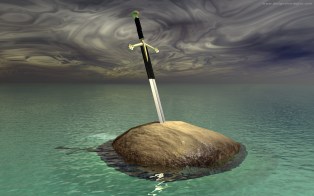 Saul’s rage forced David to flee for his life. He left home and family in such a hurry that he took almost nothing with him. When he arrived in Nob, he immediately searched for both food and weapons. Since he arrived at the home of the priest, and not a military compound, weapons were hard to come by. The only available sword was the one David had taken from Goliath, and it probably sat in a display case.
 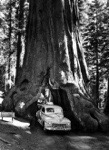 I remember years ago listening to Pastor Chuck Smith teaching from John 15 on the Vine and the branches. To illustrate our need to bear fruit, he asked, “What does a full grown tree look like?” Immediately, my mind was filled with visions of the massive Redwoods of Northern California. I remember, as a child, driving our car through a tunnel cut out of a tree in Humboldt County. After pausing to let the question sink in, he responded, “A full grown tree looks like firewood.” You see, a tree grows as long as it is alive. The moment it stops growing, is the moment it has died.
 Like all of us, King Saul struggled with his emotions. When he looked at David, he did not see Israel’s rising star, or a man after God’s heart, but only a man who was a threat to his throne. Saul found himself filled with jealousy, fear, pride, and anger. As the story unfolds, we find these sins ultimately became his downfall. His failure was partly due to the way he dealt with his sin.
 The relationship between David and Jonathan is one of the most beautiful and encouraging in all of Scripture. We find that these two young men met while serving the Lord and furthering His kingdom. Their relationship was built on love, humility, and self-sacrifice. It was this relationship that proved to be a constant source of encouragement to David, and a means by which Jonathan learned to discover God’s plan for his life.
 The Psalmist is describing his life. The lines he refers to, speak of his experiences in life. They might include his family life, his marriage, his ministry experiences, and even his recreational pursuits. He is saying, life is good. To use the words of Jesus, he is experiencing life in abundance. I think every one of us would like to be able to sing these words. The question is, how did he get there.?
 Jim Gallagher