Pardon The Preserved 

Jeremiah 50:20

“‘In those days and in that time,’ says the Lord,
‘The iniquity of Israel shall be sought, but there shall be none;
And the sins of Judah, but they shall not be found;
For I will pardon those whom I preserve.'”

One of the greatest benefits of being in a relationship with God is the forgiveness of sin. God explains that although we have transgressed His laws, the covenant provides pardon. In Israel’s case, it was through temple sacrifice, in ours, it is through the blood Christ shed at Calvary. The forgiveness He offers is complete. All sin, and it’s penalties, are washed away in the priceless blood of Christ. When God forgives, nothing will ever be brought up again.

I am captivated by the statement in this verse where sins are sought, but cannot be found. It is not saying that we cannot find a way to sin, but rather that the sins of the past have been completely pardoned. Whoever might bring a charge against the child of God, the answer will remain the same, “What sin, I don’t remember it.”

Guilt is one of the strongest anchors which holds us back, from accomplishing great things for the Lord, but it is not God who is filling our minds with guilt from past failures. Those things have been forgiven and we can move on to a life which brings glory, honor, and praise to God. I have often thought, how little Paul would have ever accomplished if he let his past failures hold him back from pursuing and serving Christ.

If you are feeling guilty about present sin, turn from it and to the Lord, but if you are plagued by past failures, it is time to look past them and at the cross, where all sin was washed in the blood of God.

Pastor Jim


Excuses Excuses 

Jeremiah 49:4
“Why do you boast in the valleys, Your flowing valley, O backsliding daughter? Who trusted in her treasures, saying, ‘Who will come against me?’”

Some things never change. The sun will always rise in the East and set in the West, water will always be wet, and a person in a backslidden state will always deceive themselves, about their spiritual condition. This was true 2600 years ago in Ammon, and it is true today.

When we drift from the Lord, we develop a skewed perspective about our spiritual condition and the reasons for it. There are a number of pretty common deceptions that keep a person from turning back to the Lord.

It is not uncommon for a person, who has backslidden, to have a list of excuses for their sin. They might have an elaborate story about how another Christian, or the church in general, let them down or treated them badly. In reality, by doing this, they are simply blaming their actions on someone else. This did not work for Adam in the garden, and it will not work today. Sometimes, the first step to getting things right with God, is taking ownership for what we are doing wrong.

Another common deception is thinking we have gone too far and God is no longer interested in us. I have even known backslidden believers to quote obscure verses out of context, convincing them it is too late for them. Keep in mind, the entire underlining message of the Bible is that God is in the business of bringing wanderers back to Himself. You may have made some big mistakes and gotten way off track, but the Cross provides forgiveness for that, and the Lord is waiting to restore you to Himself.

It is also typical for backsliders to think they have time to put off getting things right with God. We often realize we are not where we should be, and we have intentions of returning to the Lord, but we think it is something we will do later. Either we are enjoying our backslidden state, or we are not willing to do the work necessary to return to Christ.

The thing we are forgetting is, the longer we stay in our condition, the deeper our roots go, and the more difficult repentance becomes. Don’t put off repentance for another day. Keep in mind, that while the trip may seem far, it is really as simple as turning to God, and recommitting yourself to Him.

Pastor Jim


Clean Me

Jeremiah 48:11
“Moab has been at ease from his youth; He has settled on his dregs, And has not been emptied from vessel to vessel, Nor has he gone into captivity. Therefore his taste remained in him, And his scent has not changed.”

Jeremiah is describing the judgment that will fall upon Moab. He explains, in vivid fashion, that one of the chief causes of their wickedness was the fact that they were like a vessel which had never been cleaned. Their failure to allow the difficulties of life to purify their actions, ultimately lead to their judgment and destruction.

Trials are not the most pleasurable experiences in life. Whenever we face difficulty that is beyond our ability to endure, we wonder if there is a God, and if so, why He is allowing such hardship to come our way. One reason for the difficult seasons of life, is that they are designed to stir things up in our lives, in order to purify us.

Like taking a dirty cup, filling it with hot soapy water, and shaking it back and forth to release the dregs, hardship is designed as a means of getting things out of our lives that will ultimately bring the judgment of God. Instead of questioning the love of God, we should allow difficulty to serve its purpose, and examine whether or not we are living in a way that pleases God. Had Moab turned from their wicked ways, they would not have been facing heaven’s wrath.

What about you? Are you practicing things that are unacceptable to God? I am not talking about wanting to live for God and slipping along the way, instead, I am referring to a person who is looking at the Word of God and saying, “I don’t care what it says, I am going to do what I want.” Be careful, that kind of living will lead you face-to-face with the judgment of God.

Pastor Jim


Add To Your Faith . . .

2 Peter 1:5-7
“But also for this very reason, giving all diligence, add to your faith virtue, to virtue knowledge, to knowledge self-control, to self-control perseverance, to perseverance godliness, to godliness brotherly kindness, and to brotherly kindness love.”

Building a healthy relationship with the Lord is made up of a number of elements, the first of which is faith. In Hebrews 11, we are told that without faith it is impossible to please God. We might say, faith is the currency of the Kingdom of Heaven. It is the means by which we receive from God. The gift of eternal life, the promises of the Word, and the work of the Spirit are all received by faith. For anyone to begin a relationship with God, it must start by entrusting your life to Christ, and becoming His follower.

Just like Matthew rose from his tax office and began to follow after Jesus, we must leave our old life behind and trust our lives into the care of Jesus. When that is done, a relationship with God begins. But notice, Peter makes it clear that receiving Christ is not the finish line, but the starting gate. He exhorts us to add to our faith. His list is not exhaustive, there are certainly other things that can be added to our relationship with Christ, that will ensure our spiritual growth, but these seven things are a great place to start.

These 7 Things:

To faith add virtue – Virtue was defined in ancient times by Socrates as “doing something as well as it can be done”. Paul wrote, we should “do all things heartily as unto the Lord” (Colossians 3:23). The Christian should seek to do all things well as a testimony to the world, and as an offering of worship to the Lord.

To virtue add knowledge – Knowledge is both information and experience. As Christians, we should be good students of the Bible, seeking to get to know the Word of God. This does not mean, we are searching for hidden meanings in the Bible, but we are learning to take the Bible at face value, and apply the truths to our lives. This word ‘knowledge’ also carries the idea of experience. It is not just information about the Lord that is important, but that we are getting to know Him better, by walking with Him day-to-day.

To knowledge add self-control – To exercise self-control, the Christian must learn to deny or say no to himself. Not everything we desire is healthy for us, or helpful in walking with the Lord. There are times when the flesh is tempted toward things that will lead us away from Christ. We must resist the devil and draw near to God.

To self-control add perseverance – This means simply to press on. Wherever you are currently in your relationship with Christ, it is not the end. Paul reminds us, there is a day when we will complete the race and be in the presence of God, but until that day we must keep pressing forward.

To perseverance add godliness – There are many aspects to godliness, one of which is the idea of reverence. This is a word which has sadly lost its place, not only in our vocabularies, but in our culture. It is rare to see people acting with proper reverence. The word carries the idea of having a healthy fear. When people enter the ocean without proper fear, they are often swept away by large surf or caught in rip tides. When we do not have a healthy fear of God, we will toy with sins that should have been cast aside long ago.

To godliness add brotherly kindness – It always amuses me when the New Testament writers have to encourage Christians to be nice to each other. You would think we would realize we are all saved by grace, all are adopted into the family of Christ, and we should be kind to each other. But just as a parent has to break up the bickering between siblings, we must be reminded to be kind to one another. Don’t forget the world is watching how we treat each other.

Finally, to brotherly kindness add love – As faith is the starting point of a relationship with the Lord, love is the chief evidence. Paul stated, upon receiving Christ, the love of God would be shed abroad in our hearts. As Christians, our lives should be marked by love, and that love should be categorized properly. First, love is toward God. We are to love Him with our heart, soul, mind and strength. Second, love is to be toward others, Finally, we are to fall in love with the things that God loves.

Pastor Jim

 

Throw It All Away

1 Peter 5:7 “. . .casting all your care upon Him, for He cares for you.”

Cares, concerns, worries, and anxiety are all relatively synonymous terms. They speak of the things in life that fill us with fear, rob us of peace, overwhelm us, and stress us out. There are numerous things that create this kind of anxiety; some of them are real and others irrational, but all of them seem to have the same effect upon us. Peter tells us the solution to dealing with the cares of life.
“. . .casting all your care upon Him, for He cares for you.”

The word ‘casting’ is a translation of a compound word in Greek meaning, ‘to throw upon’. It was used in the book of Acts when Paul was traveling by ship to Rome. In the midst of the sea, they experienced a great storm similar to a hurricane. In addition to being tossed around by the large waves and driven off course by the high winds, they had lost all sense of where they were, because for many days they were unable to see the stars to navigate. As the ship was being beat up by the storm and taking on water, the crew began to realize, they may not survive. Suddenly, the precious cargo they were transporting meant little to them, and they began to toss it overboard to lighten the ship, and increase their chances of survival. When the storm continued, they reached the point where they even began throwing the ship’s tackle overboard.

This is an apt illustration of what it means to cast our cares upon Christ. Sometimes, the storms of life cause us to realize that much of what we are living for, or hold dear, matters little in light of eternity. In the storm, we, like those sailors of old, evaluate what is truly precious and we cast all the rest at the feet of Jesus. Maybe now would be a good time to cast some of those cares at His feet. Perhaps there are things you have allowed back into your life that should be left behind, as you press toward the upward call of God in Christ Jesus.

As the storm continued they cast the ship’s tackle overboard. Tackle, unlike cargo is necessary to the sailors. They could not hoist the sails without it. When the storm began, they relied upon their own strength and experience to get them through. As the storm raged on, they reached a point where they realized it was too much for them. All they were accustomed to trusting in proved faulty, and as a last resort they threw the tackle overboard and listened to the instructions, not of the captain, but of the Apostle. Sometimes, life’s storms are allowed so we will stop trusting in our own strength, instead turning to the Lord for direction. It may be that the care that you need to cast at His feet is the idea that you can get through this without Heaven’s help.

Whatever you are facing, cast those cares at His feet. Peter promises that Jesus cares for us.

Pastor Jim


Armed And Dangerous

Jeremiah 46:3-4
“Order the buckler and shield,
And draw near to battle!
Harness the horses,
And mount up, you horsemen!
Stand forth with your helmets,
Polish the spears,
Put on the armor!”

As the forces of Egypt prepared to go to battle with Babylon, Jeremiah describes the battle scene. He paints a picture of soldiers with weapons in hand and clad with armor. His battle scene has been repeated countless times over in human history, as one force prepares to defend itself against another. I cannot help but notice a few similarities to the battle we face as believers.

First, it is critical that we choose the right side. All the flashy armor, swords, spears, bows and impressive speeches, were no match for the forces of Babylon. Those who chose to side with Egypt, chose poorly and lost dearly. In the same way, it is important that we choose to side with Christ as we enter into the warfare of life. Too many are fighting vainly in life trying to get ahead, while neglecting to realize that the first step to real life is found in complete surrender to Jesus.

Second, we need to see that certain apparel is required for battle. While the people may have been more comfortable, and looked better in pictures, had they dressed in their finest suits, armor is required in battle. If we want to succeed in following Christ, we too must put on the armor of God. Paul described this as, a helmet of salvation , a breastplate of righteousness, the belt of truth and the shoes of the gospel. The basic idea is that, we receive Christ, seek to live pleasing to Him, and be guided by His word.

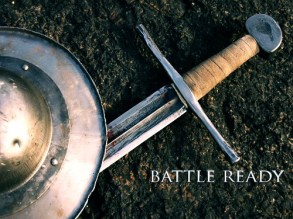
Finally, in addition to armor, we are in need of weapons. A spoon might be the appropriate tool for the kitchen, but it has little value in hand-to-hand combat. The soldier needed a shield and a sword. The shield would protect him from whatever the enemy threw at him, and the sword was the offensive weapon, by which he would put down his enemy. Paul explained that our shield is faith or confident assurance in the promises of God. When we are attacked, we need to cling to the promises of God, and let His word, like water, wash away the fear, guilt and discouragement that keeps us from pressing on. At the same time, we need to cast down the enemy with the word of God. Paul said there would be times when thoughts would enter our minds that would not come from God, but would exalt themselves above His Word. We need to cut those thoughts down, as a soldier would his enemy. We need to be a people who are governed and guided by the Word of God.

Pastor Jim


Self-Promotion 

Jeremiah 45:4-5
“Thus says the Lord: ‘Behold, what I have built I am breaking down, and what I have planted I am plucking up… And do you seek great things for yourself?'”

As the nation teeters on the brink of collapse, Jeremiah is given a prophetic message for one man, Baruch. Baruch was an assistant to Jeremiah. One of his main roles was that of a scribe. He was responsible for writing down Jeremiah’s messages in book form and delivering them to the kings. We have every reason to believe that Baruch served Jeremiah, and the Lord, faithfully. But even faithful men are in need of correction from time to time.

Often Christian service goes unnoticed, especially when we are in a support role in ministry. We might labor intensely to help accomplish a goal and someone else receives all the accolades. I think pastors’ wives are particularly susceptible to this. They are at the side of their husbands serving, supporting, encouraging, and no doubt feeding, but it is the pastor who gets all the attention come Sunday’s service.

Baruch seemed to grow weary in his support role, and as time moved on, wanted to make a name for himself in ministry. Perhaps since he was a writer, he was toying with the idea of having a Bible book with his name on it. Whatever the case, the message he heard was clear.

“Now is not the time to seek great things for yourself”

The nation needed men and women who would seek to promote the Lord. Yet, Baruch was seeking to promote only himself. While there is nothing wrong with working for a nicer car, bigger house, or better retirement, we need to keep in mind that the current condition of things, calls us to focus on the service of the Lord. We should seek to be doing our part in the furtherance of His kingdom, rather than seeking only the things that are best for ourself.

Time is short, life will soon pass, only what is done for Christ will last.

Pastor Jim


The End Is Near 

1 Peter 4:7-10
“But the end of all things is at hand; therefore be serious and watchful in your prayers. And above all things have fervent love for one another, for “love will cover a multitude of sins.” Be hospitable to one another without grumbling. As each one has received a gift, minister it to one another.”

Peter gives a series of exhortations, all predicated upon the fact that the end is near. When the Bible refers to the end of all things, it does so, not out of fear or despair, but out of joy and anticipation. For the believer, the end of all things means Christ will call His church home, and ultimately return to set up His earthly kingdom, where He will reign and rule in righteousness.

This end was the anticipation of the prophets of old, who spoke of things like righteousness covering the earth, as the waters cover the sea; or the lion and the lamb lying down together; and weapons of war being turned into instruments of agriculture; and men learning war no more. Peter is reminding us that Christ will come back and make things right.

In addition to filling us with hope, the reality of His return should stir us to proper behavior. Peter lists four areas of life that should be impacted by the expectation of Christ’s return. First, we must be watchful in prayer. I think there are two very important things we must watch for in prayer. One, we must watch that we are praying. Too often, prayer becomes our last resort, instead of our first instinct. If we want to see God accomplish the things He promises, we must be men and women of prayer. James said we have not, because we ask not (James 4:2). Also, we must watch that we are praying according to the Word of God. The Bible is filled with promises predicated upon asking. James went on to explain, the reason we do not see God accomplish what He promises is that we ask amiss (James 4:3). In other words, we are asking for things He has no intention of doing, while neglecting to ask Him to do what He promised.

Second, Peter exhorts us to love one another. Love is the greatest of all the commandments. Jesus said our first love must be directed to God. If we truly love God, it will be expressed in love for each other. John asked, “How you can love God whom you cannot see, if you do not love others who you do see” (1 John 4:20)?  One way this love is expressed is through covering the faults of another. Peter is not suggesting that we condone sin. The Bible clearly teaches, if a Christian is in sin, we must confront him, to help rescue him from impending danger. What we are exhorted to do is look beyond the failures of one another, and love each other. This is where forgiveness is a huge expression of love. The proper way to have a relationship is to be willing to forgive and press forward.

Third, Peter speaks of being hospitable. The Greek word translated hospitable is a compound word literally meaning “to love strangers.” As we are to love each other, we are also to love those who do not yet know Christ. One of the great ministries of the early church was breaking bread from house to house. They turned their homes into places where others were welcome to come and learn about Jesus. We should be those who are always looking for ways to express the love of Christ to those who have not yet come to Christ.

Finally, Peter declares that as we await the arrival of Jesus, we must be involved in ministry. Sadly, many Christians think ministry is to be done by the professionals; when the Bible clearly teaches that every Christian has been called to ministry. The church was designed by Jesus as a place where the Bible would be taught so the Christian could grow and impact others. It was also to be a place where the Gospel would be declared, so Christians can bring their friends and family to hear about Jesus and be saved. As we await Christ’s return, let’s be busy serving the Lord.

Pastor Jim


Self-Inflicted 

Jeremiah 44:7
“Now therefore, thus says the Lord, the God of hosts, the God of Israel:‘Why do you commit this great evil against yourselves…”

God warned the people not to flee to Egypt for help. He knew the Babylonians would soon defeat Egypt and any who were In allegiance with her. Despite these warnings, many of the people chose to depart from Jerusalem and Judah, making their way to Egypt. When questioned by Jeremiah as to why they chose to disobey the clear commands of God, they responded that life was easier when they worshipped the “queen of heaven.” The real reason they fled the commands of the Lord was they wanted to worship other things.

Often, an unbeliever or backslidden Christian will bring accusations against God and His Word. They will claim the Bible is difficult to understand or that there are many interpretations. While there are some Biblical texts that require careful study in order to rightly understand, most texts are plain, clear and simple. The real reason for abandoning them is not because we are not sure what they say, but because of what they clearly say.

God’s word is abundantly clear; worshipping other things is forbidden. His word is also clear that the lifestyles connected with these pagan worship practices are sinful and not pleasing to The Lord. The people did not worship false gods because they thought they were more believable than God, but because these false systems allowed them to behave in ways God had forbidden.

It is important that we do not follow the pattern set by those of Judah. These men and women chose to walk outside the parameters of Scripture, only to find they were sinning against their own souls. It would not be long before they found their sin had cost them their freedom, their lives, and their families.

Pastor Jim


Self-Willed 

Jeremiah 43:4
“So Johanan the son of Kareah, all the captains of the forces, and all the people would not obey the voice of the Lord, to remain in the land of Judah.”

After the fall of Jerusalem to Nebuchadnezzar’s forces, the inhabitants of Judah began to look to Egypt as a place of refuge. Jeremiah warned them that fleeing to Pharaoh would result in further death and destruction. The same people who refused to listen when the prophet told them to willingly go to Babylon, are the people who are now fleeing to Egypt. On the one hand, the Word of God told them to go, on the other, it told them to stay. In both cases they chose to disobey. It is not the commands of God that are the problem, but the will of men. Disobedience is always driven by self-will.

Scripture is filled with examples of people choosing to place their will above the will of God. We find Jacob wanting his brothers things, so he lies, cheats, swindles and steals to get it. We read of the multitude of Israel erecting false gods, looking for a leader who will lead them back to Israel, and refusing to enter the promised land. We recall men like Samson who continued to pursue the lust of his flesh to his own demise, or Saul who initially refused to accept the position of king and later refused to let it go. The details may vary, but the one constant in every case of disobedience is placing self-will above the will of God. We often do this because we are driven by fear, misunderstanding, or a lack of trust.

The inhabitants of Judah could not process how staying in Jerusalem and submitting themselves under Babylonian rule could ever be a good idea. They had seen Nebuchadnezzar’s forces come multiple times over a period of 15 years, taking waves of people as prisoners of war. What they failed to realize was the cause of the fall in the first place; their unwillingness to submit to the authority of God and His word. They were developing a pattern of living however they wanted, then blaming God for the outcome. As time unfolds, the command of God will make perfect sense. It would not be long before Pharaoh and his forces were defeated and those who allied themselves with Egypt became the enemies of Babylon.

Don’t allow your inability to understand the ways of God limit you from being willing to do what His word says.

Pastor Jim