Acts 8:5
“Then Philip went down to the city of Samaria and preached Christ to them.”
 Philip was one of the men selected to serve tables at the church in Jerusalem. Now we find him heading out to Samaria as a missionary and winning many souls to the Kingdom. His ministry became so effective, it drew the attention of the apostles, who came to aid him in discipling those who had been saved. As quickly as he arrived in Samaria, Philip leaves. God calls him away from the masses, to reach an individual with the message of salvation through faith in Christ. After a muddy baptism in the desert, he headed out once again, this time making his way to Caesarea, where he settled down and raised a family of followers of Jesus.
Philip’s story is a fascinating one, filled with application for our daily lives. One of the most important lessons he teaches us is, in God’s economy, all service is the same. When Philip was serving tables, raising children, or leading revivals, he was simply doing what God had called him to do. Sometimes, I think we lose sight of how God wants to use us today, by being overly consumed with what the future holds. Spending all my time thinking about how God wants to use me tomorrow, will cause me to miss the opportunities He has placed in front of me today.
Keep your eyes open! Perhaps, today, God may lead you right into an opportunity to share Christ with someone like the Ethiopian, a man who God had prepared in every way for Philip’s arrival.
Pastor Jim
 Stephen’s story is a common one with an uncommon ending. All who have attempted to share the love of Christ with others have experienced the crowd turn on us. The very ones we have prayed for, and stepped out in faith to share with, have accused us of wrong doing, and lashed out against us. Unfortunately for Stephen, these men lashed out not only with words, but also with stones. Stephen was taken outside the city, as if he were a false prophet, and stoned to death. A martyr could be defined as one who lives for Christ, even if it means dying for Christ. Stephen is not the only martyr the church has ever seen, but he was the first.
 Jesus promised, when we are baptized with the Holy Spirit, we will receive power to be witnesses for Christ. It seems to me, I am always in need of more power than I currently have. The longer I walk with the Lord, the bigger some of the battles become. I need a greater measure of His power to deny the flesh, as well as to effectively serve the Lord. I think it is a common experience for all Christians to feel powerless against the battle in front of them. That being said, there is a critical principle revealed in this verse. Peter declares that the Holy Spirit is given to those who obey.
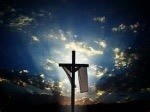 The greatest tragedy in human history was the day Christ died. The true sinfulness of mankind was expressed as the world turned on Christ, as if to say, “We won’t have this man ruling over us.” In an attempt to rid the world of Him, they nailed Him to the cross and watched Him die. In contrast to the darkness of that hour, heaven’s great light shone forth as Jesus rose from the dead, gaining victory over death, hell, and sin. The Resurrection is heaven’s great triumph. The resurrection, proves the claims of Christ. When asked for a sign Jesus declared,
 Peter makes reference to a simple rule of life. We can only give away what we personally possess. By his own admission, Peter had no money to give this man. It is interesting to note that from an economic standpoint, Peter’s condition was no different than the beggar’s. In the world’s estimation, a man in his thirties who is too broke to share his change with a beggar, is of very little value. Peter would not make a who’s who list in the 1st Century. However, if we look more closely, we see that Peter possessed something far greater than riches that tarnish and fade. Peter said,
  The Holy Spirit is the driving force behind all the ministry that will take place in the book of Acts. Jesus had commanded His disciples to go into all the world and proclaim the Gospel message, but before they went, they were to wait for the outpouring of the Holy Spirit. Their personal lives, their ministries, and their world, would forever be changed because the Holy Spirit came upon them.
 The book of Acts is a sequel to the Gospel account, written by Luke. He declares, in this opening verse, the purpose for writing the Gospel account and the book of Acts. He states that the Gospel records what Jesus began to do; and the book of Acts, what He continues to do. Since Jesus is alive from the dead, the story of the Bible is a continuing one. John closed his Gospel account declaring that all the books in the world could not hold all that Jesus did for humanity. As amazing as it may seem, Jesus is not finished. The resurrection is not the end of the story. It is the transition point where the work of Jesus transfers from being accomplished outwardly through His life on earth, to the inward working of His Spirit in the life of all who believe.
 Jim Gallagher