2 Chronicles 11:4
“Thus says the Lord: ‘You shall not go up or fight against your brethren! Let every man return to his house, for this thing is from Me.’ Therefore they obeyed the words of the Lord, and turned back from attacking Jeroboam.”
 “Thus says The Lord” is a very common phrase in scripture. All in all, it is used over four hundred times. We find God speaking to priests, prophets, kings and commoners. It becomes very clear that the problem is rarely with God being silent, and is more often with man refusing to listen and obey.
I am particularly encouraged by the use of “Thus says the lord” in this passage, because of who it was that God spoke to, and how he responded. The portrait the bible paints of Rehoboam makes it clear he was anything but a godly man. His self-will created division within the nation, and his idolatrous ways continued to weaken things from within. He was a defiant, proud, and self willed man, yet we read of a time when he responded favorably to the words of God.
The bible teaches that believers ought to be praying for our political leaders. Often, we become discouraged, and fail to pray, when it seems they show little or no regard for the things of God. It is important to keep in mind, the God who got through to Reheboam, is the same God who wrote on the wall of Belshazzar’s palace, and the same God who stirred Caesar to take a census of the people, and is the same God who is able to direct our leaders, even if they show little evidence of wanting his direction. Rather than losing heart at the condition of our nation, it should drive us to our knees, where we seek God to bring about His purposes, and perhaps bring yet another revival before Christ returns.
Pastor Jim
 A person, standing at a distance and looking in at Solomon’s kingdom, would be struck by the enormous wealth and prosperity. We read of merchants traveling the world and returning with treasures of gold and precious stones, as well as exotic spices and animals. We are told, the landscape was marked with elaborate building projects, fine arts, and gourmet foods. Beyond question, the nation looked to be at its apex, and was envied by the world around them. In fact, we are told that delegations, including kings and queens, would make their way to Israel just to see its highly developed society and vast wealth. All the world wanted to be like Israel. Sadly, things were not really as they appeared. Underneath the surface was a cancer that was eating away at the fabric of the nation, and in a few short years would cause its collapse.
 The bible clearly teaches God is just, and will one day judge each nation for its wickedness. The farther a nation strays from the ways of God, the weaker it becomes, and the closer it gets to its final hour. This was true of Israel, Judah, and the surrounding nations; and remains true today. One cannot read the pages of God’s Word and not conclude, there will come a time for judgment for those who turn their back on God. That being said, it is also true, God does not take pleasure in judgment, but delights in extending mercy. It is His desire to pardon and restore. To that end, a promise is given to Solomon which remains true today. This promise is directed at the child of God, for the purpose of forgiveness and restoration.
 Once the Temple was erected and the altar and priesthood put in place, Solomon explained the purpose of the Temple. It was designed as a means for sinful men to have relationship with a holy God. As Solomon prayed, he revealed the great benefits of the Temple. We might say, 2Chronicles 6 gives us the doctrine of the Temple. It became clear, no matter what the cause, turning to the Lord was the cure. If the people were suffering loss, pain, sorrow, sickness, or defeat, they could turn toward the Temple, pray, and find restoration with the Lord. Since the Temple provided access to God, it was the means to receiving mercy from the Lord.
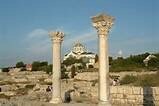 In addition to building the Temple, Solomon had two large pillars erected, which he named Jachin and Boaz. Jachin means to establish and Boaz means strength. Whenever a person approached the Temple, they would see these two massive pillars. A reminder that the nation, the kingdom, the Temple, and each of our individual lives, are established and strengthened by God.
 Solomon faced a great predicament, he desired to build a temple where God and man could meet, but he realized that all the heavens were too small to contain Him. He knew the dwelling place for God must be grand, but he also knew that no earthly building could ever truly reflect the glory of God. The temple he would build would be a mere shadow of the real glory of God, and was designed to point Israel to the Lord. For generations to come, this building would serve as a place where man worshipped God, and was the focal point of many revivals within the nation. It interests me that this glorious building was the byproduct of a multitude of people investing their many different gifts. In fact, we find thousands of men were hired for the work of quarrying stones alone. Seemingly, innumerable man hours were spent doing nothing more than working with rocks.
 After Solomon ascended to the throne of David, he was gifted by God with everything necessary to become the greatest king the world had ever known. Because of his father’s military campaigns, the nation would experience a time of peace unlike anything they had ever known. The wisdom of Solomon and the wealth of the nation made it seem as though they would have years and years of abiding peace, strength and growth. It seemed as though nothing could stop the nation that had been birthed by God. Tragically, in a few short decades, this nation would go through a heated civil war, dividing the nation, and costing many their lives. Not too much later, this nation would be defeated over and over again by their enemies, until they were finally overthrown and carried captive to Babylon. What happened? What caused the rapid fall of a nation with such promise?
 David’s domestic policy included doing everything possible to ensure that the Lord was at the center of the nation of Israel. To this end, he sought to bring the Ark into the city of Jerusalem. In doing so, David committed one of the more common mistakes in ministry; doing the right thing, the wrong way. Instead of opening the Word of God and doing the necessary research on the subject of transporting the Ark, David used “common sense” and a pattern set by the Philistines. The Ark was placed upon a new a cart and driven to Jerusalem. Tragedy struck along the way and a young servant of the king was killed. The reason for the failure was that David had failed to seek the ways of the Lord.
 Jim Gallagher