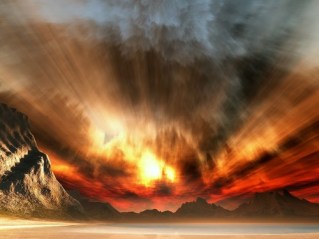
Revelation 16:16
“And they gathered them together to the place called in Hebrew, Armageddon.”
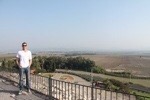 Recently, I had the privilege of standing on Tel Megiddo, the ruins of the ancient city of Megiddo. It overlooks, what is often referred to as, the valley of Armageddon. The experience was almost surreal. As I stood there, contemplating the events described in Revelation 16, I could see smoke rising in the distance, from tires being burned in protest to the fighting in Gaza and southern Israel. The silence of the moment was suddenly interrupted as the entire valley was filled with the roar of an Israeli fighter jet flying past. It was not difficult to imagine what the scene will be like when men gather in one last effort to eradicate God. Hundreds of years before Revelation was written, the Bible prophesied of this event.
Psalm 2:1-3
“Why do the nations rage,
And the people plot a vain thing?
The kings of the earth set themselves,
And the rulers take counsel together,
Against the Lord and against His Anointed, saying,
“Let us break Their bonds in pieces
And cast away Their cords from us.”
I have always looked at this as the epitome of folly. Men, in rebellious pride, gather to do battle with God, who loves them so much He gave His own Son to save them. Up to this point in Revelation, judgment has been poured out in measures. We read of a fraction of the population being judged, allowing for the remainder to respond to the mercy of God. Yet, we also read time and again, that the inhabitants of the earth refuse to repent. Instead of being drawn to God, many become hardened toward Him. That hardness ultimately reveals itself in mobilizing for battle, to rid themselves of the influence of God, once and for all. In light of this, the second Psalm closes with some valuable advice.
Psalm 2:12
“Kiss the Son, lest He be angry,
And you perish in the way,
When His wrath is kindled but a little.
Blessed are all those who put their trust in Him.”
Instead of hardening our hearts to God, because of the things that we do not understand, or the raw deal we feel life has dealt us, we should accept His merciful plea and draw near to Him. Much of the difficulty we ascribe to God, is actually an extension of His loving kindness, seeking to draw us into relationship with Him.
Will you draw near to Him today?
Pastor Jim
Old Testament:
Ezekiel 43- Dedication Day
Ezekiel 44- Service
 While the tribulation continues on earth, John’s attention is drawn once again to the scene in heaven. The contrast alone should be enough to persuade us to surrender to Christ. Earth is experiencing the wrath of God, while heaven is being filled with sweet and continuous praise. Those who have been rescued from the tyrannical reign of the Antichrist stand before the throne and worship.
 The tribulation years will be the most difficult time period the earth has ever known. Any hardship we have ever experienced, will pale by comparison, to say the least of the trials during those few years. It is prudent that we each do everything we can to avoid being left here when these events begin to transpire. The way out is to trust in, and surrender to, Christ as Lord and Savior. If you have not yet made the decision to receive Christ, stop reading and pray. Invite Him to forgive your sins and be your Lord.
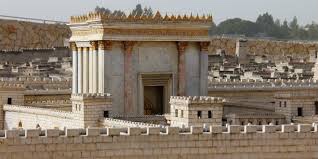 Ezekiel lived in Babylon as a prisoner of war. The nation of Judah had rebelled against Babylonian occupation and this rebellion cost them dearly. In 587 BC the city of Jerusalem and the Temple of God were burned to the ground. What had once been a glorious structure representing the majesty of God was now nothing more than a pile of rubble.
 Keep in mind as you read through Revelation, John is seeing the events on earth from a heavenly vantage point. Instead of the glamour of wealth and power, John sees what God sees, a hideous beast filled with blaspheme, violence and hatred. It seems as though the entire world is enamored with this ruler. Like Haman of old, in the book of Esther, the world has found a common scapegoat in the believers, and their hatred streams forth in persecution. As a means of both coercion and identification, the beast requires a mark to be given to every person. Without this mark, survival will be difficult, and persecution guaranteed. This mark is later identified as being a series of numbers.
 The book of Revelation is filled with symbolism. Some of the symbols are easy to understand because they are explained in the text, itself. For instance, in Chapter 1 we see Jesus in the midst of the lamp stands, then we are told the lamp stands represent the churches. Here in Chapter 12, the imagery is a bit harder to deduce. We are told of a woman clothed with the sun, who gives birth to a male child. Next, a red dragon, with seven heads, who draws a third of the stars from heaven, and awaits the birth of the child, that he might devour him. If we take a few minutes to unwrap the text, we will find that most of the imagery is, in fact, explained for us. Verse nine reveals the dragon is Satan, which makes the stars he drags, a reference to his angels. Verse five disclosess the male Child would rule the nations, making this a clear reference to Jesus. We are told He ascended to the throne of heaven. In verse 17, Satan makes war with the remnant of her seed. It would seem then, this reference represents Israel and the further offspring of the woman, and the Gentiles, who come to faith during the tribulation.