Luke 21:13
“But it will turn out for you as an occasion for testimony.”
 As the world approaches the end times, difficulties will increase. The believer is reminded that these difficult situations are the perfect backdrop in which to share Christ with the world. This is a principle to live by. We do not need to wait until the end to have an impact upon the lives around us. The present circumstances which you face have been designed by God as the best conditions for you to grow as a Christian, and have an impact upon others for the kingdom of Heaven. In addition to reminding the disciples of the opportunities He will provide for them, Jesus also gives a promise of success:
“I will give you a mouth and wisdom which all your adversaries will not be able to contradict or resist.” (Luke 21:15)
We often find ourselves face to face with an opportunity to share Christ with someone. Perhaps the door begins to open while watching a sporting event together, having a coffee during a break at work, or hanging together as our kids play at the park. Whatever the setting, as we see the door opening, we immediately feel as though we do not know what to say. What a wonderful promise Jesus gives. He promises to give us irresistible wisdom. This is a wisdom you will not find until you open your mouth and begin to testify of Christ.
Pastor Jim
Questions for Luke 21
- Who is contrasted as Jesus looked on at those putting gifts in the treasury?
- What was Jesus talking about when he said, “Not one stone will be left upon another that shall not be thrown down”?
- What two questions did the disciples ask in response to Jesus?
- The rest of the chapter is a response to those two questions that the disciples asked. For the disciples, the answers that Jesus gives are future events. For us, half of Jesus’ answer is future and half is history. In 70 AD the Romans, under the command of Titus, destroyed the temple and fulfilled the prophecy of Jesus concerning the temple and the stones. It’s important to look at Matthew 24 and Mark 13 and find the differences between the three accounts.
- Take time now and reread verses 34-36 and consider how you spend your time and energy.
- Now read Ephesians 5:15-17.
Old Testament:
Numbers 11- Living In The Outskirts
Numbers 12- Personal Conflict
 We are introduced to a group of men who are examining Jesus. They have taken the time to carefully observe Him in action, dissect His teachings, and even quiz Him on a variety of difficult subjects. Their conclusion is worth noting. We read, “they marveled.” The word “marveled” means to be amazed by, and even to admire. It is a word that would commonly be used of a person standing in a museum observing a beautiful work of art. In that case, the proper response would be to admire the work and protect it from being harmed.
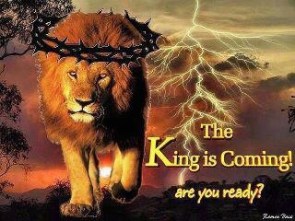 Jesus rebuked the leaders of His day for being able to discern weather patterns, yet failing to recognize the signs of the times. He also exhorted His followers to carefully observe the condition of the world, and to live in anticipation of His soon return.
 The chief trait of this Pharisee was the idea that he did not need God. A modern equivalent would be the person who, with his imagination and personal experience, has fabricated both a god and a religious system by which he is acceptable to his god. The Pharisees did just that. They picked out certain verses from Scripture to form what they thought God was like, then based upon that, they established behaviors they believed He would accept. The result was a group of self-righteous men who looked down upon others and rejected Christ. In contrast, we find a man who has lived a compromising life. While externally he seems to be the one whom God would reject, he is accepted because he came to God, not on his own terms, but on God’s.
 Lot and his family represent the Christian. Jesus tells us, if we want to save our lives, we must lose them. In other words, life, true life, abundant life, will not be found in holding things back from the Lord, but by giving up all to follow the Lord. Matthew modeled that idea when he left his tax table, Peter and John when they left the fishing business, and you and I when we leave behind our past life, and seek to live for Christ. Unfortunately, even after we determine to follow Christ, we face temptation to return to the things from which we were saved. Satan even has a way of making the sin life which we used to live, look better than it really was. Knowing this, Paul exhorts us,
 Between man and God there is a great gulf of separation. This gap is caused by sin, and makes it impossible for us to have fellowship with God. This is precisely the reason Jesus came. He bled and died on Calvary’s cross to bridge the gap; to make it possible for us to know God now, and spend eternity with Him. This life will come to an end, and when it does, only what we have done with Christ will really matter. In this story, the rich man reveals what happens to those who refuse Christ. Not only do they live separated from God, but they die that way.
 I imagine what the scene must have been like in the Synagogue that day. The crowd had gathered like they did every Sabbath. For some it was no more than a religious duty, for others, it was how they expressed their devotion to God. The scene suddenly shifts from the normal activities of prayer and Bible reading to a woman with a serious medical condition. She had been suffering for eighteen years and nothing could be done for her. Without hesitation Jesus called her to Himself, and when she responded to the call, He healed her. Imagine being there! Imagine the joy that would fill her, perhaps like the lame man in Acts 3, she leaped with joy, celebrating what Jesus had done for her. I would expect to read that the service changed that morning, as the people broke out in unrestrained praise. Sadly however, rather than hearing praise, we hear the sound of objection.
 Jesus tells the story of a rich man who believed true life was found in great possessions. He worked hard and was very successful. His success caused him to evaluate his life. His conclusion, he needed to work harder so he might acquire more, and be able to retire in comfort. He began to increase his efforts, acquire more, build larger storehouses for all his possessions. All the while, hoping for that time when he would be able to live at ease and enjoy it all. Sadly and expectedly, he died and all of his riches were of no use to him as he stepped into eternity.”
 There seems to be some striking differences between the Church in the book of Acts and the church today. The impact they were having on their world was tremendous; we read of the sick being healed, the dead being raised, and most importantly, multitudes of people believing in the resurrected Lord, and their lives being transformed. How is it that they, with so little, were able to do so much? We know they did not have the completed Bible, much money, or the technological resources we have today, yet they were turning their world upside down. The secret to their success was the filling of the Holy Spirit. It is clear, what they did not have was overshadowed by what they did have; that is, power from on High!
 Sadly, the world has no shortage of those who are in need of Christ. Our population has reached the seven billion mark. Seven billion souls walking this planet, many of whom do not yet know Christ. We recognize certain places in the world as being unreached. Places where many, or even most, of the citizens are yet to hear the good news of salvation, through faith in Christ. We need to pray, send, and provide for those who go to the uttermost parts of the earth with the Good News of Christ. However, we cannot neglect to remember the many unreached souls in our own backyard. Here, in Luke 10, as Jesus sends the seventy, we have some practical instruction on how to reach the lost.
