Perspective 

Psalm 81:4
“For this is a statute for Israel, a law of the God of Jacob.”

After choosing His people, God established laws to govern their behavior. There were moral laws and social laws, as well as ceremonial laws. All of which, when followed, would serve to benefit the individual, as well as the nation.

The Psalmist draws our attention to a particular set of laws that had to do with worship. “Sing aloud to God our strength; make a joyful shout to the God of Jacob. Raise a song and strike the timbrel, the pleasant harp with the lute. Blow the trumpet at the time of the New Moon, at the full moon, on our solemn feast day.” Psalm 81:1-3

Instead of laws that forbid religious assembly in public places, their laws required it. They were commanded to worship, and to worship loudly. Why? Why does God require His people to worship? We know it has something to do with God. He is, after all, worthy of praise. Just being God, and being exalted above the heavens, demands our highest praise. But I believe, it has at least as much to do with us. There are great benefits derived from taking time for private and corporate worship. Perhaps the greatest benefit is what it does to our perspective.

Too often, we see God in light of our problems. When we come face to face with a trial, perhaps an illness or a financial burden, we often become overwhelmed by the sheer fact that it is bigger than we can handle. We focus our attention on the problem, and it seems to grow larger and larger. Before we know it, we are consumed with worry, doubt, and anxiety. We can’t sleep, become irritable, and lose our appetite. It is even possible to begin to pray about the problem, only to find that after praying, we are more anxious than when we began. The solution is worship. When we take our eyes off of the problem and place them fully upon the Lord, our perspective changes. We no longer see our trials as something so much bigger than ourselves, but we see God as so much bigger than our trials. A healthy dose of the power, majesty, love, mercy, and provision of God, is the antidote to worry.

In Acts 4, the Church was threatened. If they continued to speak publicly about Christ, they would be beaten, imprisoned or killed. These were not idle threats. They had seen the rage of the religious leaders meted out on Christ only months before. Instead of allowing this trial to sink their faith, they turned their eyes upward and prayed, “Lord, You are God, who made heaven and earth and the sea, and all that is in them, . . ” Acts 4:24

Having been reminded of the power of God that casts a shadow over the weakness of human powers, they were able to rise from prayer with a new-found confidence. We read, “. . .they spoke the word of God with boldness.” Acts 4:31

No matter what you are facing, God commands you to worship. As you take your eyes off of your weakness, and the problem you are facing, and place them upon the God of Glory, your perspective will change. Faith will grow and His peace will flood your heart and mind. Let’s be faithful today to raise our voices in praise.

Pastor Jim

 

Church Life

2 Kings 5:3
“Then she said to her mistress, ‘If only my master were with the prophet who is in Samaria! For he would heal him of his leprosy.’”

Namaan was a Syrian general and a man of prominence within that nation. He was a courageous, well-spoken individual, who seemed to be both well liked and morally sound, by the standard of the day. With all Namaan had going for him, he was struck with a blow that would undo the strongest of men. A quick visit to his local doctor had revealed he had contracted the deadly and painful disease of leprosy. No doubt, he gathered with his family and closest friends to share the news. That meeting would have been filled with weeping and despair. No amount of money, power, or position could undo the deadly effects of this disease. He was destined for a long, painful struggle that would definitely end badly.

It is in this setting we are introduced to an unnamed young woman. When she heard of Naaman’s condition, her heart leaped; for she knew there was a solution. Not just for this problem, but for every problem. Her solution was to go see the prophet. Something about the ministry of Elisha had convinced her that a man whose life was devastated, could be restored by simply showing up. Her counsel was simple, “if only my master were with the prophet…”

What was it about the ministry of Elisha that caused her to believe the prophet could resolve Naaman’s problem? I believe it was the double portion of the Spirit of God that was upon Elisha. A ministry governed by the Spirit of God is a ministry that will transform even the most devastated lives. What we need in our churches, more than anything else, is a greater portion of the Spirit of God.
We meet people everyday whose lives have been turned upside down by illness, death, divorce, and much more. Would to God they would see the solution is found in coming to Christ. Pray for your church, pray that it would be a place where people would encounter Christ, and their lives would be repaired. If you have a friend who is in pain, get them to a church where they can hear of the wonderful workings of Christ, and become another in the long line of individuals that have been healed, transformed, and saved by the powerful work of God.

Pray for Calvary Chapel and pray for me.

Pastor Jim


Memories 

Psalm 79:8
“Oh, do not remember former iniquities against us! Let Your tender mercies come speedily to meet us, for we have been brought very low.”

Memory is a funny thing. There are certain things that no matter how hard I try, I cannot seem to remember, and other things I can never forget. Names are particularly hard for me. It is not that I don’t care, or don’t want to remember; I just have a mental block. I have tried all the tricks: concentrating when the person introduces themselves, repeating the name back to them, using it in the conversation, and even relating their name to something else. Still, if some time has passed, and I encounter them again, the file that holds their name has been corrupted, and my memory refuses to access it.
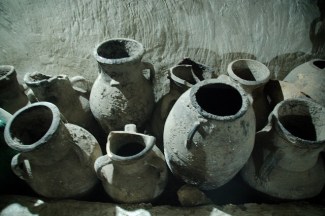
It is not a memory problem, because there are many things that I have a hard time forgetting. Those are usually my failures. I can be haunted by the ways I have let others down, or been a disappointment. I am particularly plagued, at times, by past sins. It is during those times that I am encouraged by the way God’s memory works. While He is omniscient, He chooses to forget our sins and refuses to forget our accomplishments.

“For I will be merciful to their unrighteousness, and their sins and their lawless deeds I will remember no more.” Hebrews 8:12

When we are plagued with a failure from the past, it is important to remember that it is not the Lord who is bringing it to mind. When that sin was committed, the blood of Christ had already made payment for it. Our Savior already paid the price, carried the punishment, and removed the sin, as far as the East is from the West; drowning it in the depths of the sea. There is someone who loves to bring up the past, his name is Satan, and one of his titles is the Accuser of the Brethren. Scripture tells us he lives to bring accusation against us for our failures. Since God refuses to listen to the accusations, he has to find another audience; that audience is usually the sinner. I don’t know how much time he spends trying to convince others of my unworthiness, but I know he expends a tremendous amount of energy on me. During those times I am so thankful that I can cry out with the Psalmist “Oh, do not remember former iniquities against us! Let Your tender mercies come speedily to meet us, . . .”

If you are struggling with a past failure, whether it ended ten years ago or ten minutes ago, the solution is the same. Confess your sin and receive the complete and total pardon that Christ offers through His shed blood. Do not dwell on your failure, but on His mercy. Instead of playing back that event over and over in your mind, use your thoughts to recall the cross. Think back to His love for you, that was displayed as He gave His life to pardon your sin. Allow His blood and love to wash you clean and restore your strength.

Pastor Jim

Empty Jars 

2 Kings 4:6
“Now it came to pass, when the vessels were full, that she said to her son, ‘Bring me another vessel.’ And he said to her, ‘There is not another vessel.’ So the oil ceased.”

Living conditions in Israel had become very difficult; the nation was constantly at war with its enemies, years of drought had created wide spread famine, and morality was in decline. These things affected the living condition of everyone, regardless of their social status. In the story before us, we are introduced to a poor widow who is facing starvation. Without giving details, we learn that her husband, a godly man, had died and she and her sons were on their last leg. All her resources were gone and the creditors were at the door. In her distress, she sought counsel from Elisha who asked a simple question, “what do you have?” To which she replied, the only thing left in the house was a jar of oil. Elisha went on to instruct her to borrow vessels from her neighbors and fill them with oil from the jar. When she did, they found that the oil poured as long as their was an empty vessel to put it in. I think there are at least two valuable applications from this passage.

The first is obvious. This is a story which illustrates how God provides for His people. Long before this, Abraham referred to God as YHWH-Jirah, the Lord our Provider. This unnamed woman found God to be the one who could meet her needs when all seemed lost. We can take comfort in knowing, no matter what our need, we have a God who cares for us and has the resources to provide. I am always blessed when I hear of a child of God who chooses to trust in the promises of God, for they are the ones who see the miraculous hand of God providing for them.

The second may not seem as obvious, but is equally as striking. We read the oil flowed as long as an empty vessel was provided. Oil is often used symbolically in Scripture to represent the work of the Spirit. In the Old Testament, it was oil that was used to anoint prophets, priest, and kings, and in the New Testament oil is used to anoint the sick. In this story, what was required to have the oil flow was an empty vessel. It did not matter what the vessel had previously been used for, it did not matter what size, shape, or color the vessel was, the only thing that mattered was that it was empty and available. When it comes to Christian service, we are all dependent upon the work of the Holy Spirit. Nothing in the kingdom of God can be accomplished in the energies of the flesh. That being said, if we want to be used by God, we need to be empty and available. Some of the things we must be empty of are private sins, pride, excuses, prejudice, and unwillingness to do the lowest of tasks.

This woman and her sons saw a remarkable work of God, and when it came to an end, I suggest that their only regret was that they did not gather more jars.

Pastor Jim


Redirected 

2 Kings 3:7
“…And he said, ‘I will go up; I am as you are, my people as your people, my horses as your horses.’”

Jehoshaphat made the same mistake we all make, he made a decision without first consulting the will of God. His decision seemed, on the surface, to be a wise one. The king of Moab was threatening Israel, and if not stopped, it would not be long before he was a threat to Judah. It seemed, joining forces with Israel to attack Moab was the right thing to do. Soon it became apparent, the Lord was not behind their endeavor. After seven days of travel through the desert, the armies arrived, only to find the waters had dried up. In the heat of the desert, they found themselves seven days away from water. Without a miracle, the armies would perish before ever stepping onto the battlefield.

It is here, the story becomes an example for us. Rather than sulking in the misery of his condition, or over his failure to consult the Lord, Jehoshaphat trusted in the mercies of God, and made the decision to seek Him once again. He first asked for a prophet of the Lord, who knew the Word of the Lord, and would give him godly counsel. Second, we read that the Prophet Elisha arrived and called for a musician. In a time of great need, the prophet took time to worship. Finally, Jehoshaphat did as he was instructed. Although digging numerous shallow holes in the desert seemed to be preparing more for death than life, Jehoshaphat trusted the Word of the Lord and put it into practice.

I cannot help but note, when we find ourselves in difficulty, we need to go to a place where we can worship and hear from the Word of the Lord. That can happen anywhere, but is most common in the church. Instead of letting our difficulties push us away from the Lord, we should allow them to draw us near unto Him.

Pastor Jim

Has God Forgotten?

Psalm 77:7-9
Will the Lord cast off forever?
And will He be favorable no more?
Has His mercy ceased forever?
Has His promise failed forevermore?
Has God forgotten to be gracious?
Has He in anger shut up His tender mercies?
Selah”

If these questions were posed to us on a theology test, we would all answer “No, no, six times no.” We know that He promises:

Hebrews 13:5 “…For He Himself has said, ‘I will never leave you nor forsake you.’”

Lamentations 3:22-23 “Through the Lord’s mercies we are not consumed, because His compassions fail not. They are new every morning.”


Mark 13:31 “Heaven and earth will pass away, but My words will by no means pass away.”

Ephesians 2:7 “. . . that in the ages to come He might show the exceeding riches of His grace in His kindness toward us in Christ Jesus.”

His presence, mercy, promises, and grace are eternal. They will never change, wear out, or fail. No matter what our condition, as turbulent as it may seem, the promises of God are sure and steadfast. He will never change. But these questions are not posed as a quiz for the Bible student, but out of the difficulties the Psalmist is facing. We are not privy to the details that caused his condition, but by his own admission, his soul refuses comfort. It is quite common in times like that, to question the promises of God. When the tides of trial swell up against us, and we begin to go downward in sorrow, it can seem as though the promises of God have failed.

The Psalmist does more than state the problem, he also provides the solution.

Psalm 77:11 “I will remember the works of the Lord; Surely I will remember Your wonders of old.”

His trials had robbed him of sleep, but rather than letting worry consume him, he began to recall the mighty works of the Lord. He seems to have called to memory the Red Sea crossing. Thinking back to those who were boxed in, surrounded by mountains, armies, and the waters, it looked as if there was no hope. The promise of a land flowing with milk and honey seemed to be impossible, and the death of a nation imminent. That is, until the Lord showed up and meted out His promise to His people. The Psalmist was not a participant in that event, but since faith comes by hearing the Word of God, his strength was revived by calling to mind the faithfulness of God.

In your trial, don’t be consumed in mind by the storm you are facing, but rather flood your mind with stories of His faithfulness, and watch Him revive your strength as you await His deliverance.

Pastor Jim


Where Is He? 

2 Kings 2:14
“Where is the Lord God of Elijah?”

Looking back, we see that the ministry of Elijah was remarkable. He came out of obscurity, and was powerfully used as the voice of God for a nation. His ministry impacted kings, and stirred revival in a morally collapsing Israel. As he aged, the world knew it was losing one of the greatest men who ever walked its soil.

Elijah had taken the time to invest in a younger man named Elisha, who no doubt, would be filled with emotion as he watched his mentor pass through the heavens. What would happen to him? What would happen to Israel? Was there any hope for this falling nation? It is in this situation that Elisha speaks, and his words reveal to us the ways of God. “Where is the Lord God of Elijah?” Elisha realized that the success behind the ministry of Elijah was his Lord; so the cry of his heart was for more of God. As Elisha made his way back to the other prophets, they saw something in him that had not been as noticeable before, “The Spirit of Elijah rests on Elisha”.

If the work of God is going to continue in our day, as it has in the past, we need the God of Elijah. If we are going to experience revival that transforms lives and turn the course of a town, city, county or nation, we need the Spirit of Elijah. If we are going to see our families impacted, and our children walking with Christ, we need the God of Elijah. When Elisha was asked what he wanted, (an open ended question, which would reveal the depths of his heart), he replied “Let a double portion of the Spirit be upon me.”

What does your heart cry for? If you could have anything, what would it be? It is time we take a page from the book of Elisha and cry for the Spirit of God upon us, and a work of God around us.

Pastor Jim


Greatness 

Psalm 75:6-7
“For exaltation comes neither from the east nor from the west nor from the south. But God is the Judge: He puts down one, and exalts another.”

Things in the kingdom of God run very differently than they do in the kingdoms of men. This is particularly true of exaltation. The word exalted means “to raise in rank or power, to be elevated or lifted above.” What exaltation is, and how to achieve it, are different in God’s Kingdom.

Jesus declared, “You know that the rulers of the Gentiles lord it over them, and those who are great exercise authority over them. Yet it shall not be so among you; but whoever desires to become great among you, let him be your servant. And whoever desires to be first among you, let him be your slave” Matthew 20:25-27

The greatest in the Kingdom of Heaven is the one who serves. That does not mean if we serve we will be exalted to a place above serving, but when we serve, we are in the highest place. Servanthood is not a means to greatness, it is greatness. Paul wrote to the Philippians that we should, “do nothing out of selfish ambition or conceit, but with lowliness of mind we should esteem others higher than ourselves” (Philippians 2:3). One of the driving factors behind selfish ambition is a failure to recognize that exaltation comes from the Lord. We see others push their way to the front and we think the only way to get ahead is to push and push hard.

Jacob was a man who struggled to understand that exaltation comes from the Lord. At birth, he was given promises that he would be exalted, and would inherit the promises of his father Abraham. Instead of walking in the ways of the Lord, and trusting in the promises of God, Jacob spent his life pushing to the front. It was not until he surrendered to the ways of God that he benefitted from the promises.

Instead of striving, pushing, manipulating, and worrying, why not sit quietly before the Lord, laying your needs before Him. When we learn to humble ourselves, then we will find true exaltation.

Pastor Jim


What’s It Worth

1 Kings 21:20
“I have found you, because you have sold yourself to do evil in the sight of the Lord”

This is certainly not the only record of Ahab’s sin. He was a man who long ago had given up on any desire to live a life that honors the Lord. This passage does however illustrate, quite strongly, the question asked by Jesus, when He said, “What will a man give in exchange for his soul?” (Matthew 16:24)

We all know we will never gain the whole world. A few have tried, but none have succeeded. Many, however, have traded eternity for some temporal pleasure or possession. Like Esau, who gave his birth right for a bowl of soup, many give up eternity for something that lasts only a moment. For Ahab, it was a field. He wanted a garden he could enjoy from his palace window. There was however, a problem; the land was owned by another man. Instead of letting it go, he plotted to take the field by force. For a plot of ground, he took a life. In doing so, he revealed how cheaply he valued his own life.

The Bible tells us redemption of the soul is costly; our actual value is infinite. Peter explains we were redeemed with the precious blood of Christ (1 Peter 1:18-19), because no amount of silver or gold would do. Instead of sitting on the sale rack, selling yourself off to participate in a passing sinful experience, remember you are worth much more than that, and are a blood-bought child of the Lord.

Pastor Jim


Slippery Slope 

Psalm 73:2
But as for me, my feet had almost stumbled; my steps had nearly slipped.”

This psalm is the personal testimony of a man who almost fell away from the Lord. When he speaks of slipping, he is not talking about a little slip, but rather about throwing in the towel, and giving up on following the Lord.

His condition began when he bought into the lies of the devil. Jesus exposed who Satan really is when He described him as the father of lies. His lies are always the same. He brings into question the goodness of God, and makes sin look like something it is not. He did it to Eve, when he convinced her that God forbid the fruit in order to keep something good from her; persuading her that the fruit was the secret to really enjoying life. He did the same with the Psalmist, when he convinced him that God was keeping good from him, and those who rejected the Lord, were the ones who were gaining in life. From this skewed perspective, he describes the ungodly, “Behold, these are the ungodly, who are always at ease; they increase in riches” (Psalm 73:12).  He also spoke of the sinner as having no pain in death, great strength, no sicknesses, and living in abundant riches; all of which was and is completely untrue.

When the devil makes us think God is keeping good from us, he can also convince us that life is better away from the Lord; that is when we start to make compromises. We allow things into our lives that we had once laid down at the cross. Those things do give an immediate sense of pleasure, but like all sin, the pleasure is soon gone. We are then left ensnared in something that is robbing us of the abundant life Jesus provides. As scary as this may be, there is a solution.

The Psalmist declares, “Truly God is good to Israel, to such as are pure in heart” (Psalms 73:1). He was rescued when he remembered the goodness of God. When he took his eyes off others, and put them back upon the Lord, he was reminded of the character of God.

Just as it is in the nature of the devil to lie, it is the nature of God to give good things to His children. James reminds us that every good and perfect gift comes from God (James 1:17). Because He is good, He can only do what is good. In fact, the term ‘God’ is derived from an old word meaning ‘good’. Paul explained, having given us His only Son, He will freely give us all things (Romans 8:32). God will hold back no good thing from His children. If there is something I desire, and do not have, it may simply be that having it would not be good for me. It is so easy to lose perspective and begin to see the world through the eyes of the Psalmist. Thankfully, he explains what led to the lies being uncovered.

He declares, “When I thought how to understand this, it was too painful for me— Until I went into the sanctuary of God; then I understood their end.” Psalms 73:16-17

The sanctuary was the meeting place with God, where the people of God gathered, and the truth of God was declared. If you are struggling, tempted to go back to the things of the world, rather than forward in your relationship with the Lord, get to the sanctuary. Get around the people of God, where the Word of God is being declared, and let Him remind you of His goodness.

Pastor Jim