Psalm 133:1
“Behold, how good and how pleasant it is for brethren to dwell together in unity!”
 The psalmist is calling us to action. He desperately wants our attention, and calls us to look at the brethren dwelling together in unity. The unity he was speaking of was a united desire to seek after and worship Jehovah. This Psalm was one of the many songs the travelers to Jerusalem would sing as they made their way up the mountain to celebrate the feasts of the Lord. People from all over Israel congregated together with the unified purpose of devoting themselves more wholeheartedly to the Lord. The Psalmist declares, it is a good and pleasant thing, something worthy of our attention. This uniting of the brethren is good and pleasant for many reasons; not the least of which is the result it brings. David declares, it is like the anointing oil that was poured out upon the priests.
Shortly after being delivered from Egypt, God established the worship practices for the congregation of Israel. In order to ensure their spiritual development, He set up the descendants of Aaron as the priesthood. They would be responsible for much of the labor involved in making the corporate worship possible. The priests were clothed in special garments (a picture of being clothed in righteousness), then the sacrificial blood of the lamb was placed upon them for cleansing, and finally the anointing oil was poured on them. The blood serves as a type of Christ being crucified for the cleansing of our sin, and the oil a type of the Spirit of God, poured upon us, and equipping us for service. David describes the oil being poured on Aaron’s head and dripping down upon his beard and garments. It is a picture of the flowing of the Spirit upon those who have gathered together.
There is something special, something holy and divine, when we gather for corporate worship. Paul spoke of the body ministering to itself in love. As each of us are filled with the Spirit of God, and gather to seek the face of God, an atmosphere develops where the Spirit is flowing. How many times have you been met by God in the midst of worship? It is because the anointing oil is running off the beard of the worship leader. How many times have you been ministered to after service while speaking with another, and they begin to share things with you that encourage, edify and challenge you? It is because the oil is dripping from their beard. How many times have you been sitting in the service and felt as though the pastor was speaking directly to you? It almost seems as though the room has emptied and you are alone, hearing directly from God’s Word. It is because the oil is dripping from his beard. It is possible for the oil to drip from yours as well. When you gather next with the saints, don’t come simply to receive, come ready to give. As you walk into the fellowship, be praying that God will bring you face to face with someone to whom you will be able to minister. Few things are more exciting than knowing the Spirit of God has worked through you in the life of another.
Pastor Jim
 Once the Temple was erected and the altar and priesthood put in place, Solomon explained the purpose of the Temple. It was designed as a means for sinful men to have relationship with a holy God. As Solomon prayed, he revealed the great benefits of the Temple. We might say, 2Chronicles 6 gives us the doctrine of the Temple. It became clear, no matter what the cause, turning to the Lord was the cure. If the people were suffering loss, pain, sorrow, sickness, or defeat, they could turn toward the Temple, pray, and find restoration with the Lord. Since the Temple provided access to God, it was the means to receiving mercy from the Lord.
 This psalm is referring to a time when King David took a spiritual inventory of his life. His days of fleeing from Saul and living in caves were no more than a memory; he now dwelt within the palace. The Philistines, who had plagued the nation for so long, had been conquered, and Israel was at peace with the surrounding nations. As David began to muse over his life, he saw an area of inconsistency; while he dwelt in a palace, the ark of God still resided in a tent.
 The primary purpose of the Temple was to serve as a place where God and man could meet, however, it also serves as an illustration of the our salvation. Each of the furnishing depicts an aspect of our relationship with God. We can walk through the courts of the Temple and be reminded of the main elements of our salvation.
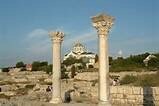 In addition to building the Temple, Solomon had two large pillars erected, which he named Jachin and Boaz. Jachin means to establish and Boaz means strength. Whenever a person approached the Temple, they would see these two massive pillars. A reminder that the nation, the kingdom, the Temple, and each of our individual lives, are established and strengthened by God.
 The Psalmist is rejoicing in the pardon the Lord provides. In doing so, he considers what would happen to us if the Lord treated our wrongdoings the way we do. What would happen to us if, instead of forgiving sin, God kept a detailed record of it. Instead of removing it as far as the East is from the West, or casting it into the depths of the sea, He held it close by, to remind us of it each time we struggled or fell.
 Solomon faced a great predicament, he desired to build a temple where God and man could meet, but he realized that all the heavens were too small to contain Him. He knew the dwelling place for God must be grand, but he also knew that no earthly building could ever truly reflect the glory of God. The temple he would build would be a mere shadow of the real glory of God, and was designed to point Israel to the Lord. For generations to come, this building would serve as a place where man worshipped God, and was the focal point of many revivals within the nation. It interests me that this glorious building was the byproduct of a multitude of people investing their many different gifts. In fact, we find thousands of men were hired for the work of quarrying stones alone. Seemingly, innumerable man hours were spent doing nothing more than working with rocks.
 After Solomon ascended to the throne of David, he was gifted by God with everything necessary to become the greatest king the world had ever known. Because of his father’s military campaigns, the nation would experience a time of peace unlike anything they had ever known. The wisdom of Solomon and the wealth of the nation made it seem as though they would have years and years of abiding peace, strength and growth. It seemed as though nothing could stop the nation that had been birthed by God. Tragically, in a few short decades, this nation would go through a heated civil war, dividing the nation, and costing many their lives. Not too much later, this nation would be defeated over and over again by their enemies, until they were finally overthrown and carried captive to Babylon. What happened? What caused the rapid fall of a nation with such promise?
 The Psalmist is describing a scenario common to all of us. There are times, when the hand life deals us is difficult to cope with; sleep is effected, and our minds are tormented. There are many terms that describe this condition, but perhaps the most common is worry. One dictionary defines worry as, “to torment oneself with or suffer from disturbing thoughts; to fret.” I think that is a pretty apt description of worrying; to torment yourself. When we lay in bed unable to sleep, or rise up to pace the floor, filling our minds with what-ifs and worse case scenarios, we are really tormenting ourselves. It is as if we are waterboarding ourselves, and wondering why we are suffering so greatly. The question is not whether we will face things that fill us with dread, concern and anxiety, the question is how we will react. What is the proper response for the child of God when he is faced with things bigger than himself?
 David, and others, invested in the temple at great personal cost. They devoted their time, talents, and treasures to ensure that the house of the Lord was built. Their devotion to this project stemmed from realizing that the work of God would outlast them. David would not live to see the temple, but knew that his investment would impact the nation long after his departure. For years to come, this building would be a place where the Word of God was proclaimed, and commitments to the Lord were made, as each of Israel’s revivals centered around the events that took place at this building.
 Jim Gallagher