1 Corinthians 6:12
“All things are lawful for me, but all things are not helpful. All things are lawful for me, but I will not be brought under the power of any.”
 There are certain things that God’s Word clearly encourages, and other things that are clearly condemned. Earlier in the chapter, Paul gave a list of actions that, if a person is practicing, they “will not inherit the kingdom of heaven.” Among the forbidden acts are fornication, adultery, homosexuality, drunkenness, and extortion. Clearly, Paul is not saying that unlawful things are lawful for him. Instead, he is saying, he is free to practice all things that are not forbidden, but is careful to add that he will not be controlled by them. Paul is giving us a principle by which he lived his life, a principle we would all do well to follow. Hebrews 12:1 warns us to,
“Lay aside every weight, and the sin which so easily ensnares us…”
“Easily ensnaring sins” are sins we are more prone to fall into. For some it is lust, others covetousness, jealousy or envy, while others may struggle with pride or discouragement. We all know what our “easily besetting sins” are. While we all have the same freedoms in Christ, we know if we practice these freedoms, we will fall into sin again.
In order to guard against personal failure, Paul set up a system for success. That system included looking at the grey areas, the things Scripture is silent about, and putting them through a filter. He would ask, “although this is lawful, is it helpful?” When I was a young Christian, I began a practice of asking myself a simple question, “Will doing this help me get to heaven?” I understand we do not earn our way to heaven, but I also understand, there are many things that can trip us up along the way. So, I would examine what I was doing in light of where I was going. Before indulging in the activities so common to our culture, ask yourself if it will help your walk with God, or hinder it.
Some things are so dirty, they must be filtered more than once; so Paul added a second question, “Will practicing this put me under its control?” Jesus died to set us free from the power of sin. One of the great experiences, when a person receives Christ, is the realization that their sin is forgiven, and they no longer have to live under its dominion. That being said, there are many things which will lead us right back under sin’s control.
I once knew a man who had a drug problem, prior to coming to Christ. After months of freedom, he fell again into sin. I asked him what happened, to which he explained, he chose to take a shortcut home that led him by an area where he used to purchase drugs. Before he knew it, he was using again. As a Christian, he was free to drive down whatever road he wanted, but because of his ensnaring sins, if he wanted to succeed, he had to forever avoid that part of town. We all have things which will draw us back into sin. We all must honestly evaluate our lives, if we want to ensure we are not brought back under sin’s power.
What things do you need to remove from your life in order to ensure victory in Christ? Is it time to set aside certain music, TV shows, computer time, or even relationships? Keep in mind, although they may be lawful, they might not be helpful.
Pastor Jim
 The final prophecy from Balaam, regarding Israel, declares God will defeat all their enemies. The nations that surrounded Israel, as well as those who lived within its borders, would be brought under the mighty hand of the Lord.
 Recently, I had the privilege of standing on Tel Megiddo, the ruins of the ancient city of Megiddo. It overlooks, what is often referred to as, the valley of Armageddon. The experience was almost surreal. As I stood there, contemplating the events described in Revelation 16, I could see smoke rising in the distance, from tires being burned in protest to the fighting in Gaza and southern Israel. The silence of the moment was suddenly interrupted as the entire valley was filled with the roar of an Israeli fighter jet flying past. It was not difficult to imagine what the scene will be like when men gather in one last effort to eradicate God. Hundreds of years before Revelation was written, the Bible prophesied of this event.
 Ezekiel takes us on a fast and furious ride into the future. He describes a time when a coalition of nations will come against Israel in a final attempt to wipe them off the face of the planet. The players in this coalition will come from the far north, perhaps modern Russia, and will include Iran and North Africa. Ezekiel explains that although Israel is greatly outnumbered and ill prepared for such an onslaught, God will intervene, protect them, and bring about a devastating defeat on their enemies. This prophecy is remarkable for a number of reasons.
 Often, when someone is attempting to convince us to do something we are not sure we want to do, a little voice softly speaks in the back of our mind asking simply, “What’s in it for me?” We want to know if we make a commitment, what we will get in return. If you are struggling to make a decision to commit to Christ, perhaps it would help if you took a few minutes to consider what you will get out of the deal. Ezekiel promises three benefits that will not be found anywhere else.
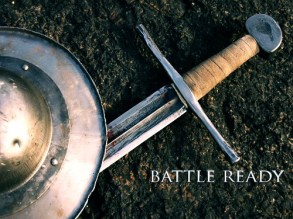 As the forces of Egypt prepared to go to battle with Babylon, Jeremiah describes the battle scene. He paints a picture of soldiers with weapons in hand and clad with armor. His battle scene has been repeated countless times over in human history, as one force prepares to defend itself against another. I cannot help but notice a few similarities to the battle we face as believers.
 There are certain things that God’s Word clearly encourages, and other things that are clearly condemned. Earlier in the chapter, Paul gave a list of actions that, if a person is practicing, they “will not inherit the kingdom of heaven.” Among the forbidden acts are fornication, adultery, homosexuality, drunkenness, and extortion. Clearly, Paul is not saying that unlawful things are lawful for him. Instead, he is saying, he is free to practice all things that are not forbidden, but is careful to add that he will not be controlled by them. Paul is giving us a principle by which he lived his life, a principle we would all do well to follow. Hebrews 12:1 warns us to,
 As we read through the Word, it is important to remember the chapter breaks were added later to make it easier to find specific passages. At times, they can create a break in thought not intended by the author. This often causes us to miss something vital in the text. The thoughts of Romans 8 are an obvious conclusion of what Paul declared in Chapter 7. He referred to himself as carnal, a word meaning worldly; and wretched, meaning deeply afflicted, or extremely bad. The reason for his dire view is that he found himself incapable of living a proper Christian life. The Word of God clearly expresses the kind of life which pleases God, and the particular behaviors, thoughts, desires and actions that are regarded as sinful. By his own admission, Paul knew what was right, but lacked the power to accomplish these things. He writes,
 Sometimes, worship can have a tired feel to it because we are singing the same songs over and over again. It is so refreshing when the worship team brings a new song; partly because new songs come out of new experiences with the Lord. I spent many weeks of my early years of ministry serving at a Christian camp. Those days were filled with lessons I still benefit from today. One afternoon, while sitting by the pool, I struck up a conversation with the worship leaders wife. While her children were in the pool, she was relaxing in the sun, but her husband was noticeably absent. I will never forget her response when I asked where he was, she said, “He is taking some time alone with Jesus because that is where the songs come from.” He realized, in order to have a new song to sing, he needed a fresh experience with the Lord. Anything done over and over again can become tedious or stale, even our relationship with the Lord. We might wake up each day, read a chapter or two, get the kids up, make breakfast, clean up, make lunch, clean up, make dinner, clean up, run out of energy, go to bed, and start it all over again the next day. Our days become routine, and soon our relationship with the Lord has grown stale. How can we have new experiences with Jesus that result in new songs of praise?
 Jim Gallagher