Joshua 21:45
“Not a word failed of any good thing which the Lord had spoken to the house of Israel. All came to pass.”
 A lot of my childhood was spent on the ocean. From as far back as I can remember, my dad had a boat and we would spend the summers taking vacations to Catalina Island. It was a great way to grow up. We would spend day after day on the boat, fishing, swimming, diving and exploring. When the vacation finally came to an end and we made the 27 mile journey back to the mainland, I experienced an interesting sensation. After so much time rocking back and forth on the boat, the ground seemed especially solid.
Life can seem like a journey at sea. We seem to get hit by unexpected waves, and the ground we are standing on is moving. If we are going to get through turbulent times, we need to have some solid ground to stand on.
After a lifetime of following the Lord through some very turbulent waters, Joshua confidently exclaimed that not a single promise of God had ever failed him. No matter what the obstacle, Joshua had learned by experience, the promises of God are like a solid rock upon which he could stand.
I have found, for every experience of life, there is a promise to cling to. When facing the challenges of life, it is vital that the child of God look into the Word, find the appropriate promises, and then hide in them, like a bunker from the storms of life.
Some of the promises which have been particularly encouraging to me include:
2 Timothy 1:7
“For God has not given us a spirit of fear, but of power and of love and of a sound mind.”
Philippians 4:7
“. . . and the peace of God, which surpasses all understanding, will guard your hearts and minds through Christ Jesus.”
Hebrews 13:5
“Let your conduct be without covetousness; be content with such things as you have. For He Himself has said, ‘I will never leave you nor forsake you.’”
Isaiah 54:17
“‘No weapon formed against you shall prosper,
And every tongue which rises against you in judgment you shall condemn. This is the heritage of the servants of the Lord, and their righteousness is from Me’, says the Lord.”
Jeremiah 29:11
“For I know the thoughts that I think toward you, says the Lord, thoughts of peace and not of evil, to give you a future and a hope.”
2 Corinthians 3:5-6
“Not that we are sufficient of ourselves to think of anything as being from ourselves, but our sufficiency is from God, who also made us sufficient as ministers of the new covenant, not of the letter but of the Spirit; for the letter kills, but the Spirit gives life.”
In response to this blog a good friend sent me the following note.
“When I was diagnosed with an illness, a close friend gave me a list of “promise” verses. Honestly, at the time, I read through them and tucked them away, but that was about it. In the last 3 years, I can’t tell you how many times I pulled out that list and allowed the Word of God to comfort, strengthen and encourage me.
To your list I would add Isaiah 41:10, Psalm 61:1-4, Psalm 55:22 and so many more.”
Praying His Word will be like a safe harbor, and like solid ground, in the midst of the storms of life.
Pastor Jim
 It is not always the longest, or even the most creative works, that become the most well known. I am not a poet, and cannot speak to the artistic side of things, but I doubt whether any poem is as well known as “Roses are red and violets are blue…” Sometimes, the simplicity of things is exactly what is most needed. In a songbook filled with some of the most elaborate and beautiful expressions of praise, we find a simple song, consisting of only two short verses. It is the brevity of this song that magnifies its content. We find the Psalmist emphasizing two things that make God worthy of the praise of all the nations. He states, God is kind, and His word is true.
 As I child, I remember watching a movie where a group of people were trying to escape a town. Whatever direction they took, or road they chose, they always arrived at the same destination. They continued trying until they found the one way out. According to Jesus, life is like that. He stated that life really only consists of two roads. One is wide and crowded, but leads away from God. The other is narrow and difficult, and sadly, often ignored, but results in eternal life (Matthew 7:13-14).
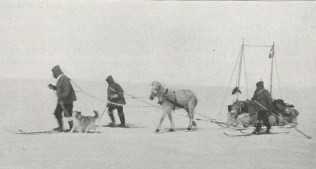 This passage gives some very interesting insight into leadership. David searched for men of faith who would be willing to take risks for the kingdom. Abishai rose to the challenge and joined David on a dangerous mission to infiltrate the camp of the king. Under the cover of darkness, they made their way past the guards, and all the way to Saul. It was at this point that Abishai suggest they take the opportunity to kill the king, and bring an end to the difficulties he has caused. The exchange between David and Abishai is priceless in the lessons it illustrates.
 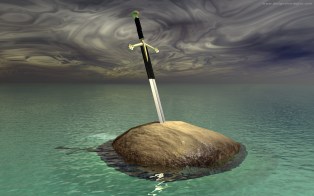 Saul’s rage forced David to flee for his life. He left home and family in such a hurry that he took almost nothing with him. When he arrived in Nob, he immediately searched for both food and weapons. Since he arrived at the home of the priest, and not a military compound, weapons were hard to come by. The only available sword was the one David had taken from Goliath, and it probably sat in a display case.
  The first verse of the Bible introduces us to its main character: God. This verse is not a philosophical statement, but an axiom upon which all other statements will be based. As we venture through the Bible together, we will read of the great exploits of God. We will hear of Him speaking to men, parting seas, knocking down walls, vanquishing enemies, stopping time, raising the dead, and providing salvation for mankind. If this first statement is true, if God spoke, and the worlds were formed, then we should have no problem believing there is nothing He cannot do. If we accept this first sentence of Scripture, we will have no problem accepting all the miracles that follow. We will have no problem accepting that there is nothing too hard for God, and we will live with an expectation of Him accomplishing great things in the lives of all who live surrendered to Him.
 Jim Gallagher