1 Kings 22:7-8
“And Jehoshaphat said, ‘Is there not still a prophet of the Lord here, that we may inquire of Him?’So the king of Israel said to Jehoshaphat, ‘There is still one man, Micaiah the son of Imlah, by whom we may inquire of the Lord; but I hate him, because he does not prophesy good concerning me, but evil.’ And Jehoshaphat said, ‘Let not the king say such things!’”
 Syrian forces occupied land that belonged to Israel and Ahab was determined to get it back. When Jehoshaphat, king of Judah, arrived for a visit, Ahab seized the opportunity to enlist Judah as an ally in his campaign against Syria. Not wanting to bring his people into an unnecessary war, Jehoshaphat wanted to take a moment to hear from the Lord, so he asked to hear from a prophet. Ahab paraded a host of prophets before the king who all declared victory in battle. The problem was, they were not prophets of God, but were a variety of fetish priests who worshiped idols. Jehoshaphat objected to their counsel and sought to hear the Word of God. It is here where the true heart of Ahab is revealed. He declares,
“There is still one man, Micaiah the son of Imlah, by whom we may inquire of the Lord; but I hate him, because he does not prophesy good concerning me, but evil.”
The king of Israel had no interest in hearing the truth. In fact, as the story unfolds, we find that Micaiah will be thrown in prison for speaking the word of God. Ahab’s desire was to silence anyone who did not declare the truth as he saw it.
What a sad parallel to much of what we see happening in our world today. We have accepted a worldview where tolerance is the highest form of morality. We are required to accept the choices people make as though every choice was equal, and those who would dare speak out against certain behaviors as immoral, are immediately silenced. The approach of silencing the word of God was not good for Ahab and Israel, and it will not turn out positively for us either.
Proverbs 14:34 “Righteousness exalts a nation, but sin is a reproach to any people.”
Pastor Jim
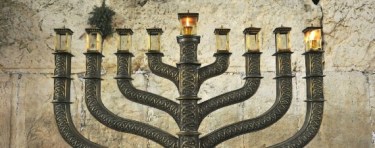 Daniel describes a very difficult time in Israel. Constant battles between the Seleucid and Ptolemian empires have wreaked havoc on the people of God. They have been an occupied territory for several years, and now face the threat of annihilation, as the Seleucid king, Antiochus IV, has set his attention on destroying Israel. He outlawed the Jewish religion, ordered the Jews to worship Greek gods. In 168 B.C., his soldiers descended upon Jerusalem, massacred thousands of people, burned the Holy Scriptures, and desecrated the Temple by erecting an altar to Zeus, and sacrificing pigs on the altar. It is with this dark, and seemingly hopeless, backdrop that Daniel declares, “the people who know their God will be strong and carry out great exploits.” In other words, the darker the backdrop, the greater opportunity for the child of God to shine.
 Beginning with the eighteenth verse of chapter one, Paul is developing his case against humanity. He states, because of the inner witness of the conscience, and the outer witness of creation, men have no excuse for atheism, agnosticism, or idolatry. He makes it clear, unbelief is primarily driven, not by lack of evidence of the divine, but out of a desire to practice things God forbids. He speaks of those who reject the truth in order to practice unrighteousness.
 Pharaoh thought the problem with his nation was the believers, and as a result, he attempted to suppress or destroy them at all costs. What he failed to see was, it was his attack upon God, His word, and His people, that actually destroyed his nation. What was once a powerful empire, and the delight of the nations, was being weakened by rebellion against the ways of God. Egypt is not an anomaly. The same is true of any nation that seeks to remove the influence of God.
 Jim Gallagher