Jeremiah 3:3
“Therefore the showers have been withheld, And there has been no latter rain.”
 Difficulties in life are not always the result of personal sin, but sometimes they are. Sometimes our struggles could be alleviated by getting things right with God. Haggai wrote, the people in his day were ignoring the Lord and their relationship with Him, and as a result he wrote, “You have sown much, and bring in little; You eat, but do not have enough; You drink, but you are not filled with drink; You clothe yourselves, but no one is warm; And he who earns wages, Earns wages to put into a bag with holes. ‘Thus says the LORD of hosts’: “Consider your ways!'”” (Haggai 1:6&7) It is possible that the hardships you are enduring are not actually trials or even the natural results of living in a fallen world. It is possible that you are facing the consequences of certain behaviors, or even the chastening of God. The solution to alleviate those types of difficulties is through what the Bible calls repentance; a word meaning to change both your mind and your direction.
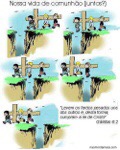
A few years ago, I was involved in taking a group of high school students to the mountains for a retreat. We decided to take them on a hike that led to a deep water creek. As we ventured down the path, we realized that it was much more difficult and dangerous than we expected. Instead of walking, we were forced to sit down and “scooch” our way down the hill. Once we finally reached the bottom, we saw some local teenagers who informed us that we had taken the wrong path. They pointed us to a much easier and safer way in and out.
Perhaps the solution, for the troubles you are facing, is to get on a different path. Instead of living like those in Jeremiah’s day, who “followed the dictates of their hearts” (which is a fancy way of saying they did whatever they wanted), we need to turn to Christ and live pleasing to Him. Don’t take another step down the road of self will. Stop, surrender to Jesus, and start following Him.
Pastor Jim
 The church in Crete was like most churches. It had a pastor, who was seeking to minister to the spiritual needs of the people, while facing many struggles from within and without. It had members who were growing in the Lord and seeking to serve Him, and members whose growth was stunted, due to a variety of lingering and tolerated personal sins. Then there were others, who only pretended to be Christians. Paul describes this group as ones who claim to be followers of Christ, yet they fail to really follow Him.
 Isaiah watched as righteousness ceased in the land. Those who lived their lives according to the standards of the Bible were looked down upon and even persecuted. Rightoeusness was seen as a plague, and the righteous were treated with contempt.
 Isaiah prophesied of a day when a nation would come against Judah, and the Lord would defend His people. This happened at the end of the 8th Century BC when the Assyrian forces besieged Jerusalem, and were supernaturally defeated. In light of this, Isaiah calls people to return to the Lord. I find it interesting, that he couples coming to the Lord, with the laying aside of idols.
 Sin is a killer. It is guilty of taking the spiritual life from all of us. God warned Adam that if he disobeyed the command of God and partook of what was forbidden, he would die. While many years transpired before his physical death, the moment Adam sinned, he experienced spiritual death, or separation from God. Since we are sons and daughters of Adam, we have all joined him in his sin and its consequences. The remedy for that condition is faith in Christ. The moment we put our trust in the work of Christ on the cross, our sins are forgiven, and we who were dead in sin, come alive to God. Jesus called that being “born again.” Paul calls it being raised with Christ. Since this is such a miraculous event, it should have tremendous impact on the way we live our lives. Paul goes on to give a series of exhortations, all predicated on the fact that, we who were dead have been made alive.
 Isaiah 6 is perhaps most well known for what Isaiah saw. He records, in the year of King Uzziah’s death, he had a vision of the throne of God. He describes how he saw the Lord enthroned and surrounded by angelic beings, who ever live to give Him praise. What perhaps, is sometimes missed, is what Isaiah heard. He records hearing the voice of God in two distinct ways.
 Sheol is an Old Testament word for the abode of the wicked in death. The New Testament uses the words “Hades,” “Tartarus,” and “Gehenna.” Although different words are employed, they all refer to the final resting place for those who reject Christ, and as a result die in their sins. Isaiah gives a sobering picture when he writes, “Sheol has enlarged itself…” Suggesting that the boundaries of hell are expanding because of the unwillingness of people to respond to the call of God and the cries of the prophet. There are a few things we need to keep in mind.
 “The Branch of the Lord” is a messianic title, meaning it is a description of Jesus our Savior. This phrase is used often by the prophets to speak of the work of Christ.
 If it were possible to travel back to the time of Isaiah, I think we would be surprised by how religious the people were. At the temple in Jerusalem, sacrifices were being offered and the priests were busy about the work of the Lord. The hilltops throughout the land were laden with altars, and homes were filled with religious images. Prayer was perhaps at an all time high, and religious music filled the air waves. To an outside observer, it might seem that all was right in Israel. The problem was, although the people were passionately religious, they were not in a relationship with God. Isaiah wrote to explain the problem was with sin, and that religious activity is not the cure.
 Jim Gallagher