Nahum 2:1
“He who scatters has come up before your face. Man the fort! Watch the road! Strengthen your flanks! Fortify your power mightily.”
 Nahum wrote to warn Assyria of the destruction that was coming upon them, because of their violent and immoral rebellion against God, His word, and His ways. He foretold of a time when the ancient city of Nineveh would be razed to the ground. Like Jonah before him, his message reveals the mercy of God, as the people are warned in advance and told how to be prepared. They are told to man the fort, watch the road and fortify the city. This is good advice no matter what enemy we are facing. In ancient times, cities were defended by being surrounded by high walls. The less defensive the terrain, the higher the walls had to be. If a city sat on a hilltop surrounded by steep cliffs, it’s walls did not have to be nearly as high as a city situated in the plains.
In many ways, the believer is like an ancient city. The more we become like Christ, the higher a target we become to the enemy of our souls, and the more likely we are to be under his attack. Every Christian who has stepped into ministry has experienced this. If you sign up for a mission trip, join the prayer team, or become a children’s ministry volunteer, you know this will come with increased opposition, temptation and difficulty. The key is not to retreat from service, but to build better defenses. We need to know what our weaknesses are if we are going to successfully prepare for an attack, and we need to have a defense system set in place. Often, this is done by making it more and more difficult to sin. For example, if you struggle with worry, then it is a good idea to build a defense system that makes worrying more difficult. This can be done by focusing less on the things that cause concern and spending time meditating in the promises of God. If I were prescribing medication to the worrier, it would be to take a healthy does of the promises of Jesus.
Whatever your greatest area of spiritual weakness might be, the solution is to build a good defense system against it.
Pastor Jim
 God has chosen to reveal the plan of salvation through the foolishness of preaching. Nowhere, is that better illustrated than in the story of Jonah. This reluctant preacher delivered a message that turned a nation toward the Lord. As the king heard this message, his heart was stirred to turn from his wicked ways and begin to follow Jehovah. In his desperation, he asked a deeply profound question. Is it possible to know for sure that our sins have been forgiven and we have been set free from the judgment of God?
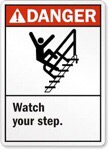
 While Jesus hung on the cross paying for the sins of humanity, paving the way for man to have fellowship with God, and giving entrance to heaven, we are told a group of soldiers were gambling for His clothing. The most important event in the history of humanity is unfolding, and these men are playing games at the foot of the cross. Sadly, their behavior is all too common among people today. Many, instead of taking seriously their need for Christ, are playing around with sin and treating it like sport. Even among believers this behavior is all too familiar. There are many Christians who seem to live for the adrenaline rush they receive, by getting as close to sin as possible, while not falling completely into it. That, my friend, is a dangerous game. Solomon wrote,
 This chapter is given entirely as a warning against the danger of falling into sexual sin. It is written as a letter from a father to his son, pleading with him to avoid the things that will lead to sin. While this sin is perhaps more common among young men, it is a sin we all must avoid. The principles found in this chapter will apply to guarding against all sin. To grasp the danger being warned against, look at what happened to this young man who turns aside from the Lord for sinful pleasure.
 Growing up, one of my favorite TV shows was Sherlock Holmes. As most of us know, he was a detective from London who used his keen skill of observation to solve crimes. Often, when he would uncover a clue, he would declare, “It’s elementary my dear Watson.” Which was an underhanded way of stating that what he discovered was obvious to anyone who would take the time to look. Hosea makes a statement that Holmes would find elementary, he declares that if a person builds an altar for sin, he will find it leads him into sin.
 The mercy of God is so great that He not only invites us to come to Him for salvation, but invites us to return to Him if we have wandered. After describing the spiritual condition of the nation, as though they had been involved in spiritual prostitution, God does not cast His people aside, but pleads with them to return and be restored. No matter how far you have wandered and what consequences you are facing, the Lord wants to restore your relationship with Him. He promises to heal what has been torn, and bind up whatever has been stricken.
 At first glance, Hosea’s story seems to be a unique one. He was instructed to marry a woman who was involved in prostitution. We have three choices as to exactly what this means. Either she was currently a prostitute, had been one, or God knew she would become one. My personal opinion is, she had a promiscuous past, but had come to the Lord and been delivered, only to fall back into her previous lifestyle. At this point in the story, her life has been reduced to that of a common slave being sold on the bargain rack.
 As John begins to describe the fall of Babylon the Great, he hears a cry from heaven calling the people of God to come out, and no longer share in its sins. Babylon here is referring to more than a city in modern Iraq, it refers to the world system that is opposed to the ways of God. The call then is for the people of God to leave the ways of the world, to live in step with the ways of God. This is not a one time call, but is repeated time and again within the pages of your Bible. We were saved, not to continue in a destructive lifestyle, practicing the things that Jesus died to free us from, but to live a new life on a higher plain, where we seek in every area of life to bring pleasure to God.
 Often, when someone is attempting to convince us to do something we are not sure we want to do, a little voice softly speaks in the back of our mind asking simply, “What’s in it for me?” We want to know if we make a commitment, what we will get in return. If you are struggling to make a decision to commit to Christ, perhaps it would help if you took a few minutes to consider what you will get out of the deal. Ezekiel promises three benefits that will not be found anywhere else.
 The inhabitants of Mount Sier, a nation south and east of ancient Israel, were about to face the consequences of continually rejecting the grace of God. Ezekiel points out, they would be held accountable for the words they had continually spoken against God. Perhaps the idea is that they had brought accusation after accusation against God, without ever taking the time to examine their own lives. This seems to be very common today. How often have we heard someone accuse God of wrong? Perhaps they are facing some level of personal difficulty, or maybe they are simply reacting to the evils of the world and they cry out, “How can God let this happen?” The statements may vary, but the indictment is the same. They are essentially accusing God of wrongdoing.
 Jim Gallagher