Psalms 78:1-2
“Give ear, O my people, to my law; Incline your ears to the words of my mouth. I will open my mouth in a parable; I will utter dark sayings of old”
 Asaph, Israel’s chief musician during the reign of David, took it upon himself to write a song depicting the history of the nation. His tale is one that magnifies the mercy of God, while revealing the continual unfaithfulness of Israel. Time, and time again, the people turned from the Lord out of fear or desire for things that He had forbidden. He spoke of their experiences in Egypt, when they feared the king more than the Lord, and of their time in the wilderness, when the trials they faced caused them to doubt the provision of God. He told of their time in the Promised Land, when comfort and ease drove them to complacency toward God, and into idolatry. Imagine how the first readers of this psalm might want to go back and make changes to their history, or at least make changes to their personal lives.
Asaph referred to his message as a parable. The idea, of course, is that the psalm has a meaning that sits underneath the surface. Instead of just being a message indicting Israel for their sin, it also serves as an illustration of the life of many believers. We, like Israel, have been redeemed from bondage into a relationship with God. In this relationship, we find ourselves in times of trial or battle, and in times of ease and comfort. If we read the psalm carefully, we can see ourselves in the story, as well as learn from Israel’s mistakes.
What would a psalm read like that told your story? What amazing ways would the mercy of God be reveled as your conversion was told? How would His faithfulness be seen in your daily walk? What changes would you want to make in how you walk with Him, in whatever time you may have left?
Take a few minutes to contemplate your testimony. Perhaps even write it out. Then consider what you will do to ensure that the remaining chapters of your story give glory to God.
Pastor Jim
Questions for Psalm 78
This is the first called the “Historic Psalms”. What a wonderful way to teach the history of the children of Israel.
- The introduction of the history lesson begins. Verse 3 says “we have heard and known, and our fathers have told us.” Are you sharing with your children, friends the things God has done in your life? He wants to do more.
- In verse 4, we read of the wonderful works He has done. What has the Lord done in your life? Where is He leading you?
- Remember, psalms or songs were sung. Not like music of today but a wonderful way to remember history, events in life and who God is. Who is God in your life right now? Read Jeremiah 32:27.
- As you read you will see things like; they still sinned, they tested and provoked, they did not keep His testimonies. Verse 32 says in spite of all that God has done for Israel, they did not believe. You know the end of this story. Trust God in all that you are. Proverbs 3:5-6.
 After seventy years of captivity Israel was allowed to return to the land and begin to rebuild their broken down Temple. Millions had been taken captive and only a fraction returned to get the task started. Even those who returned had become discouraged and had forsaken the work. It is in this setting that Zechariah declares,
 This is one of the greatest and most anticipated prophecies in all Scripture. Going back to the time of Moses, Joshua heard a report that two men had the Spirit fall upon them and they began to prophecy, although they had not come to the Tabernacle to do so. In concern for the people, Joshua exhorted Moses to forbid them. Moses responded,
 The Bible is the most popular book of all time. It has been translated into almost three thousand languages, and has been distributed on every continent. In America, almost every household contains a Bible, and in many cases, they own more than one. Some Christians seem to be collectors of Bibles. Their bookshelves contain multiple translations of the Bible, and with the advent of smart devices, we can have a cornucopia of translations at our fingertips. All that being said, there seems to be a common problem around the world; people do not read the Bible. John’s encounter with this angelic being gives some beautiful insights into what we should do with our Bibles, and what our Bibles will do to us.
 Shortly after coming to Christ, I was driving down PCH in Southern California and found myself stuck at one of the many red lights, waiting for the arrow to turn green so I could continue to my destination. It was a summer day, and since my car did not have AC, my windows were rolled down. A car pulled up next to me and the driver called out to get my attention. I had never seen him before, and to my knowledge have never seen him since, but what he said to me has stuck with me for more than 25 years.
 How would you treat delegates from another nation? It seems likely, we would go out of the way to make them feel as comfortable as possible. It seems, they would not even need to be a dignitary to receive that treatment. I recently sat on a plane with a young man who had never traveled. His every experience, throughout the airport and on the plane, was a new one. I attempted to do my best to acquaint him with what was coming. To me, it was just courtesy to show him kindness and respect.
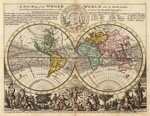 Isaiah takes us beyond his day to the future reign of Christ. In doing so, he promises a time when Egyptians, Israelites and Assyrians will follow the Lord and live in peace with one another. This might be referred to as the ultimate purpose of God, since He desires all men everywhere to be saved. If we look carefully at the church, and the commission we have received from Christ, we realize He wants ALL men EVERYWHERE to come to him for the free gift of eternal life. God designed the church to be assembled from people from every walk of life, and all people groups, who recognize Christ as Savior and follow Him as Lord.
 We spend a lot of time, effort, and energy, seeking to determine the will of God for our lives. Right now, many of us are facing circumstances where we are not exactly sure what God wants us to do. Should I go ahead with Plan A or is it time to implement Plan B? Should I take the new job, or wait this one out a little longer? Should we let the kids do this, or is it best to wait till they are a little older? Needless to say, we are plagued with questions that we need the will of God to answer. While this text does not address those questions specifically, it does give us some keen insight into the will of God for our lives. Paul associates the will of God to the giving of His Son and delivering us from evil.
 Jim Gallagher