Psalms 67:2
“That Your way may be known on earth, Your salvation among all nations.”
 Psalm 67 was written by an unknown author. We cannot know for sure who wrote it or what circumstances influenced its content. The one thing we know for sure is that it was penned by a person with a desire for others to come to the Lord. He pleads with God for mercy in his own life, in order that the world around him may come to a saving knowledge of God. The Psalmist is not alone in this. Paul declared
“Brethren, my heart’s desire and prayer to God for Israel is that they may be saved” (Romans 10:1).
As a result of this desire, Paul risked his life to bring the gospel message to his countrymen. At the conclusion of his third missionary journey, Paul made his way to Jerusalem with one goal in mind, he wanted to tell others about Christ. He received continual warnings regarding the danger he would face and the beating and imprisonment that lay ahead. Regardless of these threats, Paul pressed forward because his desire was for others to come to Christ.
The pattern of Paul has been followed by saints down through the centuries. Men, like Saint Patrick, who in the 6th century brought the gospel to the unreached pagans of Scotland and his contemporary, Saint Augustine, who brought the gospel to England. Saint Boniface, who in the 8th century brought the gospel to Germany, Hudson Taylor, whose efforts brought the Gospel deep into China, in the 19th century. CT Studd gave up a life of wealth and comfort to bring the Gospel into Africa. Or the countless unnamed Methodist circuit preachers who took the Gospel to the settlers in the United States.
What the world needs today are men and women with a desire to see others come to Christ, regardless the personal cost.
Psalms 67:2 “That Your way may be known on earth, Your salvation among all nations.”
Pastor Jim

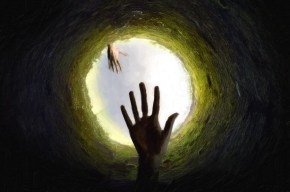 If we were writing a comedic screenplay, we might want to include a character who designs an elaborate trap, only to unwittingly catch himself. While it might be quite humorous on the big screen, it is tragic in the real world. The psalmist reminds us, one of the consequences of wicked living is, in the long run, we are actually setting a trap for ourselves. The day is coming when the cage will swing shut, and we will find ourselves enslaved by the very thing we were toying with. This happened to Samson who fooled around with Delilah, telling her to braid his hair or tie him up with new ropes. As time went on, he found himself enslaved to the Philistines. It happened to David, who fooled around with Bathsheba, first watching her bath then flirting with her. He soon found himself enslaved by his lust and caught in an ungodly relationship that had devastating effects upon his family. And it will happen to us, if we toy around with sin. Each time we dabble in unrighteous behavior, it is like putting the shovel in the ground. Day after day, the hole gets bigger until one day we find ourselves caught in a trap we dug for ourselves.
 As we reach the end of ourselves and cry out in desperation to God, prayer is the place where we express our greatest desires. We have found ourselves on our knees pleading with God for direction, the healing of a loved one, or to fix a mess we have created through our own foolishness. I wonder though, when is the last time we pleaded with God for those who don’t yet know Him.
 On a night that probably started out like every other night, Pharaoh’s life was suddenly interrupted by the Divine. While sleeping, he had a dream, so vivid, he realized it must be a message from God. After unsuccessfully searching for the meaning, he was introduced to Joseph, who, under the influence of the Spirit of God, was able to explain the meaning of his dream. Without going into the details, we find that God revealed the future to Pharaoh. He was told what was coming and given the opportunity to prepare in advance.
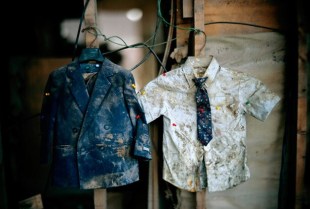 We cannot be certain of the attire of the King of Israel or that of a common housewife, but we do have a detailed description of the clothing worn by the high priest. Scripture goes into great lengths to describe the artistically woven garments he would wear whenever serving around the Temple. It must have been quite a shock to Zechariah when he saw a vision of Joshua the high priest clothed in filthy garments. I am sure the words of the prophet Isaiah came to mind,
 Over the past year we have seen summits on global warming, protests against the cruelty to animals, and the unjust treatment of certain groups of individuals. It is clear that people feel justified in demanding the ethical treatment of the planet and its inhabitants. While it is clear that we bear a responsibility before God for the way we treat what He has given us to care for, it is also true, we can become consumed with other things and forget that the most valuable, and often most neglected resource in the world, is the human soul. Jonah wept over the mistreatment of a plant and cared little for the eternal souls of the inhabitants of Nineveh.
 God has chosen to reveal the plan of salvation through the foolishness of preaching. Nowhere, is that better illustrated than in the story of Jonah. This reluctant preacher delivered a message that turned a nation toward the Lord. As the king heard this message, his heart was stirred to turn from his wicked ways and begin to follow Jehovah. In his desperation, he asked a deeply profound question. Is it possible to know for sure that our sins have been forgiven and we have been set free from the judgment of God?
 Amos, the shepherd-prophet, saw two consecutive visions that revealed the impending disaster looming over the nation. The first was a swarm of locust that would come just prior to harvest time. History records massive swarms of locusts in and around Israel, that had devastating affects upon the land, the people and the economy. One such incident describes a swarm so great, it devoured every crop in he field, took the bark off the trees, and even the thatch off the roof of many homes. The only thing that stopped this deadly swarm, was when they finally reached the Sea. So many locust died in the waters that a plague broke out and thousands of people died. The second vision was that of a fire that would consume the land. If these visions were fulfilled consecutively, the devastation would be catastrophic.
 As the angel explains the images John sees, he makes reference to the Book of Life. This book is mentioned again, in Revelation 20:15, as the guest list of heaven. All, whose names are written in this Book, will have access to heaven; those who do not, will be cast out to eternal judgment. If there is one thing you want to be certain of in this life, it is that your name is in the Lamb’s Book of Life. The question is, how do we get our names in that Book?
 Jim Gallagher