1 Chronicles 20:1
“It happened in the spring of the year, at the time kings go out to battle… But David stayed at Jerusalem…”
 Although the writer of Chronicles does not include it here, this is the time when David compromised, broke his own standards, violated the ways of God and sinned with Bathsheba. This is the lowest point in the life of the sweet psalmist of Israel. While there are many factors that led to his failure the text makes it clear that one of the contributing factors was being idle when he should have been busy in the battle.
The word idle simply means not to be working, busy or active. There are times in life when being idle is the exact thing we need; it was God who established the sabbath for Israel and desired them to take times of rest. Taking a break from activity to rest the body, wait on the Lord or simply enjoy the blessings of following Christ is an important part of life and our walk with the Lord. That being said, we must also realize that there are times when being idle can be dangerous. David’s problem was not that he was resting, but that he was resting when he should have been battling. He was in a season in life when the situation called for clinging to the Lord and stepping out in service, instead he chose to stay home, let his guard down and compromise his standards.
The seasons of life often determine our focus for us. If bombs are falling on the city it is not time for a family picnic. If you are in the midst of difficulty at home or work, or if you are struggling with something in your private and personal life it is not the time to sit back, but to clothe yourself in the armor of God and to battle the fiery darts of the wicked one that so often evidence themselves in thoughts that oppose the word of God.
Jim
 Like most of us, much of my childhood was spent in school, and one of the worst words for any student to hear is “test.” For some of us, this word still conjures up feelings of fear, defeat and humiliation. As a student, I was never quite sure why we had to take so many tests. Years later, and much to my own surprise, I actually became a teacher and had a totally different view of the purpose of all those tests. They were not to make the children suffer as much as they were to show, student and teacher alike, what they already knew and what we needed to work on. The tests God put Israel through had a similar purpose. He allowed them to walk through some difficulties to show them what was in them and what work He still needed to do.
 The final prophecy from Balaam, regarding Israel, declares God will defeat all their enemies. The nations that surrounded Israel, as well as those who lived within its borders, would be brought under the mighty hand of the Lord.
 Isaiah promises a time when violence and destruction will be replaced with salvation and praise. Clearly, we have not yet entered that time. Violence is one of the major themes of our day. While this is true everywhere, it is especially true in the Middle East. It seems as though, not a day goes by where we are not faced with reports of violence, war, and terrorism.
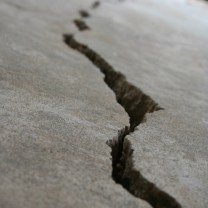 Recently, I was driving with some friends, some of whom were from California, and others from Florida. It did not take long for the subject of hurricanes to come up. As we described our experiences of boarding up windows, stocking up on supplies and even evaluating our homes, one of the Florida folks said, “but at least we know they are coming, unlike those California earthquakes.” As you can imagine the conversation then switched to what it is like to have the ground we believe to be solid, suddenly begin to roll underneath your feet. Fortunately, we reached our destination before the conversation became more grave. Suffice it to say, it is a pretty eerie feeling when, what we believe to be solid, suddenly begins to shake; proving our foundations are not what we thought them to be.
 It could have been easy for a woman like Esther to feel forgotten. She had lost her parents at a young age, and was a believer living, in an area where she was surrounded by those who did not know the Lord. As the pages turn, it appears there must have been some level of persecution against the Jews, since Esther chose to hide her heritage from everyone in authority. This rising persecution will set the stage for much of what develops in her story. It seems as though, instead of allowing difficulty to tarnish her view of God, she allowed her situation to give God an opportunity to show His love in her life.
 The Psalmist is describing a scenario common to all of us. There are times, when the hand life deals us is difficult to cope with; sleep is effected, and our minds are tormented. There are many terms that describe this condition, but perhaps the most common is worry. One dictionary defines worry as, “to torment oneself with or suffer from disturbing thoughts; to fret.” I think that is a pretty apt description of worrying; to torment yourself. When we lay in bed unable to sleep, or rise up to pace the floor, filling our minds with what-ifs and worse case scenarios, we are really tormenting ourselves. It is as if we are waterboarding ourselves, and wondering why we are suffering so greatly. The question is not whether we will face things that fill us with dread, concern and anxiety, the question is how we will react. What is the proper response for the child of God when he is faced with things bigger than himself?
 It seems to me, if one thing is certain in life, it is that things are constantly moving. We live on a moving planet. At the equator, the Earth is spinning at 1000 miles per hour, moving at 67,000 miles per hour around the Sun, and our entire Galaxy is moving at about 185 miles per second. Since this motion is constant, we cannot feel its effects. However, there is other movement that we do notice. The United States Geological Survey website lists dozens of earthquakes that have happened around the world in the past seven days. Earthquakes happen because the earth’s surface is like a thin crust. This crust is made up of many pieces, like a puzzle, and the pieces keep moving around and bumping into each other. This causes the surface of the earth to move like waves rippling in a pond. Also, about 70% of the earth’s surface is water. That means almost three-quarters of the earth is too unstable to stand upon. As far as I know, Jesus and Peter are the only two people to successfully stand on the surface of the water, and that did not last too long for Pete.
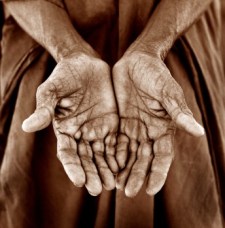 Sometimes, God chooses the most unlikely candidate as His teaching vessel. Here, and again in New Testament, we find poor widows, with almost no resources, being used to illustrate the principle of giving.
 After the great deliverance from Egypt, forty years in the wilderness, and five years in the Promised Land, there were still tribes who were neglecting to possess their possessions. In other words, the land that had been promised and distributed to them, remained in the hand of their enemies. Joshua, in a form of harsh rebuke, declares that the reason for their failure to take the land was simple neglect. Perhaps some used the age old excuse of “I have just been so busy” or “I don’t have time right now.” We know for sure, some of them made the excuse of the task being too difficult.
 Jim Gallagher