Isaiah 22:12-13
“And in that day the Lord God of hosts called for weeping and for mourning, for baldness and for girding with sackcloth. But instead, joy and gladness, slaying oxen and killing sheep, eating meat and drinking wine: ‘Let us eat and drink, for tomorrow we die!’”
 Isaiah lived during interesting times. The northern nation of Israel was about to fall prey to Assyrian forces, while the southern nation of Judah was facing the threat of annihilation. Instead of turning from immorality and seeking God, the people were determined to continue in their wickedness. A great campaign was underway to fortify the cities to withstand enemy forces. They built reservoirs to hold water, stored up grain supplies, and made pacts with other nations in order to withstand the onslaught of the enemy. In all their efforts to prepare for battle, they forgot the most important step, they failed to turn to the Lord.
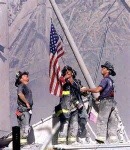
It seems whenever our leaders speak, they refer to the difficult times we are facing as a people, and a nation. Most of us experience first hand the financial crisis; we also hear of the constant threat of terrorist attacks, and how an inappropriate response may insight a global conflict. Immorality seems to be at an all time high, creating moral confusion, which has led to increased social chaos. It seems to me, great efforts are being taken to protect us against these things. Anyone who has traveled in the last 14 years, has experienced the heightened security in airports. We have seen metal detectors installed in schools, and increased security in almost every public gathering place. Committees have been formed, laws written, and policies implemented, all in an attempt to ward off the dangers of modern society. With all that is being done, we are failing to take the most important step, that is, turning back to the Lord.
It is time to realize, the answer to our present condition is spiritual. Hezekiah, King of Judah, led the nation on a campaign to turn to the Lord. The result was, while every nation around them fell to Assyria, Judah was spared.
Our present condition calls for “weeping, mourning, and sackcloth.” These are figurative ways to show repentance.
Pastor Jim
 Sheol is an Old Testament word for the abode of the wicked in death. The New Testament uses the words “Hades,” “Tartarus,” and “Gehenna.” Although different words are employed, they all refer to the final resting place for those who reject Christ, and as a result die in their sins. Isaiah gives a sobering picture when he writes, “Sheol has enlarged itself…” Suggesting that the boundaries of hell are expanding because of the unwillingness of people to respond to the call of God and the cries of the prophet. There are a few things we need to keep in mind.
 Unfortunately, sadness is a common feeling. We have experienced it in all its varying levels and intervals. We have had little things happen that caused us to frown and go quiet, and we have had deeper experiences that gripped us with sorrow and caused us to weep or even wail. Paul is speaking here, not of the sorrow that comes from your favorite team losing a game, or even losing someone you love, he is speaking of the sorrow that comes upon a person when they realize they have sinned against God. The Psalmist wrote of a time when he was overcome with that kind of sadness;
 A covenant, like a treaty, is an agreement between two parties that results in peace. Job realized that he was at war, not with others, but with himself. The battle that raged within him was for control of his thoughts. He came to realize, the only way to be victorious, was to be certain his eyes did not look at what would stir his lusts.
 God designed sexual intimacy as part of the marriage relationship. It is the most intimate of all acts and plays an important role in the love relationship between man and wife. In the book of Hebrews we are told, “Marriage is honorable among all, and the bed undefiled.” (Hebrews 13:4)
 Jesus, speaking figuratively, said if our hand causes us to sin we should cut it off, and If our eye causes us to sin we should pluck it out (Matthew 18:8-9). Essentially, He was saying we should take radical action against personal sin. As the book of Nehemiah comes to a close, we see Nehemiah doing just that. He has seen the devastating effects sin has on an individual and a nation, and decides it is time to take a radical stance against sin.
 After some initial reforms, the remnant, who had returned to Jerusalem from captivity, soon began to drift from the Lord. The ways of the world are always tempting for the child of God; as such, many of the people began to pick up the customs of the day. Soon, it was difficult to see any difference between believer and unbeliever. News of the people’s behavior devastated Ezra, and he began to cry out to the Lord. His prayer reveals what to do when we find ourselves overwhelmed by our own failures.
 Compassion is a necessary ingredient in order to bring about change. It is more than an emotion, it is a sense of pity that stirs one to action. The compassion of God flows from His love for humanity. He looks at our condition because of sin, and His heart breaks. Rather than simply feeling bad for us, His compassion stirs Him to action. In the days of Jeremiah, we read, God’s action was to send men to declare the truths of His Word.
 Hands down, Manasseh was the worse king to ever reign in Judah. In a few short years, he undid all the reforms his father had effected, and seduced the people into sins they had never dreamed of committing. The spiritual climate in the nation was at an all time low, and the morality of the people followed suit. It is not surprising to read the Assyrians defeated Judah, and carried the king off captive to Babylon. What is surprising to read is, during his affliction, he not only cried out to God for help, but he truly committed his life to the Lord. This turn around forever changed life and eternity for Manasseh. Through his downfall, he came to realize the Lord was God, and he began to make great reforms within his life and the nation. Altars, which had previously led him into sin, were removed. Repairs were made to the Temple of God; making worship and sacrifice easier and more appealing.
 The bible clearly teaches God is just, and will one day judge each nation for its wickedness. The farther a nation strays from the ways of God, the weaker it becomes, and the closer it gets to its final hour. This was true of Israel, Judah, and the surrounding nations; and remains true today. One cannot read the pages of God’s Word and not conclude, there will come a time for judgment for those who turn their back on God. That being said, it is also true, God does not take pleasure in judgment, but delights in extending mercy. It is His desire to pardon and restore. To that end, a promise is given to Solomon which remains true today. This promise is directed at the child of God, for the purpose of forgiveness and restoration.
 Jim Gallagher