Hebrews 6:4-6
“For it is impossible for those who were once enlightened, and have tasted the heavenly gift, and have become partakers of the Holy Spirit, and have tasted the good word of God and the powers of the age to come, if they fall away, to renew them again to repentance, since they crucify again for themselves the Son of God, and put Him to an open shame.”
 When Jesus was in the wilderness he faced three severe temptations from the devil. Through His experience we learn a lot about how the devil seeks to trip up the Christian. One of his most effective tools is to twist the Scriptures into saying something they do not mean. This passage in Hebrews carries a very strong warning to all, concerning the danger of falling away from the Lord. But the devil has used it to fill numerous Christians with fear over their past failures, or current struggles. Let’s take a minute or two to examine its content.
First, notice the text is clearly describing a believer. The person being warned is one who has been enlightened, has tasted the heavenly gift, and been a partake of the Holy Spirit. The words enlighten and partake are used elsewhere in Hebrews referring to believers. To “fall away” is an idiom used to speak of returning to the sins from which we have been delivered. Earlier in the chapter, we were told one of the elementary principles of Christianity is repentance, or turning from our sins to follow Christ. The person described here, has turned from Christ and gone back into sin. Finally, notice the word “impossible”. It is a compound word, meaning able, with a negative prefix. It means there is no way for something to be accomplished. it does not mean that it is unlikely, or difficult, but that a person who goes back to sin, cannot return again to the Lord.
As I mentioned, this is both a strong warning, as well as a text that the devil has used to beat down the struggling believer. On many occasions, I have been approached by believers who had once walked with the Lord, only to backslide for long periods of time. They have now come back to the Lord, but come across this verse and begin to doubt their salvation. I think the key to this text is the word “impossible”. It is employed because of the gripping nature of sin, and the deceitfulness of the human heart. Falling away is not something that happens suddenly; but something that is the result of neglecting the Word, prayer, fellowship, and service. It is something caused by sowing little seeds of sin over a long period of time. When we first begin the downward slide, the Spirit of God speaks to us, warning us, and convicting us. It is only when we ignore the warnings and harden ourselves against conviction, that we can continue to sin. The problem with hardening our hearts, is that our hearts become hard. Soon, we cannot hear the voice of God, or sense the conviction of the Spirit. We have seared our conscience with an iron, and the voice of God is lost to us. At that point, even when confronted directly by others, we are so hardened, we keep going on in sin, unwilling to listen or repent. For that person, renewal is impossible. Before fear strikes you, keep in mind, it is not the only thing that is impossible.
Jesus said it is impossible for the rich to be saved because they trust in riches, yet many wealthy men and women have laid down their riches to trust in Christ alone. Salvation itself is impossible. There is no way sinful man could ever be restored to fellowship with a holy God. But Jesus reminded us that,
“The things which are impossible with men are possible with God.” Luke 18:27
While it is true, sin will harden our hearts; we are capable of becoming so hardened we will not listen to the conviction of the Spirit, the warnings of the Word, or the pleas of others. It is also true, the Bible is filled with stories of those who have fallen into sin and returned. One of the most well-known of all the parables Jesus told, is the story of the Prodigal Son (Luke 15:11-24). It is the story of falling away and returning. It is so well-known because it strikes a chord in all of us. We might go so far as to say, the whole Bible is the story of falling away and returning.
If we are to properly apply this text, we must take serious the warning against sin. We must examine ourselves to see if we have been hardening ourselves against the warnings of God, and we must repent. If we have returned to the Lord, we must accept the grace of God and not think we are destined to live as second class Christians, unable to ever truly experience His grace or be used by God.
Pastor Jim


 Paul warned against having an attitude toward grace that encourages sin. Some were suggesting, since God is gracious, it is okay to sin, knowing we will receive forgiveness. He put it this way,
 Difficulties in life are not always the result of personal sin, but sometimes they are. Sometimes our struggles could be alleviated by getting things right with God. Haggai wrote, the people in his day were ignoring the Lord and their relationship with Him, and as a result he wrote, “You have sown much, and bring in little; You eat, but do not have enough; You drink, but you are not filled with drink; You clothe yourselves, but no one is warm; And he who earns wages, Earns wages to put into a bag with holes. ‘Thus says the LORD of hosts’: “Consider your ways!'”” (Haggai 1:6&7) It is possible that the hardships you are enduring are not actually trials or even the natural results of living in a fallen world. It is possible that you are facing the consequences of certain behaviors, or even the chastening of God. The solution to alleviate those types of difficulties is through what the Bible calls repentance; a word meaning to change both your mind and your direction.
 The church in Crete was like most churches. It had a pastor, who was seeking to minister to the spiritual needs of the people, while facing many struggles from within and without. It had members who were growing in the Lord and seeking to serve Him, and members whose growth was stunted, due to a variety of lingering and tolerated personal sins. Then there were others, who only pretended to be Christians. Paul describes this group as ones who claim to be followers of Christ, yet they fail to really follow Him.
 When archeologists discovered the remains of the ancient city of Jerusalem, which had been destroyed by the Babylonians, they discovered hundreds of small graven images or household gods. These images shed light on the fact that during the days Isaiah lived, idolatry ran rampant throughout the land. People filled their homes with images representing the gods they created with their own imaginations. Isaiah writes of the folly of idolatry. He describes a man planting a tree, waiting for it to grow, cutting it down, using a portion to build a fire to cook his meal, and the rest to shape into an image he will later bow down and worship. The gods that were created were the product of the imagination, and took the shape of the world in which they lived. The folly of idolatry is that we are both making god and worshipping god.
 As Paul traveled the world to preach the Gospel, he had the great joy of seeing many come to Christ. Sadly, however, he also had the difficult experience of seeing some fall away from the Lord. Here he mentions two such individuals and describes their backsliding as being shipwrecked. They once had sails unfurled on course for the Kingdom, but had drifted off course and were no longer serving or following Christ. He mentions them as a warning to us of the dangers of falling away from Christ. A shipwreck is an appropriate analogy for the Christian because of the dangers we face on our journey towards what John Bunyan called “The Celestial City.” Unfortunately, shipwrecks, like backsliding, have a variety of causes.
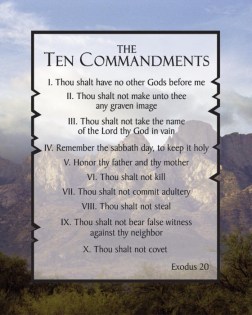 Israel, in Isaiah’s day, was in dire straights. The Assyrians were on a rampage, overthrowing any nation that stood in the way of their desire for global dominance. Israel watched as their neighbors were defeated and enslaved to the most bloodthirsty nation the world had ever known. In the midst of these threatening conditions, people began to offer solutions. The most common was to make an allegiance with Egypt to withstand the Assyrian invasion. Isaiah offered an entirely different remedy. He encouraged the people to understand, it was God who could save them. But in order for this to happen, they would have to look at Him very differently than they had been doing. He used three words to describe a proper relationship with God.
 Tyre was an ancient coastal city situated on the Mediterranean, just north of Israel. Like all people, they were answerable to God for their actions, and would soon face the consequences of ignoring Him, and living by their own standards. Isaiah describes a time coming, when the Chaldeans, also known as Babylonians, would attack and drive them into the sea.
 Jim Gallagher