Psalms 62:11
“God has spoken once, twice I have heard this: That power belongs to God.”
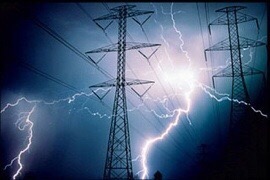 A number of years ago, I came home from a long day of work, at the end of an even longer week. I was worn out and hungry. Since I was the only one home at the time, I was facing a battle within. My stomach insisted on being fed, but the rest of me demanded rest. Too broke to order out, and too tired to fix a meal, I laid down on the couch and began flipping the channels. I stopped on a show called, “Lifestyles of the Rich and Famous.” This a series that displayed the possessions of extremely wealthy individuals. If memory serves me, this was the only time I had ever seen the show. The episode followed the life of a the king of a small Middle Eastern country, whose name I have forgotten. While his subjects lived in poverty, he was one of the wealthiest men alive. They showed his palace, which was the size of a small college campus. What really got my attention, however, was when he traveled to the U.S. He wanted to stay in a particular room in a hotel in Beverly Hills, but the room was booked. Instead of finding another room, or another hotel, he bought the hotel, remodeled it to his liking, and stayed in the room of his choice. Lying there on the couch, I was struck by two contrary things. The first was this man’s great wealth, the second was how it had no effect on me whatsoever. I was still too broke to go out and too tired to cook.
The Psalmist speaks of the wealth of God’s power. He declares, “power belongs to God.” His power is infinite. There is nothing too hard for God. It required no more effort from Him to create the world, than it did for him to heal Peter’s mother-in-law from fever. He spoke the world into existence, and holds it together by the Word of His power. When the time has come, He will fold this one up, and speak a new heaven and earth into being. However, unlike the wealthy prince, God’s power does have direct effect upon my life.
Jesus promised, “But you shall receive power when the Holy Spirit has come upon you; and you shall be witnesses to Me in Jerusalem, and in all Judea and Samaria, and to the end of the earth.” Acts 1:8
The power of God is available to the child of God. A power that will enable us to successfully walk with, please, and serve, the Lord. This power is received by simply asking and obeying. If you feel too weary to overcome the trials or temptations you are facing, the solution is to look up, and ask God to pour out His Holy Spirit upon you. The God to whom this power belongs, promises to empower us through His Spirit.
Pastor Jim
Questions for Psalm 62
- What is the key word in verse 1 and 5 that becomes the theme of this Psalm?
- How many times is the word salvation repeated?
- Who should we pour our hearts out to?
- Look at verse 8 and 10. Who are we to trust in and what are we not to trust in?
 There can be great value in getting away from our manmade world and looking at the creative work of God. Seeing the beauty of His creation seems to give us new perspective on His love, power, and glory. I can recall one particular sunset in Africa that was so magnificent and seemed to last for an hour. The sky was filled with an array of colors, like I had never seen before. I recall how the view of the snow capped Austrian Alps, and the water falls of Kauai captivated me, filling me with awe and amazement at the beauty of God’s handiwork. I am sure you have a list of your own experiences that cause you to celebrate the beauty of creation. That being said, the Psalmist begins to talk about what God views as true beauty. He declares;
 Ephesus was a very large city with a diverse population. It is estimated, at the time of Paul’s visit, there may have been in excess of 400,000 people living in the city. Ephesus was the largest city in Asia Minor, and one of the largest in the empire. Because of its location, on a trade route, the city was very wealthy; it had become an important center for commerce. Like any large wealthy city, Ephesus had its share of vice. One of the greatest was temple prostitution. Overlooking the city, was the Temple to Diana; which was an awe-inspiring site. It drew pilgrims from all over the world to come and worship. The worship practice included sexual immorality.
 The conditions in Israel at the time of Deborah and Barak were very difficult. Moral failure, on the part of the people and their leaders, had led to national decline, and in turn, to losing much of the freedoms they once enjoyed. After eighteen years of oppression, the people finally began to see that the root cause of their condition was not economic, political or even social, but that they had departed from the ways of God. Understanding this led them to return to the Lord, and cry out for deliverance. In response to these cries, God raised up what may seem like two very unlikely heroes. The first was a woman who would rule in a definitively male culture, and the second was a man who was somewhat resistant to the whole idea.
  As I read through the book of Judges, I am confronted with mixed emotions. On the one hand, it is a sad and tragic story of repeated failure. Over and over, we are told of the compromise of the people of God, and the suffering they experienced as a result. We are told, much of the reason for their repeated failure, was that they did not know how to fight. Instead of realizing they were facing spiritual battles, and engaging in conflict against compromise, they simply gave in. Judges records the story of failure which is often repeated today.
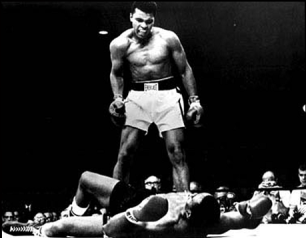 The tribe of Manasseh felt as though they had been ripped off when the land was distributed. They looked at their inheritance with disdain because it seemed small, and they considered themselves a great people worthy of so much more. Joshua explained to them that the land was theirs for the taking and their greatness would be proven as they overcame the obstacles that stood before them. It seems pretty clear, Joshua and Manasseh had very different views as to what greatness really meant.
  Jesus promised, when we are baptized with the Holy Spirit, we will receive power to be witnesses for Christ. It seems to me, I am always in need of more power than I currently have. The longer I walk with the Lord, the bigger some of the battles become. I need a greater measure of His power to deny the flesh, as well as to effectively serve the Lord. I think it is a common experience for all Christians to feel powerless against the battle in front of them. That being said, there is a critical principle revealed in this verse. Peter declares that the Holy Spirit is given to those who obey.
 The story of Rahab is a story of redemption. It is nothing short of a miracle. The Spirit opened Rahab’s eyes to understand that YHWH is the true and living God. This happened as a result of the Word of God reaching her ears long before the spies ever set foot in Jericho. For decades, her people had been hearing stories of a people whose God had parted the Red Sea and given them victory over Egyptian bondage. Now those same people were at her doorstep, and Rahab wanted to join the people and the God of Israel. She had come to realize, salvation would be found in God alone, but she did not want to follow Him alone. In what is a beautiful example of intercessory prayer, Rahab pleads not only for herself but for her loved ones.
  The Holy Spirit is the driving force behind all the ministry that will take place in the book of Acts. Jesus had commanded His disciples to go into all the world and proclaim the Gospel message, but before they went, they were to wait for the outpouring of the Holy Spirit. Their personal lives, their ministries, and their world, would forever be changed because the Holy Spirit came upon them.
 Jesus is facing the battle of His life. We could even say it was the battle for His life. All the political power of Israel was manipulating the power of Rome, to execute the Son of God. Yet Jesus remained silent. We know He wields the power to overcome these attacks. We read that He calmed the storms, healed the sick, cast out demons, and even raised the dead. Yet now, when it seemed to matter the most, He refused to lift a finger or say a word.
 Jim Gallagher