Ecclesiastes 9:2
“All things come alike to all: One event happens to the righteous and the wicked; to the good, the clean, and the unclean; to him who sacrifices and him who does not sacrifice. As is the good, so is the sinner; he who takes an oath as he who fears an oath.”
 Solomon spent his life as a student of human behavior. He appeared to be on a quest to find meaning and purpose to life. His observations led him to the conclusion that trials, or difficulties, are the lot of all men; both the righteous and the wicked experience times of sorrow, pain and suffering. When a tornado strikes a town, it makes no distinction between the believer or the unbeliever. Cancer strikes the godly, as well as the ungodly. Christians and non-Christians have both lost their jobs due to tough economic times. If there is no difference between the ailments that we suffer, what is the benefit of living a life committed to Christ?
First, there are great promises given to the child of God, in the midst of the difficulties he or she is enduring. We are promised the peace of God will sustain us, and the strength of God will carry us through. One of the most attractive aspects of a relationship with Christ is the peace He provides, in the midst of the storms of life. I have known believers who are facing intense trials, yet they are guarded within by the perfect peace, which flows from God.
In addition to peace, the child of God understands, there is purpose behind the suffering. Difficulties are not meaningless, but rather become tools in the hand of God to build character, to provide opportunities, and to give to others the light of the Gospel of Christ. Paul found himself in prison, where he celebrated the goodness of God, and by doing so, won others to faith in Christ. We cannot always understand why we are suffering, but we can look for ways by which God will be glorified in our trying times.
The believer also realizes trials are temporary. While they may seem to last forever, they are in fact transient and will be over soon. Some run their course in this life. We may even have a difficult time remembering some of the things we suffered a year ago. Other trials may follow us throughout the course of this life, but will not follow us into eternity. Whatever difficulties we have now, the Christian can be sure they will not plague us in eternity.
Whatever you might be facing, allow me to encourage you to trust Christ and cling to His promises. There is no reason you should have to walk this journey alone. There is a Savior who wants to comfort and strengthen you, if you will trust your life into His care.
Pastor Jim

 Paul is referring to one of the most difficult times in the life of the prophet Elijah. He lived during a time when the nation of Israel had turned from the Lord and had become steeped in idolatry. As the people stood in the valley of decision, swaying between a decision to follow Jehovah or become more like the world around them, Elijah stood boldly for the Lord and saw the beginnings of a national revival. This did not come without a price. Jezebel, the queen who was openly opposed to the ways of God, began a campaign to see Elijah killed. These were not idle threats, for she had been responsible for the death of many of the prophets of God. Elijah saw no other course of action except to flee. He ran from Mount Carmel in the north of Israel, all the way to the wilderness where Moses had received the Law of God. There, in a place of solitude, he began to cry out to God. “I alone am left of the prophets of God and they seek to take my life.” He truly believed that his life was over and there was no escape from certain death. His fears led his heart to speak, but in the midst of his trial, he heard another voice saying,
 A few years back, a good friend of mine was applying for a new job. When he returned from his interview he was very excited. Naturally, I asked him how it went. He replied, “It is such a good job! Because of the company’s connections, I will get deals on hotels, flights, cruises, and be able to travel for a fraction of normal rates.” After describing, in much greater detail, many of the peripheral benefits of his new job, I did not have the heart to ask him what he would be doing everyday; or to remind him he would only have one week of vacation to enjoy all these benefits. Sometimes, a reminder of the benefits is all we need to keep us pressing on through the difficult times.
 The Psalmist is describing a scenario common to all of us. There are times, when the hand life deals us is difficult to cope with; sleep is effected, and our minds are tormented. There are many terms that describe this condition, but perhaps the most common is worry. One dictionary defines worry as, “to torment oneself with or suffer from disturbing thoughts; to fret.” I think that is a pretty apt description of worrying; to torment yourself. When we lay in bed unable to sleep, or rise up to pace the floor, filling our minds with what-ifs and worse case scenarios, we are really tormenting ourselves. It is as if we are waterboarding ourselves, and wondering why we are suffering so greatly. The question is not whether we will face things that fill us with dread, concern and anxiety, the question is how we will react. What is the proper response for the child of God when he is faced with things bigger than himself?
 For thousands of years, men have stood in the valley of decision, unwillingly to make a complete commitment to the Lord. Fear, guilt, weakness, sin, and the influence of others, hold us back from surrendering to the Lord. The words of Elijah are as needful today as ever. He calls us to carefully consider the Lord, and make a decision to commit our lives to Him.
 No matter where we live, we are faced with the storms of life. Growing up in California, I was constantly reminded of the great earthquake that was looming on the horizon. We were told that because of the fault lines, one day California would fall into the sea. Upon moving to Florida, the new fear was the hurricane. A few years back, a particularly large hurricane had developed in the warm waters of the South Atlantic. The atmospheric conditions were such to allow this storm to grow larger and larger as it traveled north. All of the models had it making landfall just outside of my home town. Having never experienced a hurricane before, I was glued to the Weather Channel for information. A hurricane this large had never been tracked before; it was larger than the state of Texas, and had wind speeds over 140 mph. People up and down the coast of Florida, Georgia, and South Carolina were heading west for safety. One news station reported that hotels, as far as Kentucky were filling up, as people searched for a safe place in the storm. I felt stuck. I did not know where to go. In a last-minute decision, we drove across the state and stayed with friends, figuring though we might not be avoiding the storm, at least we would have the comfort of going through it together. Fortunately, the storm moved north, missing Florida all together, and reducing in size drastically as it met cooler waters. I came to the realization, no matter where we live, we are faced with the storms of life, and must determine where we will run for safety.
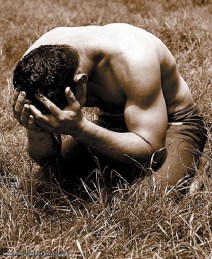 David and Bathsheba found themselves face to face with a parent’s worse nightmare. Their child was diagnosed with a terminal illness for which modern medicine had no answer. Like any of us, David was devastated, he would not eat or sleep, and those closest to him began to worry about what he might do to himself. When the sickness reached the end, and the child passed, David’s behaviors changed dramatically; he showered, ate, and worshipped. When questioned about the sudden change, he declared,
 In this Psalm, David uses the illustration of a shepherd to speak of God’s care for those who belong to Him. This Psalm speaks of the benefits true to all who are in a covenant relationship with God. He speaks of God’s provision, comfort, protection and care. Jesus used the same illustration in John 10 when He said,
  Jim Gallagher