Psalms 114:8
“Who turned the rock into a pool of water, The flint into a fountain of waters.”
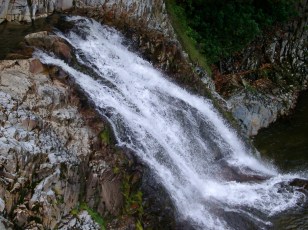 Israel was in a bad place. Conservative estimates calculate the camp of Israel to be nearly 2 million souls. They had left the comfort of the Nile river and began the arduous journey through the desert en route to the land of Promise. It did not take long before the difficulty of their journey began to take its toll physically and emotionally. The hardship of their experience coupled with the lack of basic provisions caused them to doubt the power of God to carry them safely to their destination. When their water supply ran out it is understandable that their faith was challenged and their weaknesses revealed. Their hardship would provide another opportunity for God to reveal His loving kindness. The characters in the scene include the congregation of Israel, an arid desert, a solid rock and a stick in the hand of Moses. What looked to be an impossible situation turned out to be a means for God to reveal Himself to the nation.
All of us find ourselves face to face with difficulty that is beyond our ability. We might not be in a physical desert or be in want of water but we are certainly in the midst of circumstances that are beyond our ability to handle. What a joy to know that God can use whatever means are at our disposal to provide whatever is lacking in our lives. The one who turned the rock into a pool of water is the same one who will provide for you in whatever struggle you are currently facing.
Pastor Jim
Questions for Psalm 114
- This is a brief historical Psalm showing God as an earth shaker. When you see the effects of natural disasters, do you think of God’s Greatness and Glory as being far more awesome?
- Is God shaking you up inside? Is He tugging at your heart to serve Him?
- In verse 7, to tremble means to recognize God’s complete authority. When you examine yourself in the faith, can you honestly say, “I fear the Lord?”
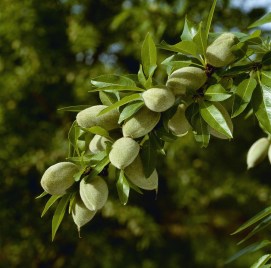 A miracle is defined as an unusual or wonderful event that is believed to be caused by the power of God. In other words, it is something that could not happen if God did not infuse His power into the situation. That is exactly what transpired here. To determine the validity of Aaron’s calling and ministry, God infused His power and made something that was incapable of bearing fruit, become fruitful. Aaron’s rod, which was nothing more than an old tree branch, suddenly came to life and produced blossoms and yielded ripe almonds.
 If these questions were posed to us on a theology test, we would all answer “No, no, six times no.” We know that He promises:
 It has been said, if we can believe the first four words of the Bible, we should have no problem with the rest of its claims. “In the beginning God…” The Bible is filled with stories of the mighty workings of God. We read of Him speaking the worlds into existence, delivering a nation from the threat of death, parting the seas, providing food in a desert, knocking down the walls of Jericho, raising a shepherd boy to the palace, healing the sick, and delivering those who were possessed by devils. Page after page, we read of God being God and providing victory over the affairs of life. It seems that for many of us, we have no problem believing in the mighty workings of God. We trust the validity of our Bibles, we celebrate His mighty work in the life of others, and even sing together of His miraculous power. However, when it comes to our own lives, we sometimes act like Agrippa. We question the ability of God; we wonder if His power is really strong enough to help us in our time of need.
 Things looked very bleak for Peter. Persecution was on the rise throughout Israel. Many of his friends had been forced to flee to other nations for their safety and survival. James, perhaps his closest friend, had been killed by Herod, as a way to increase his political status. Now Peter found himself arrested and awaiting what was sure to be a mock trial and certain execution. He had watched this scene develop once before. We read that these events transpired during the Feast of Unleavened Bread which followed Passover. It was during this time of year Peter had watched his Savior arrested, condemned and crucified. If ever there was a desperate hour in the life of Peter, it was now. Until we read,
 Jesus promised, when we are baptized with the Holy Spirit, we will receive power to be witnesses for Christ. It seems to me, I am always in need of more power than I currently have. The longer I walk with the Lord, the bigger some of the battles become. I need a greater measure of His power to deny the flesh, as well as to effectively serve the Lord. I think it is a common experience for all Christians to feel powerless against the battle in front of them. That being said, there is a critical principle revealed in this verse. Peter declares that the Holy Spirit is given to those who obey.
 As the wilderness wanderings came to an end, Israel came face to face with two formidable foes. Sihon and the Amorites, and Og and the soldiers from Bashan. Both of these enemies seemed too great a force for the children of Israel, yet they found strength in the Lord and overcame these obstacles. As Moses prepares Israel to enter the Land without him, he reminds them of these victories. In fact, as a reminder of these events, Sihon is mentioned twenty-two times in the Old Testament, and Og nineteen times. God never wanted Israel to forget the victories they experienced in the early years.
 John tells us, the miracle of turning the water into wine was the first of Jesus’ miracles, and its purpose was to make His glory known. The word “glory” is used synonymously in the Bible with the word “name” and speaks of a person’s character. When Moses longed to know God more, he asked God to “Please, show me Your glory.” (Exodus 33:18) God responded, saying, “I will cause My goodness to pass before you and declare My name.” It is in that passage we learn much of the merciful and gracious character of God. Here, at this wedding feast, John tells us that we are to learn something about the character of Christ.
 Jim Gallagher