Deuteronomy 25:3
“Forty blows he may give him and no more, lest he should exceed this and beat him with many blows above these, and your brother be humiliated in your sight.”
 A man, condemned of certain crimes, was to be beaten as a form of punishment and humiliation. The beating was reserved for the wicked, while the righteous were exonerated. Years later, a “Kangaroo Court” met in Israel, gathered false witnesses, and condemned the Son of God to death, for the high crime of blaspheme. He was taken to the Roman authorities, where He was again tried, convicted and condemned. Part of the sentence meted out to Him was the Roman scourging. Unlike the Jewish law that carried with it a level of mercy, the Roman scourge was designed, not only to punish, but to kill.
After withstanding the agony of the garden, the hostility of the Jewish leaders, a sleepless night, and the mistreatment by the Roman guards, Jesus was bound and beaten. The beating was carried out by a Roman soldier, who used a leather whip with many “tails.” Woven into the leather were sharp, hard objects, like broken glass or metal. The whip would tighten the skin, while the glass would tear through it. Since the beating was only a step in the crucifixion process, no mercy was shown. Jesus would have been beaten to the very brink of death. We know what He endured was so great He was unable to carry the cross (Mark 15:21), and collapsed under its weight. Isaiah, with prophetic commentary, wrote, “His visage was marred more than any man.” In other words, He was beaten beyond recognition.
As painful, difficult, humiliating, and cruel as these beatings were, they were not without purpose. We are told it is through the sufferings of Christ, we are able to recognize, in our own difficulties, we have a God who can sympathize with us. You have not endured pain so great that He cannot understand it, or feel compassion for you. Also, we know, it is by His stripes that healing is made available to the child of God. Finally, it is the suffering of the cross which reveals the depths of His love. As we reflect upon what He endured to save us, our hearts should be stirred to a greater personal commitment to His service.
Pastor Jim
 Mary saw Jesus, but the circumstance she was in, and the experiences she was facing, caused her to conclude that He was a gardener. It was not until she heard His Word, that she clearly understood who He really was.
 Moses is reminding the people of the laws of God. These were the standards which would govern individuals and the nation. If they followed His precepts, they would be blessed by God, and would be attractive to the world around them. Like a light in the darkness, Israel would draw men to the Lord. Tucked away in this list of regulations is a principle, that if heeded, will lead to a blessed and happy marriage. Certainly, a happy and healthy family life will serve as a strong witness in a world. A world where so many marriages are falling apart, and children are the victims of a fallen and sin-filled world.
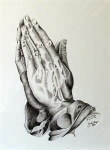 Perhaps the best title for John 17 is, “The Lord’s Prayer.” As the hour of His betrayal, arrest, and crucifixion approaches, Jesus takes time to pray for His disciples. His prayer, while encompassing many things, seems to focus upon three thoughts.
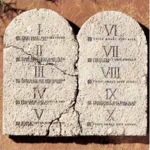 The commandments of God were given to the people of God so they had a standard by which to govern themselves. These laws were given the highest place of honor in the nation. They were placed within the Ark of the Covenant, in the Holiest place within the Tabernacle. Years later, when the Tabernacle was replaced with Solomon’s Temple, the only articles remaining in the Ark were the two stone tablets containing the commands of God. We need to understand, God’s design for His people was that He be at the center of their personal, and their national lives. The center of the nation was the Temple, the center of the Temple was the Ark, and the center of the Ark was the Word. The people of God must always be governed by the Word of God.
 James explains the process of sin,
 John tells us, the miracle of turning the water into wine was the first of Jesus’ miracles, and its purpose was to make His glory known. The word “glory” is used synonymously in the Bible with the word “name” and speaks of a person’s character. When Moses longed to know God more, he asked God to “Please, show me Your glory.” (Exodus 33:18) God responded, saying, “I will cause My goodness to pass before you and declare My name.” It is in that passage we learn much of the merciful and gracious character of God. Here, at this wedding feast, John tells us that we are to learn something about the character of Christ.
 Crucifixion was a violent and public form of execution. The display was designed not only to punish the condemned, but to dissuade others from violating the law of Rome. It is difficult for me to comprehend the emotions that would flood those who watched, as Jesus was beaten and crucified.
 While it is clear Moses is being instructed regarding the role of the priests who would care for the articles within the Tabernacle, this statement is also a beautiful picture of the ministry of Jesus. He takes care of everything that happens behind the veil. Just as the curtain would serve as a divider between the outside world and what happened within the holy chambers of the Tabernacle, so we have a veil that separates heaven’s proceedings from our view. Paul spoke of the fact that our vision of God is marred by the experiences of life.
 Jim Gallagher