Zechariah 6:12-13
“Behold, the Man whose name is the BRANCH! From His place He shall branch out… And shall sit and rule on His throne; So He shall be a priest on His throne, And the counsel of peace shall be between them both.”

The Bible speaks of the riches of the grace of God. Grace is a word that refers to God’s giving nature. James 1:17 puts it this way, “Every good and perfect gift comes from the father of lights in whom there is no variation or shadow of turning.” Certainly, life is filled with gifts given from heaven to earth. When we gaze into the face of nature, or a new born child, we cannot help but think of the grace of God. Nevertheless, every other gift pales in comparison to the gift given on the first Christmas morning. God wrapped His Son in human flesh and gave Him to mankind to be Savior and Lord. The young Child who was born in a stable, and laid in a manger, would grow to become what the apostle John called, “the propitiation for our sins, and not ours only but the sins of the whole world” (1John 2:2). As the years went by, He would move from a manger to a cross, where He would die, to pay the debt of sin, and reconcile man to God. As you give and receive gifts this Christmas, it is our prayer you would receive the greatest gift ever given, and put your trust in Christ, as Savior and Lord.
Merry Christmas, Pastor Jim
 Over the years, Hollywood has gone to elaborate ends to depict the results of a curse. The storyline of the hit movie “Pirates of the Caribbean,” is built upon the fact that a group of pirates stole enchanted treasure and were forced to live forever under its curse. The curse forced them to live forever, without taste or feeling.
 Zerubbabel, the governor of Judea, was responsible for a task far too great for himself. He had led a small group of untrained refugees from Persia back to Jerusalem. There, in the midst of continual opposition, and with limited resources, they began the project of restoring the Temple of God. It did not take long for the people to become discouraged and the work to cease. It was then, that a message came to Zechariah from the Lord. The message was in the form of a vision, and showed the Temple menorah connected to an olive tree by seven golden pipes. These pipes provided oil to the lamp, without the need of human intervention. Puzzled by the meaning of the vision, Zechariah was told this was a message for the governor. Just as the lamp would be fueled supernaturally, so would Zerubbabel be strengthen by the hand of God. He was told that it was ‘Not by might nor by power, but by My Spirit,’ says the Lord.
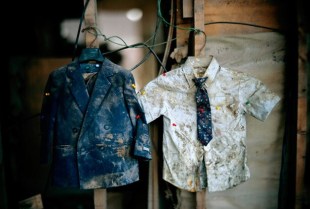 We cannot be certain of the attire of the King of Israel or that of a common housewife, but we do have a detailed description of the clothing worn by the high priest. Scripture goes into great lengths to describe the artistically woven garments he would wear whenever serving around the Temple. It must have been quite a shock to Zechariah when he saw a vision of Joshua the high priest clothed in filthy garments. I am sure the words of the prophet Isaiah came to mind,
 After seventy years of captivity Israel was allowed to return to the land and begin to rebuild their broken down Temple. Millions had been taken captive and only a fraction returned to get the task started. Even those who returned had become discouraged and had forsaken the work. It is in this setting that Zechariah declares,
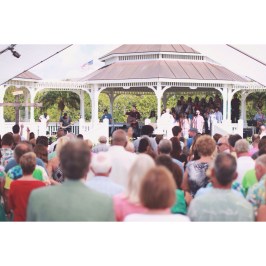 The sermons from Haggai and Zechariah stirred the people to return to the work of rebuilding the Temple. Because of their dedication, it did not take long before walls were erected and priestly ministry restored. The completed Temple had a dual affect upon the people. Some celebrated, while others wept. Those who wept did so because they remembered how glorious Solomon’s Temple had been, then they looked at the rudimentary structure they had built to replace it. Haggai’s message was directed to them. He declared, this new Temple was actually more glorious than the one it replaced. It’s glory was not in the expense required to build it, or in its intrinsic value, but in what would take place within it.
 Seventy years after Judah was defeated and Jerusalem was burned to the ground, a remnant of Israelites, led by Zerubbabel, made their way back to Jerusalem to rebuild the Temple. After an initial period of success, they were met by strong opposition that caused the work to cease for a period of fifteen years. During that time, the people who were once involved in the ministry, became distracted by life and the Temple remained an incomplete work. It was at this time God raised up the prophet Haggai to exhort the people. His initial message was both simple and clear. He told them it was time for them to consider their ways. The needed to take the time to examine their lives and see if they were, in fact, living for the Lord. This is the first step in getting our spiritual life back on track.
 Many things that are highly esteemed in our world have little value in the kingdom of God. We put such a high price tag on appearance, when God tells us that He looks past our temporal frame and into the heart. It use to be, countries were assessed financially by the amount of gold they had in reserve, but God uses that for asphalt in the new Jerusalem. Conversely, much of what is lightly esteemed by man is of the highest value to God. Here we are told of the great emphasis He places upon meekness and humility, two character traits that are not highly valued in our world today.
 Several years ago I went to Orlando International Airport to pick up a young man whom I had never met. We had talked numerous times on the phone, but had not yet met in person. Before making the hundred mile drive to an airport that has almost thirty five million customers every year, I wanted to be sure I’d be able to pick my friend out of the hundred thousand people milling about. I asked him how I would recognize him. He responded by telling me, he had blond hair and was six feet, six inches tall. A few hours later, I walked into the airport and found him among the masses. Two characteristics were enough to distinguish him from the crowd.
 Over the past year we have seen summits on global warming, protests against the cruelty to animals, and the unjust treatment of certain groups of individuals. It is clear that people feel justified in demanding the ethical treatment of the planet and its inhabitants. While it is clear that we bear a responsibility before God for the way we treat what He has given us to care for, it is also true, we can become consumed with other things and forget that the most valuable, and often most neglected resource in the world, is the human soul. Jonah wept over the mistreatment of a plant and cared little for the eternal souls of the inhabitants of Nineveh.
 Jim Gallagher