Mark 10:49
“Be of good cheer. Rise, He is calling you.”
 Imagine the thrill that must have filled Bartimaeus when he heard these words. Although his eye did not allow him to see, he had heard the stories of the man from Galilee, who was healing the sick and raising the dead. Now Jesus was right there within the sound of his voice, able to hear his cries. Knowing that he had nothing to offer, Bartimaeus simply cried out for mercy. “Jesus, Son of David, have mercy on me!”
Bartimaeus did not consider himself worthy of receiving anything from Jesus, but he did consider Jesus worthy of giving it. He knew that his only hope was mercy, and He cried out to the One he knew would provide it. The surrounding crowd began to rebuke him. They did not consider Bartimaeus worthy of receiving anything from Jesus. It is not difficult to understand why. What could a blind beggar possibly offer the King of Kings? I am sure Bartimaeus had grown accustomed to being silenced and ignored. Those with little to offer are often ignored. But his cry for mercy did not go unnoticed; Jesus heard his cry and called him; first to have his sight restored, and then to follow Jesus.
Like Bartimaeus, Jesus is calling you. First, He is calling you to come, have your sins forgiven and receive eternal life. Second, He is calling you to follow Him, and finally He is calling you to serve Him. Will you answer that call? Will you ignore the cries of your own heart or of others who say, you are not worthy? Instead, will you listen to the One who is worthy of giving mercy; Who is calling you to come to Him?
Pastor Jim
 Paul often referred himself as a servant, or a slave. The word he used was “dulous”, which means bond-slave, or a person who was bound to another. It is not difficult to find examples in history of people who have been enslaved. Some are slaves because they were conquered in battle, others for religious or ethnic persecution, and still others because of debt or a criminal offense. It is quite difficult, however, to find examples of people who chose slavery as a way of life. I suppose no ambitious students ever pursued slavery as a career path, seeking a university that offers a good slave training program. Yet Paul refers to himself as a bond slave of Christ. Exodus 21 gives a vivid picture of why Paul would choose to be a slave.
 Mark 4 ends with the story of a dangerous journey on which Jesus took His disciples. Knowing all things, He knew they would face a storm on the sea. He knew this storm would be so great that those who had grown up fishing those waters, and experiencing rough conditions, would fear for their very lives. But it is not until we venture into Mark 5, that we understand the reason for the journey was one man. Jesus left the multitudes and took twelve men on a death-defying trip across dangerous waters, in order to reach this one man. Multitudes were flocking to Him, but in the country of the Gadarenes, was a man in need. This becomes even more amazing when we understand who this man was. We read of him,
 In the synagogue in Capernaum, Jesus encountered a man with an unclean spirit. While there is no way of knowing what lifestyle he had lived which led to his condition, we can surmise from other accounts of dealing with demons, he was living in great darkness and difficulty. Whatever turmoil he faced, the solution was encountering Jesus. What the world could not do, Jesus did with seven simple words,”be quiet and come out of him.”
 Chapter 25 seems to be about being ready. Jesus warns about a final day of reckoning, when the sheep will be separated from goats. To ensure that we are ready for what is coming, Jesus gives two parables. The first explains the need to be born again, the second the need to be busy about the Lord’s business.
 Jacob and his eleven sons were given the best that Egypt had to offer. While the Egyptians suffered under the famine and were forced to forfeit their lands to the state in exchange for food, Jacob’s sons were given the best pasture land. While jobs were scarce, Jacob’s sons were hired to be the chief herdsmen for Pharaoh’s flocks. In a time of great difficulty, they were experiencing such blessings that Jacob predicted the family would multiply greatly and become a strong nation. It is striking to me that the favor they were enjoying, was not their own merit, but the work of another. The same is true of us. We have forgiveness of sin, eternal life, and the favor of God, not based on our own work, but due to association with Christ. All who are in relationship with Him are adopted sons and daughters of God, and joint heirs with Jesus. We are no longer looked upon as strangers who live distant from God, or as enemies who are fighting against God, but we are viewed as children who are loved by God. All the favor of God is given to those who are his by relationship. It matters not the sins we have committed in the past. Throwing a brother in a pit, then lying to dad about his death, were not the issue. All that mattered, was Jacob and his sons were related to Joseph. Sit back for a few moments and rejoice over the fact that you belong to God, because of what Jesus has done for you. You are a blood-bought, highly favored child of God, who has been given every spiritual blessing in Christ Jesus.
 Egypt has already played an interesting role in the narrative of Genesis. It was to Egypt that Abraham fled when famine arose, and it was to Egypt, Isaac looked, when famine struck in his day. I find it interesting that the same God who warned Isaac not to go to Egypt, sends Jacob there. We might say, Jacob was given a great commission to go to Egypt, and to further his kingdom. Later in this chapter, we read that seventy people left for Egypt, however, when Exodus begins, that number is probably well over two million.
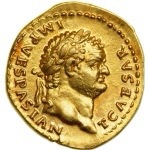 As the cross approaches, so does the opposition to Jesus. The religious leaders are desperately trying to turn the people against Jesus. In this case, they sent the young Pharisees, and the Herodians, a political sect that favored the Jews being ruled by Rome. When they arrived, they must have thought they had come up with the perfect question. No matter how Jesus answered, He would end up polarizing himself. “Is it lawful to pay taxes to Caesar?” If Jesus says “yes”, he will find himself at odds with the people. They will think of Him, and all He has done and said, as simply a political movement in support of Rome. If He says “no”, He will find himself the enemy of Rome and be a wanted man. I can almost feel the excitement of the religious leaders as the question is posed. Jesus’ response is as insightful as it is brilliant.
 Jesus told a story that the original audience understood to be speaking of how they were rejecting the Son of God. In response to the story, Jesus refers to builders who had rejected the “chief cornerstone.” In many ancient buildings, the foundation was supported by a cornerstone, without it, the foundation would not be able to support that which was built upon it. Jewish lore tells the story of the building of Solomon’s Temple, a project that took many years. The massive stones for the Temple were quarried some distance away from the Temple site and delivered to the builders. As they were laying the foundation, a very oddly shaped stone,that did not seem to fit, arrived. The contractor, thinking the quarry had made a mistake, had the stone thrown away. It was pushed down a hill into the city trash dump. Sometime later, the contractor sent to the quarry asking for the chief cornerstone. The quarry sent back a message saying it had already been delivered. When the contractor argued that he had never received the stone, someone reminded him of the oddly shaped stone, the one that did not seem to fit his plans, that he had thrown in the trash. Sure enough, that was the stone that would support the whole building. With great effort, they raised the stone out of the rubbish heap, and continued erecting what would become a building which would bring glory to God and salvation to man.
 There are some verses in Scripture that are more difficult to understand than others. Satan, who is a master of manipulating the Word of God, (he did it in the garden to Eve and in the wilderness to Jesus) uses this verse to confuse, discourage and frighten believers. Because of the severity of the warning in this passage, it is of utmost importance that we understand what Jesus is saying.
 Jim Gallagher