Psalm 123:1-2
“Unto You I lift up my eyes, O You who dwell in the heavens. Behold, as the eyes of servants look to the hand of their masters, as the eyes of a maid to the hand of her mistress, so our eyes look to the Lord our God, until He has mercy on us.”
 The Psalmist compares the way he looks to the Lord, to the way a servant looks to a master. If we are going to understand the comparison, we need to consider how a servant would look to a master. It seems to me, one word would describe it best. A servant looks to his master obediently. The role of the servant is to do the will of the master, and in order to do that, he must look to the master for instruction and respond with obedience. The servant does not have the right to argue with the master, nor the time to complain about how unfair his task, in light of what the other servants are doing. The servant obeys.
The Psalmist is not the only Bible writer to compare himself to a servant. One of Paul’s favorite terms to describe himself was servant. I imagine that if you and I were attending our high school reunion, we would not brag to others, that after years of education, we had become servants. What is it that caused these men to be so thrilled, even honored, by the idea of being servants of the Lord? I think it has something to do with freedom.
The Psalmist understood it was God who had set Israel free. Their history was marked with bondage. They had been the slaves of Egypt, sitting under the threat of death, while being ruled by a harsh task master. They watched as the Egyptians beat their friends, and attempted to kill their children. They also watched, as God came to the rescue; overcoming the impossible and delivering them from the hand of their harsh task master. Later, Israel, again and again ,found themselves in bondage to their enemies. Throughout their history, their desire to be like the world around them, and their compromise with sin, led them into bondage. Time, and time again, they would compromise and fall, and God would intervene and rescue.
Paul understood that the same is true for the Christian. While we might not be the slaves of an Egyptian king, we are no less enslaved. When writing to the Romans, Paul declared, “Do you not know that to whom you present yourselves slaves to obey, you are that one’s slaves whom you obey, whether of sin leading to death, or of obedience leading to righteousness? But God be thanked, that though you were slaves of sin, yet you obeyed from the heart that form of doctrine to which you were delivered. And having been set free from sin, you became slaves of righteousness.” Romans 6:16-18
Prior to coming to Christ, each of us was a slave of sin. As a result, we were missing out on the abundant life God intended for us to live, and we were on the fast track to eternal separation from God. On Calvary’s cross, freedom from sin was secured. Christ made the way for us to be set free from sin, and become the servant of righteousness. The celebration, of being a servant, is found in understanding that we were never free; we were once the slave of sin and death, and now we have become the slave of a holy and loving God, who desires the best for His children. The highest place you can ever attain in life, is that of a servant of Christ. Take some time right now to look to your Master. You will see His unfailing love and matchless grace. You will see his nail pierced hands and his unlimited power. You will see His ways are so much higher than your ways; and you will find, as you follow obediently after Him, you will experience life to the fullest.
Pastor Jim
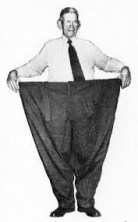 I have always been somewhat puzzled by the marketing slogan “one size fits all.” It seems that really means it might fit, but it won’t fit well. It is much like the all-in-one tools that don’t seem to do any jobs quite right.
 My father-in-law uses the phrase,“So soon,” to chide anyone who is late. I personally have heard the term more times than I care to admit. The basic idea behind it is “I am glad you are finally ready, but what took you so long.” I cannot help but think of that phrase as I read of David finally sitting upon the throne as king of all Israel.
 Paul declared, all Scripture is inspired by God and is profitable. Every page of God’s Word has a purpose in the life of the believer. However, there are certain passages that have greater meaning to each of us, because of the impact they have had upon our lives. This is a particularly important text to me.
 It seems to me, if one thing is certain in life, it is that things are constantly moving. We live on a moving planet. At the equator, the Earth is spinning at 1000 miles per hour, moving at 67,000 miles per hour around the Sun, and our entire Galaxy is moving at about 185 miles per second. Since this motion is constant, we cannot feel its effects. However, there is other movement that we do notice. The United States Geological Survey website lists dozens of earthquakes that have happened around the world in the past seven days. Earthquakes happen because the earth’s surface is like a thin crust. This crust is made up of many pieces, like a puzzle, and the pieces keep moving around and bumping into each other. This causes the surface of the earth to move like waves rippling in a pond. Also, about 70% of the earth’s surface is water. That means almost three-quarters of the earth is too unstable to stand upon. As far as I know, Jesus and Peter are the only two people to successfully stand on the surface of the water, and that did not last too long for Pete.
 This Psalm is entitled, “A Contemplation of Heman.” Heman was one of Israel’s worship leaders. As such, he was a man who was committed to the Lord, and to His service. Yet, he describes a time in his life when trials have mounted up against him. It seems as though there is no way out. While he does not explain the cause, he does describe the effects.
 Sometimes, the reason a person fails to walk with the Lord is quite simple. In the case of Jehoram, king of Judah, it was anything but complicated; he got involved with an ungodly woman, who turned his heart from the Lord.
 After choosing His people, God established laws to govern their behavior. There were moral laws and social laws, as well as ceremonial laws. All of which, when followed, would serve to benefit the individual, as well as the nation.
 Namaan was a Syrian general and a man of prominence within that nation. He was a courageous, well-spoken individual, who seemed to be both well liked and morally sound, by the standard of the day. With all Namaan had going for him, he was struck with a blow that would undo the strongest of men. A quick visit to his local doctor had revealed he had contracted the deadly and painful disease of leprosy. No doubt, he gathered with his family and closest friends to share the news. That meeting would have been filled with weeping and despair. No amount of money, power, or position could undo the deadly effects of this disease. He was destined for a long, painful struggle that would definitely end badly.
 Things in the kingdom of God run very differently than they do in the kingdoms of men. This is particularly true of exaltation. The word exalted means “to raise in rank or power, to be elevated or lifted above.” What exaltation is, and how to achieve it, are different in God’s Kingdom.
 Jim Gallagher