Psalms 62:11
“God has spoken once, twice I have heard this: That power belongs to God.”
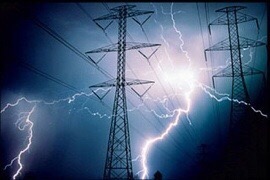 A number of years ago, I came home from a long day of work, at the end of an even longer week. I was worn out and hungry. Since I was the only one home at the time, I was facing a battle within. My stomach insisted on being fed, but the rest of me demanded rest. Too broke to order out, and too tired to fix a meal, I laid down on the couch and began flipping the channels. I stopped on a show called, “Lifestyles of the Rich and Famous.” This a series that displayed the possessions of extremely wealthy individuals. If memory serves me, this was the only time I had ever seen the show. The episode followed the life of a the king of a small Middle Eastern country, whose name I have forgotten. While his subjects lived in poverty, he was one of the wealthiest men alive. They showed his palace, which was the size of a small college campus. What really got my attention, however, was when he traveled to the U.S. He wanted to stay in a particular room in a hotel in Beverly Hills, but the room was booked. Instead of finding another room, or another hotel, he bought the hotel, remodeled it to his liking, and stayed in the room of his choice. Lying there on the couch, I was struck by two contrary things. The first was this man’s great wealth, the second was how it had no effect on me whatsoever. I was still too broke to go out and too tired to cook.
The Psalmist speaks of the wealth of God’s power. He declares, “power belongs to God.” His power is infinite. There is nothing too hard for God. It required no more effort from Him to create the world, than it did for him to heal Peter’s mother-in-law from fever. He spoke the world into existence, and holds it together by the Word of His power. When the time has come, He will fold this one up, and speak a new heaven and earth into being. However, unlike the wealthy prince, God’s power does have direct effect upon my life.
Jesus promised, “But you shall receive power when the Holy Spirit has come upon you; and you shall be witnesses to Me in Jerusalem, and in all Judea and Samaria, and to the end of the earth.” Acts 1:8
The power of God is available to the child of God. A power that will enable us to successfully walk with, please, and serve, the Lord. This power is received by simply asking and obeying. If you feel too weary to overcome the trials or temptations you are facing, the solution is to look up, and ask God to pour out His Holy Spirit upon you. The God to whom this power belongs, promises to empower us through His Spirit.
Pastor Jim
Questions for Psalm 62
- What is the key word in verse 1 and 5 that becomes the theme of this Psalm?
- How many times is the word salvation repeated?
- Who should we pour our hearts out to?
- Look at verse 8 and 10. Who are we to trust in and what are we not to trust in?
 Ephesus was a very large city with a diverse population. It is estimated, at the time of Paul’s visit, there may have been in excess of 400,000 people living in the city. Ephesus was the largest city in Asia Minor, and one of the largest in the empire. Because of its location, on a trade route, the city was very wealthy; it had become an important center for commerce. Like any large wealthy city, Ephesus had its share of vice. One of the greatest was temple prostitution. Overlooking the city, was the Temple to Diana; which was an awe-inspiring site. It drew pilgrims from all over the world to come and worship. The worship practice included sexual immorality.
 The book of Acts is a sequel to the Gospel account, written by Luke. He declares, in this opening verse, the purpose for writing the Gospel account and the book of Acts. He states that the Gospel records what Jesus began to do; and the book of Acts, what He continues to do. Since Jesus is alive from the dead, the story of the Bible is a continuing one. John closed his Gospel account declaring that all the books in the world could not hold all that Jesus did for humanity. As amazing as it may seem, Jesus is not finished. The resurrection is not the end of the story. It is the transition point where the work of Jesus transfers from being accomplished outwardly through His life on earth, to the inward working of His Spirit in the life of all who believe.
 Perhaps the best title for John 17 is, “The Lord’s Prayer.” As the hour of His betrayal, arrest, and crucifixion approaches, Jesus takes time to pray for His disciples. His prayer, while encompassing many things, seems to focus upon three thoughts.
 Much of what Jesus said was shocking to the ears of the disciples. He spoke with a wisdom that was otherworldly. They may have become used to the fact that Jesus was going to say things that surprised them, but I do not think anything could prepare them for the statement Jesus made here. Earlier, He had been speaking about His betrayal and death, He now declares they will be better off without Him. For over three years, these men have been with Jesus. They have watched as He transformed lives, and listened as He declared truths about the Kingdom of God. Now He is speaking about leaving, and declaring they will be more effective with Him out of the way. I know Peter is the one who is known for objecting to Jesus, but I find myself objecting on His behalf. I cannot think of a single scenario where it would not be better to have Jesus around. If I were fishing, boating, preaching, visiting the sick, feeding the hungry or facing the Pharisees, I think it would always be better to have Jesus there, than to be by myself. How could Jesus say such things? What conditions could make it better to have Jesus absent, rather than present?
 There seems to be some striking differences between the Church in the book of Acts and the church today. The impact they were having on their world was tremendous; we read of the sick being healed, the dead being raised, and most importantly, multitudes of people believing in the resurrected Lord, and their lives being transformed. How is it that they, with so little, were able to do so much? We know they did not have the completed Bible, much money, or the technological resources we have today, yet they were turning their world upside down. The secret to their success was the filling of the Holy Spirit. It is clear, what they did not have was overshadowed by what they did have; that is, power from on High!
 Sadly, the world has no shortage of those who are in need of Christ. Our population has reached the seven billion mark. Seven billion souls walking this planet, many of whom do not yet know Christ. We recognize certain places in the world as being unreached. Places where many, or even most, of the citizens are yet to hear the good news of salvation, through faith in Christ. We need to pray, send, and provide for those who go to the uttermost parts of the earth with the Good News of Christ. However, we cannot neglect to remember the many unreached souls in our own backyard. Here, in Luke 10, as Jesus sends the seventy, we have some practical instruction on how to reach the lost.
 When the time came to make the articles for the Tabernacle, God selected two men, and filled them with the Spirit of God. Under their leadership, this vast and elaborate project was completed. Normally, we associate the need for the Holy Spirit with intrinsically spiritual tasks, like leading worship, teaching the Bible, or witnessing to the lost. However, here, we discover that the empowering of the Spirit is required for designing the facility and making the building. It seems a pattern develops within Scripture, where God chooses common men, fills them with the Spirit of God, and accomplishes uncommon works. Instead of focussing on what makes us common, we should fix our attention on being filled with the Spirit.
 There are some verses in Scripture that are more difficult to understand than others. Satan, who is a master of manipulating the Word of God, (he did it in the garden to Eve and in the wilderness to Jesus) uses this verse to confuse, discourage and frighten believers. Because of the severity of the warning in this passage, it is of utmost importance that we understand what Jesus is saying.
 Relationships are a key part of life. Healthy relationships lead to a good life, and unhealthy relationships will make life very difficult. The most important earthly relationship is marriage, and who you marry is one of the most important decision in life (second only to receiving Christ.) Solomon wrote “He who finds a wife finds a good thing and obtains favor from the Lord” (Proverbs 18:22). Genesis 24 tells the story of how Isaac and Rebekah met. Their story is a bit different than most of ours because the marriage was arranged, but there are some vital principles to keep in mind for any relationship.
 Jim Gallagher