Numbers 31:1-2
“And the Lord spoke to Moses, saying: ‘Take vengeance on the Midianites for the children of Israel. Afterward you shall be gathered to your people.’”
 Webster defines vengeance as, “the act of doing something to hurt someone because that person did something that hurt you or someone else.” Some synonymous would include payback, reprisal or even revenge. We seem to be fascinated with the concept of vengeance. It is the premise behind famous works of literature like; The Iliad, Hamlet and The Count of Monty Christo. It seems that the idea of paying back those who have wronged us resonates within the heart of man. This is probably due to the fact that all of us have felt wronged one time or another and wished that we were able to do something to get back at the ones who hurt us. There seems to be an innate cry in the heart of all men for what we perceive as justice. We have all heard children complain that things are not fair, and we see adults, young and old, rallying behind politicians who have stirred in them the desire to get what is theirs.
When it comes to the concept of divine vengeance it is vital to realize some very important distinctions between the judgment of God and the judgment of men. First off, the very definition is different. Instead of being a form of payback for being hurt, divine vengeance would better be seen as, “punishment inflicted in retaliation for an offense.” God does not lash out in a fit of rage, nor does He seek to get back at those who have hurt Him. Instead, God metes out perfect justice upon those who have violated His laws. Throughout Scripture we find that the vengeance of God does not come without warning and long periods of forbearance with the rebellious ways of mankind. The Canaanites were given over four hundreds years before judgment came, Egypt received numerous plagues before the angel of death arrived, the judgments recorded in the book of Revelation are distributed in waves. God gives every individual numerous opportunities to turn to Him before ever pouring out His wrath.
While judgement is not our favorite subject to meditate upon, it is important for us to realize there is a time coming for every individual, and for the world as a whole, when we will give an account to God for the life we lived, and the decision we made regarding His Son. There is no way to avoid that day, but there is a way to avoid the judgment. The Bible teaches that, apart from Christ, we are all under the wrath of God, but when we receive Christ, wrath is replaced with mercy. Instead of facing judgment, we can receive the free gift of eternal life. One thing we can count on is that God will be fair. If we want to avoid punishment and receive reward, we must allow Christ to take the judgment we deserve.
Pastor Jim
 Consecration is an important part of Christianity. A person who desires to walk with God, must set himself apart from the world and to the Lord. We cannot successfully follow the Lord when only a portion of our lives is given to Him. Jesus said it is impossible to serve two masters because we will be loyal to one at the expense of another (Matthew 6:24). It is also impossible to serve the Lord when we continue to bring things into our lives that distract or defile us.
 The priests wore garments designed by God and put together by the finest craftsmen in the land. These garments included a tunic, sash, robe, ephod, breastplate and even a turban. When the priest was fully dressed, all eyes would be upon his attire. That is why this verse is so striking. Once clothed, the priest would approach the altar, sacrifice a ram and sprinkle its blood upon his clothing. Instead of seeing the glory of the garments, all eyes would be fixed upon the stain left by the blood.
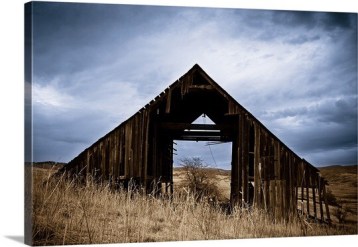 It is not uncommon today, to hear messages in the church making it sound as though walking with Jesus will mean we will no longer face difficulty, and our life will be filled with increase. This teaching is referred to as “prosperity doctrine”, and while catchy, it is clearly not Biblical. The saints of old did not expect to walk through life without trial, difficulty or opposition. Instead, they expected that in he midst of whatever life threw at them, they would find help, comfort, consolation and strength from the Lord. Perhaps no one more clearly expresses this than the prophet, Habakuk. He paints the darkest picture a farmer could ever imagine and declares, in spite of it all, he would continue to rejoice in the God of his salvation.
 Habakkuk struggled to understand what was happening in his life, because his theology did not allow for the wicked to prosper and the righteous to suffer. His definition of holiness meant that those he considered to be wicked, could never prosper above the righteous. The prophet is not alone in the struggle to reconcile life experiences with what we think to be true of God.
 Daniel is one of the greatest heroes in all of Scripture. His personal commitment and public ministry impacted the lives of his companions, co-workers, and even kings. We know he had opportunity to witness to the most powerful and influential men in the world, and it seems some of them were converted. One of the reasons for his success in ministry was his faithfulness. Daniel set himself apart to the Lord and sought to live a godly life. His commitment to the Lord affected every area of his life. Privately, we know he was a man of prayer and the Word. Publicly, we know he was a man of commitment, faithfulness and conviction. When his accusers sought to find some charge to bring against him, they realized that the only way they could find fault was if his religious convictions forbid him to obey an earthly law.
 As the prophecies of Ezekiel come to a close, he describes the allotments of land that will be given to each of the tribes of Israel. It is striking to me that seven times in the chapter theses districts are called “holy.” The inheritance the Lord gives to His people is always holy, and the life we live should be lived in holiness.
 What a glorious sight this must have been, as Ezekiel watched the glory or radiance of God descend upon and fill the Temple. What had been a building made with men’s hands, now became the temple of the living God. The presence of the Lord within its walls transformed this building and set it apart from all others.
 Jim Gallagher