Pray 

1 John 5:16
“If anyone sees his brother sinning a sin which does not lead to death, he will ask, and He will give him life for those who commit sin not leading to death. There is sin leading to death. I do not say that he should pray about that.”

Prayer is a critical part of our relationship with God. It is the means by which we are involved in the work of God on earth. Scripture reveals the things God desires to do when we join in prayer; as a result we get to see God work. There are many texts in Scripture making it clear that when we fail to pray, we fail to experience the works of God. Perhaps the most well-known is when James declares, “You have not because you ask not.” (James 4:2c) Because of the importance of prayer, as it relates to the work of God, John instructs us on how to pray. Verse 14 tells us what to pray for,

1 John 5:14 “Now this is the confidence that we have in Him, that if we ask anything according to His will, He hears us.”

The purpose of prayer is to get the will of God accomplished. When we look into the Word of God we will see the things that are important to God. When we ask Him to accomplish those things, we will begin to see our prayers answered. We know the salvation of our loved ones is on the top of God’s list, so we should put them on the top of list, and be praying for them regularly.

In verse 16, John addresses things that we should not pray for. He refers to them as the sins that lead to death. Sometimes, I wish there were a few more verses in Scripture. I wish John would have added a sentence or two explaining exactly what he meant. Since he did not, we are left to do a little digging on our own. What does the Bible say we should not pray about? I think the clear answer is, we should not pray about the things God has told us not to do. When my children were little, they would often ask for something, and not receive the answer for which they were hoping. Instead of accepting the answer they received, they would continue to ask, and at times even plead, beg, or ask with fervency. Their continued asking, after they had been told NO, did not change our minds, it only got them into trouble. In the same way, there are things God, because of His love for us, forbids us to have, or be involved in, and it is wrong for the Christian to ask for those things.

While all that is true, it is clearly not what John is talking about here. He is talking about those times when a friend gets involved in sin, and how we should respond to him. He tells us, if his sin is a deadly one, don’t pray about it. That is, if his sin is so dangerous, and able to destroy them, or their relationship with the Lord, don’t pray. Since I am not sure exactly what John means, I think the best application for the text is, instead of standing back waiting to decide what God wants me to do, I should take the advice of Paul who said, “. . .when a brother is overtaken in sin you who are spiritual restore him in a spirit of meekness. . .” (Galatians 6:1) Rather than letting our loved ones continue down a road that is taking them away from the Lord, we should step in, and do all we can to get them back on track. We already know God loves them, and He wants to restore them, the only question is, how we can help?

Pastor Jim


Walking In The Light

1 John 1:5
This is the message which we have heard from Him and declare to you, that God is light and in Him is no darkness at all.”

Light is used to illustrate holiness. John is declaring that God is perfectly holy and without sin. This creates a problem, since we are all sinners. In this text, John explains how sinful people can have a relationship with a holy God. In the opening verses of the chapter, he refers to Christ becoming a man and making fellowship with God possible. That was accomplished through the cross, where Jesus died as a substitute for us. The sinless, in place of the sinner, so we might be saved. John is now writing to the one who recognizes his sin, and begins to follow Christ.
1 John 1:6 “If we say that we have fellowship with Him, and walk in darkness, we lie and do not practice the truth.”

Coming to Christ involves more than raising your hand in response to a message, or walking forward at a church service. John declares, the one who has received Christ will have a life change. If we continue to live unchanged by the experience, then we have not truly experienced Christ. The Bible speaks of a young man who had an encounter with Christ, but was unwilling to truly commit to following Him. He walked away from the experience, unchanged and unsaved. We call him the rich young ruler (Luke 18:18-23).

1 John 1:7 “But if we walk in the light as He is in the light, we have fellowship with one another, and the blood of Jesus Christ His Son cleanses us from all sin”

On the other hand, the one who has truly met Jesus, will begin to change the way he is living. Instead of choosing to invest in the things that lead away from Christ, he will take steps toward growing in Christ. Notice he writes “walking in the light as He is in the light.” This refers to living the way Christ lived.

The Bible is more than a religious book, it is the owner’s manual. It explains how to live a life well pleasing to the Lord. John does not suggest that we will be without sin, but that as we walk with Christ, there is a continual flow of forgiveness when we stumble.

1 John 1:8 “If we say that we have no sin, we deceive ourselves, and the truth is not in us.”

I have yet to meet a person who truly believes they have never done anything wrong. We know that we sin. The problem is, we attempt to move things out of the sin category, and into the acceptable-to-God category. This is all too common for couples who are not married, and yet, get involved physically. They attempt to excuse their sin with words like, “we are in love” or “we are married in God’s eyes.” The truth is, sin is sin, and it interrupts fellowship with God. If we are to walk with the Lord, we must get sin out of our lives.

1 John 1:9 “If we confess our sins, He is faithful and just to forgive us our sins and to cleanse us from all unrighteousness.

The word confess has two meetings. First, it means to be in agreement. Instead of arguing with God about what He says is sin, we simply agree with Him. Second, the word means to admit. When we sin, we must admit it to God. We confess our sin and ask for His pardon. John promises the result will be both forgiveness and cleansing. If there is anything you need to confess, do it now. Don’t take another step down the wrong road; instead, begin to make steps toward a restored relationship with Christ.

Pastor Jim


Not Forsaken 

Jeremiah 51:5

“For Israel is not forsaken, nor Judah, by his God, the Lord of hosts, though their land was filled with sin against the Holy One of Israel.”

As Jeremiah writes this, Jerusalem is smoldering in the rubble of its own destruction. Babylonian forces have taken the people captive, burned the city to the ground, and set up their own government to rule over Israel. Since the cause of Judah’s fall was their stubborn rebellion against the Word of the Lord, it would seem logical to conclude that God had forsaken His people. Jeremiah declares that those who are in covenant relationship with God, will not be utterly forsaken, even when we have sinned against Him.

Obviously, sin is damaging and has long lasting effects upon our lives. The children of Israel experienced this first hand, as they were defeated in battle, taken captive, and became strangers in a foreign land for seventy years. The same will be true of us. A man who is unfaithful to his wife and family, may destroy his marriage and lose the trust of his children. A person who is  dishonest at work, may lose his job and find it very difficult to support his family. But a child of God, no matter how hard he falls, will not be forsaken.

Hebrews 13:5 “Let your conduct be without covetousness; be content with such things as you have. For He Himself has said, ‘I will never leave you nor forsake you.’”

The promise that God will never leave us should keep us close to Him, not living on the edges as far away as possible, while maintaining a relationship with God. This promise should drive us closer and closer to the one who loves us with an everlasting love. This truth should motivate us to cry our for mercy, and allow ourselves to be washed in His amazing grace.

No matter what you have done, His mercy is new every morning, and your relationship with Him can be restored.

Pastor Jim


Work In Progress 

James 2:14  “What does it profit, my brethren, if someone says he has faith but does not have works? Can faith save him?”

James 2:17 “Thus also faith by itself, if it does not have works, is dead.”

James asks a very important question, “What is the profit of faith without works?” He then adds, “Can that faith save?” To help lead us to the right answer, he uses an illustration which reminds us that talk of food will not always satisfy the appetite of a hungry man. In the same way, a dead faith cannot produce life. Right away James recognizes there will be objections to his teaching; some will say, “You have faith, I have works.” This seems to be the objection of those who think there is more than one way to God. They might say, “I am glad you have found something that works for you, but I don’t need that. I am a good person, and when I die, I will go to heaven because of the good things I have done.” James is in no way saying our good deeds will get us into heaven, but that true faith is always accompanied with good works. The person who truly believes, will have actions that support his claims.

Throughout history, James has gotten a whole lot of grief for writing this passage. Some have even gone so far as to suggest that this book does not belong in the Bible. I think it is important that we see James is not presenting a different doctrine than the rest of Scripture, but is in fact, explaining more clearly, the doctrine of justification by faith. James is not alone in teaching that faith without works is dead.

JEREMIAH TAUGHT IT

Jeremiah 7:8 “Behold, ye trust in lying words, that cannot profit.”

JOHN THE BAPTIST TAUGHT IT

Matthew 3:7-8 “But when he saw many of the Pharisees and Sadducees coming to his baptism, he said to them, “Brood of vipers! Who warned you to flee from the wrath to come? Therefore bear fruits worthy of repentance”

PAUL TAUGHT IT

Galatians 5:6 “For in Jesus Christ neither circumcision nor uncircumcision avails anything, but faith working through love.”

Titus 1:16 “They profess that they know God; but in works they deny Him, being abominable, and disobedient, and unto every good work reprobate.”

Ephesians 2:8-10 “For by grace are ye saved through faith; and that not of yourselves: it is the gift of God: Not of works, lest any man should boast. For we are his workmanship, created in Christ Jesus unto good works, which God has before ordained that we should walk in them.”

PETER TAUGHT IT

2 Peter 1:5 “And beside this, giving all diligence, add to your faith virtue; and to virtue knowledge; . . .”

JOHN TAUGHT IT

1 John 2:4 “He who says, ‘I know Him,’ and does not keep His commandments, is a liar, and the truth is not in him.”

JESUS TAUGHT IT

Luke 13:3 “I tell you, no; but unless you repent you will all likewise perish.”

Matthew 7:19-20 “Every tree that does not bear good fruit is cut down and thrown into the fire. Therefore by their fruits you will know them.”

Matthew 7:21-23,26,27 “Not every one that says unto me, Lord, Lord, shall enter into the kingdom of heaven; but he that does the will of my Father which is in heaven.”

James goes on to explain his teaching by stating, faith cannot be seen without action, “I will show you my faith by my works.” He then uses one of the most powerful sermon illustrations ever given. He declares the demons, who believe in God, show by their actions, they are not followers of God. In contrast to the demons, James reminds us of the father of faith. Who showed the reality of his faith with His obedience to the word of God. His action of placing his son on the altar, showed in a striking way, that God was his chief love (Genesis 22:1-12).

Jesus declared, the first commandment is to love God with ALL. This is evidenced in our lives, not simply by words, but by actions. With one final illustration, James brings up Rahab the harlot. Her past life was marked with open sin, although no details are given as to what led her down that path. All we know is when presented with the opportunity, she chose to depart from her old way of life, and determined to join with the believers and follow God. What about us? What are the works that show an account of our faith? In Matthew 7, Jesus stated, we must do the will of the Father. The first work to add to our faith is simple obedience.

Read your Bible and do what it says. When you come to a text that convicts you, make some changes in your living. It is not the change that saves you, but the saved will certainly change.

Pastor Jim


The Book

Hebrews 10:7
“Then I said, ‘Behold, I have come— In the volume of the book it is written of Me— To do Your will, O God. ’”

Years ago I had a friend who worked in a local book store. Part of his job was to be familiar with the books so he could answer questions and make recommendations. The problem was he really did not enjoy reading. His solution was to read the book jackets which often gave a brief summary of the content of each book. While that did not make him an expert by any means, it did give him a good idea of what to expect if and when he ever ventured into reading one of the books. If the Bible contained an inspired summary of its content it would be but one word: Jesus.

John 5:39 “You search the Scriptures, for in them you think you have eternal life; and these are they which testify of Me.”

While the Bible touches on, and even addresses, a wide variety of topics, it is primarily a book about salvation. The Old Testament is filled with promises of a savior coming to provide atonement for sin, and the New Testament tells the story of the Savior. The more you know the pages of your Bible, the more you will know Jesus. He is found on every page and in every story. Sometimes He is the main character of the event, other times He may rest in the shadows in the form of a type or illustration, but He is always is there. As you read the Word, be careful to observe the context so as not to make the Bible say something it does not mean, but also be careful to look for Jesus.

As you continue through Hebrews, keep in mind one of the key themes of this letter is that Jesus is better. That is why He is being contrasted with the Old Testament laws, covenant, priesthood and sacrifices. They all served the purpose of pointing to Christ, He serves the purpose of fulfilling the Law and sacrifices. As a result, we no longer live under them, but live in a relationship of grace.

Pastor Jim


The Tabernacle 

Hebrews 9:23
“Therefore it was necessary that the copies of the things in the heavens should be purified with these, but the heavenly things themselves with better sacrifices than these.”

Hebrews is dealing with the superiority of Christ. Here in Chapter 9, we see Christ is clearly superior to the Old Testament sacrifices, for they must be offered continually, but He was offered once to take away sin. We are even told, while it is appointed for all men to die once, then to face judgment, Jesus took the penalty on the cross, rescuing all who believe in Him from the judgment to come.

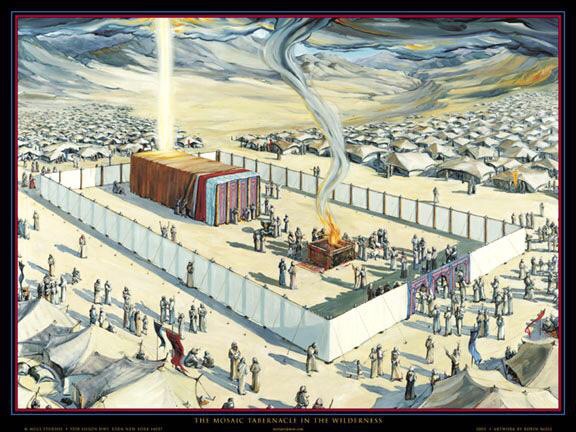
In discussing the superiority of Christ, the furnishings of the Tabernacle are listed; we are told they are “copies of heavenly things.” In fact, the Tabernacle and it’s furnishings, become a perfect illustration of the way of salvation. In Exodus, as the Children of Israel are working their way from Egypt to Canaan, God gave them plans for building the Tabernacle. This building would serve the purpose of making a way for man to be in right relationship with God.

The Tabernacle measured 15’x15’x45′ and was surrounded by a linen fence. Linen is not a durable fencing material. It is safe to say, none of our houses are surrounded by linen fences. The purpose of this fence was to symbolize the holiness of God, reminding the people they could not have access to God. However, on the eastern side of the fence, was an opening large enough for all to enter. Jesus told us, He was the doorway to heaven (John 10:7). Although God is holy and men are sinful, Jesus has provided a way, for any and all who will come to Him, to be forgiven and restored.

Once a person walked through the gateway, they would be face to face with the altar of sacrifice. This would remind them they are sinners in need a Savior. Just as the innocent animal was sacrificed for the guilty sinner, so Jesus, the Lamb of God, went to the cross to make a way for us. Right behind the altar was a large basin in which the priests would wash. Paul compared the Bible to water that washes the believer. Jesus told us that after He has cleansed us, we still need to have our feet washed (John 13:10a). The Word of God is the Christian’s cleansing agent. As we walk through this life, we get dirty, the Bible cleanses our mind and refreshes our spirit.

Inside the Tabernacle were five important pieces of furniture, each one symbolic of relationship with God. The Lamp-stand shedding its light, was symbolic of the work of the Spirit illuminating the Word, and was of God. The show bread speaks of Jesus as the bread of life, the incense altar is a picture of the prayers of the saints, and the Ark and mercy-seat, of the intimacy of relationship with God.

It can be helpful to use the Tabernacle as a roadmap, reminding us of our relationship with God that we now have because of the work of Christ. The High Priest, who alone entered in behind the veil once a year, speaks to us of the access we now have daily, to the very presence of God. Let’s take advantage and spend time with Jesus today.

Pastor Jim


Throne Of Grace 

Hebrews 4:16
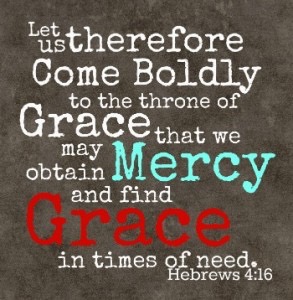
“Let us therefore come boldly to the throne of grace, that we may obtain mercy and find grace to help in time of need.”

It seems the Apostle Thomas sometimes spoke what the others were thinking. On one occasion, when Jesus spoke of where He was going, Thomas replied, “Lord we don’t know where You are going or how to get there” (John 14:5). To which Jesus stated, “I am the way, the truth and the life, no one comes to the father except through me” (John 14:6). It was through the cross that Jesus made a way. On the cross He bore our sins and their penalty, opening a doorway, for any and all who trust in Christ, to have access to God. That access to God has two applications. First, when we die, we attain heaven. Jesus was declaring, as emphatically as possible, that heaven is awarded to those, and only those, who trust Christ for salvation. This is not the only time this truth is declared.

John 3:3 “Jesus answered and said to him, ‘Most assuredly, I say to you, unless one is born again, he cannot see the kingdom of God.’”

Acts 4:12 “Nor is their salvation in any other, for there is no other name under heaven given among men by which we must be saved.”

But there is a second application this doorway into heaven provides. Hebrews 4 states, while we live, we have access to the throne of God. For the Christian, this is not a throne of judgment, where we are penalized for the things we have done wrong, or things we have neglected to do. Instead, it is a throne of grace, where we are able to receive from God the things that we need while here on earth. The word grace speaks of the giving nature of God. Because of His love for us, and our relationship with Him, He desires to give good things to His children. He will not hold back anything from us that would help us to become more like Him, or assist us in making it to the end of our journey and enter glory. Notice, at the throne of grace, we receive two things. First, there is mercy provided for the failures of the past. Second, there is grace given to help us not fall into those same snares in the future.

The way has been made to a throne of magnificent grace. All that remains is that we come boldly, consistently, and expectantly. I want to encourage you to take some time right now to sit before the Throne of Grace, pouring out your heart and receiving mercy and grace to help.

Pastor Jim


Looking Back

Isaiah 63:7
I will mention the lovingkindnesses of the Lord And the praises of the Lord, According to all that the Lord has bestowed on us, And the great goodness toward the house of Israel, Which He has bestowed on them according to His mercies, According to the multitude of His loving-kindnesses.”

I recently attended a communion service where we were encouraged to think back upon who we were and where we we going. My mind immediately took me back to being a carefree young man, who gave no regard to the things of God. I allowed myself to imagine what my life would be like had I continued on that course. I could see myself walking down a road in pursuit of pleasure, only to find that road leading to vanity. We were then encouraged to think about all Christ accomplished for us, and to reflect upon the things He has done in our lives. My mind immediately filled with images that would never have been there had I not said yes to Jesus. I reflected upon my marriage, family, and ministry. Soon my heart began to burst forth in praise, I could hardly contain the thanks I felt for my redemption and the sweet but painful experience of sanctification. Like Isaiah, I wanted to mention the loving-kindness, goodness and mercies of the Lord.

Take some time this morning to reflect upon all God has done for you. Think upon the cross, and upon the fact that while you going through life, He was drawing you to Himself, by the work of His Spirit. Look back at all the ways He has shown Himself good to you, and begin to express praise. Perhaps it would be of value to write out a list of some of the ways God has shown His unfailing love to you over the years.

Pastor Jim


Come On Down

Isaiah 64:1
“Oh, that You would rend the heavens! That You would come down!”

As Isaiah looked at the present condition of his world, his heart cried out for the Lord to come. He was not alone in this cry, for the apostle John brought the book of Revelation to a close crying out for Jesus to return. Saints throughout the ages have echoed his plea. There will be a literal fulfillment of Isaiah’s prayer; Jesus will return for His church and He will set up His kingdom. That being said, Isaiah’s prayer has a much broader scope as well. I have found myself, on multiple occasions, praying for God to rend the heavens to meet with me. In times of quiet prayer, as I am about to face a situation that I know I am less than equipped for, my heart pleads for God to rend the heavens and meet with me. In times of corporate worship, as I lift my voice and raise my hands, I often cry for Him to rend the heavens to minister to His church.
Whatever the setting may be, I am fully aware of the vast difference between God and man. We are dependent upon the greatest advances in technology to even get a glimpse of the heavens, while He stoops to look through them to meet with us. What an amazing God we serve! He was willing to step out of glory to die for us, and continues to show us His great love as He meets with us daily.

Pastor Jim


Bridging The Gap

Isaiah 59:1-2
“Behold, the Lord’s hand is not shortened, that it cannot save; nor His ear heavy, that it cannot hear. But your iniquities have separated you from your God; and your sins have hidden His face from you, so that He will not hear.”

Sin is missing the mark. Just as an archer aims at a target, lets his arrow fly, and misses; so we attempt to do our best, only to fall short of the perfect standard of God. The problem is, sin has grave consequences. Sin not only effects our emotions by making us feel guilty, it also effects our ability to have a relationship with God. Isaiah reveals, the real impact of sin is separation from God.

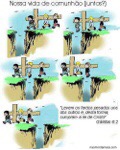
If we were hiking and came to a gorge where a bridge used to be, we would be forced to either fashion a new one or find another way across. When it comes to sin, the gorge is too wide. Our efforts can never bridge the gap between man and God. We must look for another way across. Fortunately, there is a way. Jesus went to the cross to make a way for sinners to be reconciled to God. We are told, “if you confess with your mouth the Lord Jesus, and believe in your heart that God raised Him from the dead youwill be saved.” (Romans 10:9).

Imagine the utter joy of sin being forgiven, and knowing God personally! This message so impacted the first generation of believers, they sacrificed all to travel the world, telling anyone and everyone that reconciliation with God was possible.

Thank God that while sin separates, Jesus restores.

Pastor Jim