1 Samuel 27:1
“And David said in his heart, ‘Now I shall perish someday by the hand of Saul. There is nothing better for me than that I should speedily escape to the land of the Philistines; and Saul will despair of me, to seek me anymore in any part of Israel. So I shall escape out of his hand.’”

It seems that David had reached his breaking point. After years of hiding in caves, and narrowly escaping the hand of Saul, David decides to leave Israel, and dwell among the Philistines. This decision would lead him to live a double life. He still has a heart for the things of God, but is living a lie. As the story continues to unfold, David even reached a point where he attempted to join the Philistines in battle against the people of God. This was no doubt one of the darkest times in the life of David. The root cause is revealed in verse one,
1 Samuel 27:1“And David said in his heart…”
Like all of us, David’s head was filled with a barrage of different messages. In one ear, he heard the voice of God promising him he would one day sit upon the throne in Israel, in the other, his heart spoke. Fear, discomfort, difficulty, and exhaustion, had brought David to the point where his heart began to tell him Saul would defeat him, and the only hope was to run. In a moment of weakness, David listened to his heart and walked out of the plan of God.
This is not an uncommon experience. We all face circumstances that cause us to call into question the promises of God. We, like David, are forced to make a choice. Will we listen to the promises of God or the cries of the heart? This has become so common that we are often encouraged to “Follow our heart” or “Do what our hearts tells us.” That was bad advice when David followed it three thousand years ago, and it remains bad advice today. Instead of listening to our hearts, which is little more than an expression of our ever changing emotions, we should listen to the the unchanging promises found in the pages of God’s Word.
Consider this: who was correct, David’s heart or God’s promises? Did David die by the hand of Saul, or was he crowned Israel’s greatest king? We can, and should, always trust in the promises of God, over the ever changing and unstable cries of our hearts.
Pastor Jim
 The intersection where Samuel and Saul meet is a crossroad between two fascinating story lines. Saul, the son of a wealthy and loving father, was commissioned to search out three stray donkeys. As they wandered through the land, they were divinely directed to the land of Zuph where they encountered Samuel. Meanwhile, the day before, while Saul was seeking donkeys, Samuel’s day was interrupted by the voice of God. We read,
  Israel’s failure at Ai was due to the sin of both Achan and Joshua. Achan’s sin was following his desires, and taking into his life that which God had forbidden. Joshua’s sin, while equally as destructive, is somewhat more subtle. Joshua failed by moving forward without consulting the Lord. He chose to look at his circumstances and his resources, and do what seemed logical at the moment. The result: he sent a battalion of men into a battle they were certain to lose.
 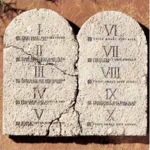 The commandments of God were given to the people of God so they had a standard by which to govern themselves. These laws were given the highest place of honor in the nation. They were placed within the Ark of the Covenant, in the Holiest place within the Tabernacle. Years later, when the Tabernacle was replaced with Solomon’s Temple, the only articles remaining in the Ark were the two stone tablets containing the commands of God. We need to understand, God’s design for His people was that He be at the center of their personal, and their national lives. The center of the nation was the Temple, the center of the Temple was the Ark, and the center of the Ark was the Word. The people of God must always be governed by the Word of God.
 Every generation likes to think of themselves as more advanced than the one before them. I recall one of my children, when he was about four, asking what life was like back when things were in black and white. He really thought color was only seen by his generation and the rest of us had grown up in the gray hues of a silent movie.
 Paul explained to the Corinthian church the simplicity of the Gospel message. He stated that Jesus died for our sins, was buried and rose again on the third day; all according to the Scriptures. That was the message the first believers declared to their world. They went into their homes, streets, marketplaces, schools and places of business, declaring the Son of God died for our sins and rose from the dead.
 Over the centuries, one of the most lucrative businesses was the spice trade. There were times when certain spices were worth their weight in gold. Names like Magellan, Columbus and Sir Francis Drake, are just of few of the names associated with those who would journey the world, in search of new found flavors. At one time, salt was so valuable the phrase “he’s not worth his weight in salt”, was a common way to express the value of an individual. The word “salary” is actually derived from the Latin word for salt.
 On the day Isaac was weaned, Abraham and Sarah celebrated by throwing a party. Because they had waited so long for a son, and since Abraham’s camp was large, this would have been quite a celebration. Tragically, this joyous occasion is cut short when the teenage son of Hagar began to mock his half brother Isaac. While it is not shocking to any parent that one child could tease another, we might all be taken back a bit by the strong reaction from Sarah. When she hears his scoffing, she calls on Abraham to “Cast out the son of the bond woman…” In response, Abe will give Hagar and Ishmael a canteen of water and a loaf of bread and send them packing. On the surface this seem like a colossal over-reaction. What was it about Ishmael’s actions that warranted such a harsh reaction?
 The circumstances of life often cause us to question God. It is hard sometimes to reconcile what we are going through with who God is; compassionate and good. This happened to John the Baptist. From the words of Jesus, we know John was the greatest man to have ever lived. He was a man that preached the gospel to thousands, the man who pointed the way to Christ, and the man who baptized Christ, Himself. Yet, in our text, we read he was also the man who doubted. Laying in a prison cell, the cold, the dampness, the suffering, all seemed to squeeze his faith and cloud his vision of Christ.
 Jim Gallagher