Psalms 146:1-2
“Praise the Lord!
Praise the Lord, O my soul!
While I live I will praise the Lord;
I will sing praises to my God while I have my being.”

Praise is pretty common. If you have ever watched a sporting event you will hear it. One team goes ahead in the final seconds and the arena bursts forth in praise. Sometimes however the opposing team hits the final shot at the buzzer and the crowd is stunned into silence and the praise evaporates from the room.
Often we approach God in the same way. If all is well in the world we offer him praise, but as soon as things become difficult we have nothing to offer except complaint. We base our praise on our emotional condition rather than basing it upon who God is and what He has done. Regardless of what our day is like God is worthy of praise. Rain or shine, blessing or buffeting, joy or sadness, God is still the one who loves us, saved us and promises to work in and through us. If we are in the midst of a difficult season of life it is important that we do not lose sight of God or become consumed with our grief. Whatever hardship we are facing Jesus is still alive from the dead, seated at the right hand of the Father, sending forth His Spirit to work in our lives and preparing a place in eternity for us. While we cannot always celebrate our circumstances or our emotional condition we can certainly celebrate the amazing great and unending love of God who promises to be with us as we walk through the fire.
Jim
 A few years ago I was traveling to West Africa to speak at a conference for pastors and church workers. Most of the preparation for the event took place on the ground in Africa leaving me to only be responsible for my own travel needs. Three documents are necessary for entrance into Ghana. First like all countries a passport is necessary, second Ghana requires a visa and finally an immunization card showing that I have received an inoculation against Yellow Fever. Having been to Ghana before I knew of the requirements, planned my trip and headed toward the airport. About fifteen miles into my drive I had an urge to check my documents. I pulled over and dug through my bag to find that I had a passport and visa but had left my immunization card behind. I was forced at that point to turn around and go get it.
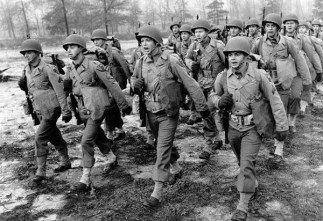 David was familiar with warfare. He had faced Giants and well as giant armies. He knew the dangers of hand to hand combat and there is little doubt that his body bore the scars of some of those battles. As a soldier, David also knew the importance of protecting his head. A wound to the forearm, although painful, was not deadly but a wound to the head could cost him his life. The same is true for us in the spiritual battles in which we are engaged. It is critical for the Christian that we learn to keep our head covered when under attack.


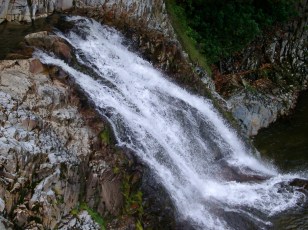 Israel was in a bad place. Conservative estimates calculate the camp of Israel to be nearly 2 million souls. They had left the comfort of the Nile river and began the arduous journey through the desert en route to the land of Promise. It did not take long before the difficulty of their journey began to take its toll physically and emotionally. The hardship of their experience coupled with the lack of basic provisions caused them to doubt the power of God to carry them safely to their destination. When their water supply ran out it is understandable that their faith was challenged and their weaknesses revealed. Their hardship would provide another opportunity for God to reveal His loving kindness. The characters in the scene include the congregation of Israel, an arid desert, a solid rock and a stick in the hand of Moses. What looked to be an impossible situation turned out to be a means for God to reveal Himself to the nation.
 A few years ago my wife and I were window shopping at an outdoor mall in southern California when we stumbled onto a crowd of people huddled around a large telescope. We decided to stand in line and see what they were looking at. When our turn came to look through the view finder we were stunned. From the courtyard of the mall we were able to see the rings around Saturn. We took advantage of the moment and allowed the young man who owned the telescope to point out distant stars and even a distant galaxy. Technology has provided us with things that were unthinkable during most of human history, and there in the mall we were able to observe the heavens. I was struck both by the majesty of the heavens and by the advances of science that would allow the casual shopper a glimpse into the heavens. But I did realize that this was only possible because of the highest reaches of human development. Centuries of studying the stars had come together at that moment to provide a telescope that could view the heavens.
 The Psalmist writes regarding the forgiveness of God and the fact that He will mete out vengeance on certain actions. These concepts often seem contrary to one another. We associate forgiveness with the removal of any and all consequences, but God does not see it that way. Abraham was forgiven for his sin with Hagar, but Ishmael was still born. Samson was forgiven for his sin, but the pillars still fell upon him. David was forgiven of adultery, but Bathsheba’s child still died. Peter was forgiven for denying Christ, but still had to live with the image of Christ’s gaze and the memory of the rooster’s cry.
 Uncertainty makes life difficult. There are times in each of our lives when we have been crippled by indecision. We struggled so long to make a decision, that the decision was ultimately made for us. In those times, we might say our problem was double-mindedness. We could not make a decision because we either wanted to go both directions or neither direction. James referred to that as being a double-minded man who is unstable in all his ways (James 1:8). The Psalmist refers to a problem even deeper than being double minded, he refers to the person whose heart is split between opposing desires.
 Jim Gallagher