Psalms 78:1-2
“Give ear, O my people, to my law; Incline your ears to the words of my mouth. I will open my mouth in a parable; I will utter dark sayings of old”
 Asaph, Israel’s chief musician during the reign of David, took it upon himself to write a song depicting the history of the nation. His tale is one that magnifies the mercy of God, while revealing the continual unfaithfulness of Israel. Time, and time again, the people turned from the Lord out of fear or desire for things that He had forbidden. He spoke of their experiences in Egypt, when they feared the king more than the Lord, and of their time in the wilderness, when the trials they faced caused them to doubt the provision of God. He told of their time in the Promised Land, when comfort and ease drove them to complacency toward God, and into idolatry. Imagine how the first readers of this psalm might want to go back and make changes to their history, or at least make changes to their personal lives.
Asaph referred to his message as a parable. The idea, of course, is that the psalm has a meaning that sits underneath the surface. Instead of just being a message indicting Israel for their sin, it also serves as an illustration of the life of many believers. We, like Israel, have been redeemed from bondage into a relationship with God. In this relationship, we find ourselves in times of trial or battle, and in times of ease and comfort. If we read the psalm carefully, we can see ourselves in the story, as well as learn from Israel’s mistakes.
What would a psalm read like that told your story? What amazing ways would the mercy of God be reveled as your conversion was told? How would His faithfulness be seen in your daily walk? What changes would you want to make in how you walk with Him, in whatever time you may have left?
Take a few minutes to contemplate your testimony. Perhaps even write it out. Then consider what you will do to ensure that the remaining chapters of your story give glory to God.
Pastor Jim
Questions for Psalm 78
This is the first called the “Historic Psalms”. What a wonderful way to teach the history of the children of Israel.
- The introduction of the history lesson begins. Verse 3 says “we have heard and known, and our fathers have told us.” Are you sharing with your children, friends the things God has done in your life? He wants to do more.
- In verse 4, we read of the wonderful works He has done. What has the Lord done in your life? Where is He leading you?
- Remember, psalms or songs were sung. Not like music of today but a wonderful way to remember history, events in life and who God is. Who is God in your life right now? Read Jeremiah 32:27.
- As you read you will see things like; they still sinned, they tested and provoked, they did not keep His testimonies. Verse 32 says in spite of all that God has done for Israel, they did not believe. You know the end of this story. Trust God in all that you are. Proverbs 3:5-6.
 We can never be sure what the day in front of us holds. We can each testify of times in life, where our days were suddenly interrupted with something good or something bad. A phone call, text, email, or visit to the doctor, can suddenly change the course of our day and even our lives. David exhorts us that regardless of what life throws our way, we should always respond by magnifying the Lord.
 Life is filled with important things and with essential things. Often, what is important will overshadow what is essential. David was an important man with many responsibilities; he was a husband, father, musician, soldier and a king. Each role he played added new responsibilities and threatened his time with God. To guard against this, David learned to fall in love with the house of the Lord, because there he could experience the glory of God.
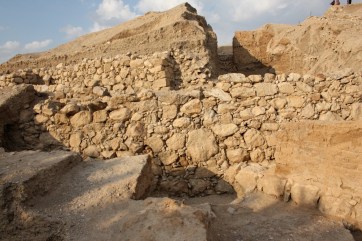 As Joshua stood overlooking Jericho, wondering how to defeat such a mighty foe, I am sure none of his plans included marching his soldiers around the walls while playing music and eventually shouting at the top of their lungs. I imagine he used his extensive battle experience to carefully discern the weaknesses in Jericho’s wall, while studying the lay out of the land to see where the high points were, or how they might build a siege mound against the city. The pragmatic mind of a seasoned soldier would have a lot to say about how to conquer a well-defended city, but in this case, God had an entirely different approach in mind. If victory was to come, Joshua and all Israel, for that matter, had to understand that the ways of God are different than the ways of man.
 Something happened in Moses that made him desire to know God better. Faced with the opportunity to ask anything from the Lord his sole desire was to see the glory of God. In response to this, God had a plan. Moses would get away from the people, hide in the cleft of a rock, and listen as God passed by declaring His true character. This event serves as a pattern for how every believer can discover the glory of a God.

 The sermons from Haggai and Zechariah stirred the people to return to the work of rebuilding the Temple. Because of their dedication, it did not take long before walls were erected and priestly ministry restored. The completed Temple had a dual affect upon the people. Some celebrated, while others wept. Those who wept did so because they remembered how glorious Solomon’s Temple had been, then they looked at the rudimentary structure they had built to replace it. Haggai’s message was directed to them. He declared, this new Temple was actually more glorious than the one it replaced. It’s glory was not in the expense required to build it, or in its intrinsic value, but in what would take place within it.
 John looked into the future of mankind and saw the day when the heavens will open, not to speak, but to call home all who have trusted in Christ for salvation. Paul explained that the dead in Christ would rise first, and we who are alive and remain will be caught up together in the air (1 Thessalonians 4:16-17). What a day that will be, when we are no longer looking through a glass dimly, but we are face to face with Christ (I Corinthians 13:12) steeped in His glory.
 he day Solomon’s Temple was built was one of the most glorious days in the history of Israel. It marked the completion of many of the promises God had given to His people down through the centuries. From a single man with a barren wife, a mighty nation had been formed, that now occupied the land that was promised to them. Their enemies had been defeated and held at bay, the people were experiencing a prosperity they had never dreamt would be possible, and the Tabernacle that spoke of mobility, was now replaced with a glorious, permanent Temple. On the day the Temple was dedicated, something quite remarkable took place. We are told, “the glory of the Lord filled the house of the Lord.” God’s presence was so “thick” the priests had to stop their ministry. It seems all they could do was fall down before the glory of God. Ezekiel lived about 300 years later and he too saw the Temple and the glory of God. This time, however, the glory was not filling the Temple, but rather was departing from it. He watched as the same glory that once filled the Temple, began to rise from it and slowly depart.
 Imagine the scene in the ancient world where nation after nation had been defeated by the Assyrian army. No matter how strong their defenses were or who they allied themselves with, no one was a match for the that ruthless nation, who not only defeated their enemies, but humiliated, tortured, and displaced them as prisoners of war. Then suddenly a tiny little country not much bigger than a large U.S. county, struck Assyria with such a devastating blow that they retreated to their homeland, and their king was assassinated for his failure. This would certainly get the attention of the nations around Judah. It did not take long before word spread to Babylon and delegates were sent to king Hezekiah to see how they had accomplished such a feet. It is interesting that he takes them to the storehouses and shows off his treasures, instead of taking them to the temple and showing off his God.
 Jim Gallagher