John 8:34
“ Most assuredly, I say to you, whoever commits sin is a slave of sin.”

James explains the process of sin,
James 1:14-16
“But each one is tempted when he is drawn away by his own desires and enticed. Then, when desire has conceived, it gives birth to sin; and sin, when it is full-grown, brings forth death. Do not be deceived, my beloved brethren.”
The gist of what he is saying is, while sin promises to bring pleasure, it can only produce death. We have all found that to be true. We all face temptations, and those temptations make promises, but when sin gets its hooks in us, we find that it really destroys. We find that instead of serving us, we are the slaves of sin. One of the worst elements of slavery is the hopelessness it produces. When a person is bound up in sin, they see no way out. They may have resolved over and over to quit, but the grip of sin is too great, and they find themselves bound to it once again.
Into this hopeless scene, Jesus enters with a message to liberate captives. Earlier, He declared He came to set the captives free.
John 8:31-32
“Then Jesus said to those Jews who believed Him, ‘If you abide in My word, you are My disciples indeed. And you shall know the truth, and the truth shall make you free.’”
Jesus promises, what resolve, counseling, even incarceration have been unable to do, He will accomplish through His Word. The process is in two parts. First, believe in Him. When you do, He will come into your life and wash the guilt, and penalty of your sins, away from you. Second, abide in His Word. The same Word that spoke the world into existence, healed the lame and the blind, and even raised the dead, is the same Word that can transform your life. It can unloose the grip sin has on you, giving you true freedom and a fresh start.
Today, if you find yourself enslaved by sin, I am sure you have lost a great deal in life because of it. You have given up personal freedom, and both negatively and drastically, impacted those who you love. I am sure you have also tried everything to be set free. You may even feel like the Pharisees who said;
“How can You say, ‘You will be made free’?” John 8:33
Rather than question the promises of Jesus, how about obeying them? Let’s determine together that we will receive Him and daily dive into His Word, trusting that He will transform our lives.
Pastor Jim
Questions for John 8
- What was the Pharisees purpose for bringing the woman caught in adultery to Jesus?
- Interestingly, there is no mention of the man that she was committing adultery with. Why do you think he was not also brought to Jesus?
- What qualification did Jesus say a person had to meet to be the first to throw a stone at the woman? Was there anyone present who met that qualification? If so what did they do?
- What is the singular remedy that is provided for removal of sin? (verse 24)
- In verse 29, what guiding principle do we see that governs Jesus’ life and actions? Are you also governed by this principle?
- Read verses 31-37. Freedom and slavery are discussed. What must a person do to be free? What will cause a person to be a slave of sin?
- Although all people are God’s children in the sense that He is their maker and Creator, not all people are God’s children in the sense that they are born again, forgiven of sin, and adopted into his family. Read verses 38-47. According to the text, what are some evidences that God is your Father?
- Notice that this chapter begins and ends with an attempt to stone someone. What similarities are there between these two instances? What differences are there?
Old Testament:
Numbers 33- Abundant Life
Numbers 34- Innumerable Promises
 In this Psalm, we find David enduring the consequences of sin. Like all of us, he was drawn into something forbidden and chose to trespass, because sin always makes promises it cannot keep. He was, no doubt, hoping to find some level of pleasure by disobeying the law of God. Whatever enjoyment he derived from his sin, was soon eclipsed by the pain and sorrow sin always brings. Here we find David in travail of soul and under severe attack from his enemies. He describes himself as being pierced by arrows of conviction, being under the heavy weight of guilt, and even undergoing attack from others who think that he deserves the sufferings he is facing.
 Sin is a funny thing. It promises pleasure, but can only bring pain. Day after day the Word of God was presented to the people, and day after day they rejected it. It was not until the walls of the city were breeched, and the city lit on fire, that many realized their mistake. The sin they thought was giving them life, was actually leading them into bondage.
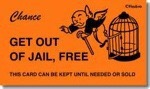 Jehoiachin, the last King of Judah, will forever be known as the one sitting on the throne when the nation fell. The collapse was not entirely his fault, although his wickedness did play a part. While very few details are preserved regarding his actual reign, we are told that after 37 years in prison, he was suddenly released and treated favorably. Jeremiah does not give an explanation of the details leading up to his release, but as Scripture unfolds, we can uncover the heavenly reasons behind it.
 As we read through the Word, it is important to remember the chapter breaks were added later to make it easier to find specific passages. At times, they can create a break in thought not intended by the author. This often causes us to miss something vital in the text. The thoughts of Romans 8 are an obvious conclusion of what Paul declared in Chapter 7. He referred to himself as carnal, a word meaning worldly; and wretched, meaning deeply afflicted, or extremely bad. The reason for his dire view is that he found himself incapable of living a proper Christian life. The Word of God clearly expresses the kind of life which pleases God, and the particular behaviors, thoughts, desires and actions that are regarded as sinful. By his own admission, Paul knew what was right, but lacked the power to accomplish these things. He writes,
 A person, standing at a distance and looking in at Solomon’s kingdom, would be struck by the enormous wealth and prosperity. We read of merchants traveling the world and returning with treasures of gold and precious stones, as well as exotic spices and animals. We are told, the landscape was marked with elaborate building projects, fine arts, and gourmet foods. Beyond question, the nation looked to be at its apex, and was envied by the world around them. In fact, we are told that delegations, including kings and queens, would make their way to Israel just to see its highly developed society and vast wealth. All the world wanted to be like Israel. Sadly, things were not really as they appeared. Underneath the surface was a cancer that was eating away at the fabric of the nation, and in a few short years would cause its collapse.
 The city of Samaria was under siege. The Syrian army with all it’s forces, had surrounded the city, and was starving out the people. The difficult times had caused the people to behave in deplorable ways. Sins so repulsive they are difficult to mention, ran rampant throughout the city. Within this scene, we read of four men living on the outskirts of the city. These men were lepers who were no longer living, as much as they were waiting to die. In this condition, they looked at one another and determined, starving to death was a worse way to die than being a Syrian POW. As a result, they decide to leave Samaria and surrender to the Syrian army.
 Even in ancient times, life was often difficult. Conditions, beyond the control of an individual, would leave him in a place where he could not pay his debts. To address this issue, God set up a system in Israel where a person could become an indentured servant for a period of seven years. During this time the work done by the individual was treated as payment for the debt owed. At the end of seven years his debt was considered as paid-in- full and he was set free. This was called the year of release, and when it arrived the servant was set free and loaded up with provisions to begin a new lease on life.
 Guilt is a powerful emotion, and very effective motivator. We can all think of times when we have been “guilted” into doing something we did not want to do. But perhaps the greatest impact guilt has on us, is not what it gets us to do, but what it keeps us from doing. I can only imagine how the guilt must have haunted Joseph’s brothers all those years. I imagine every time something went wrong they must have, at the very least, considered it to be the hand of God coming against them for their sin. Sadly, these guys are not alone. Many Christians live under the heavy weight of their past failures. Whenever they begin to make any forward progress in the Lord, they are held back by the thoughts of a past decision, failure or deed.
 Jim Gallagher