Hebrews 7:1
“For this Melchizedek, king of Salem, priest of the Most High God, who met Abraham returning from the slaughter of the kings and blessed him, . . .”
 Abraham and his nephew Lot experienced great blessings from the Lord. When they first arrived in Canaan, they had very little, but as the years passed, they acquired great wealth. As nomadic farmers, great success meant an increase in livestock, and increased livestock meant a need for larger pasture lands. Soon their wealth became so great they were forced to separate. Abraham chose to continue to live the simple life of a farmer, while Lot left the family business and began to dwell, with his family, in the city of Sodom. Sodom, and her sister city, Gomorrah, was known for the wickedness that was practiced within the city walls. The king of Sodom had been conquered by Chedorlaomer, a powerful king of Mesopotamia, and along with other kings, paid annual tribute to keep from being attacked. A group of these cities, including Sodom, elected to stop paying tribute and stand their ground. Soon, Chedorlaomer and his forces attacked the rebel cities, and overthrew them. As the saying goes, “to the victor goes the spoils”, and Lot, along with the inhabitants of Sodom and all their wealth, was taken captive. When news of this reached Abraham, he gathered his servants, other shepherds and farmers, and they went in pursuit of Chedorlaomer and his army. Overtaking them in the night, Abe and his men were able to do what the armies had failed to do, they miraculously conquered the enemy forces, and rescued the captives.
It was on the return from this great battle that Abraham met Melchizedek, king of ancient Jerusalem. Weary from battle, and perhaps somewhat frightened at the idea of the retaliation that may arise from Chederloamar’s troops, Abraham has one of the most interesting encounters of his life. We are told Melchizedek meets him with bread, wine and a blessing. The writer of Hebrews tells us Melchizedek is a type of Christ, and his actions illustrate the work of Christ. As the weary warrior is ministered to by bread and wine from Melchizedek, so the Christian is strengthened for future battle at the communion table. It was the night before His death when Jesus took bread and wine and instituted the sacrament of communion. He told us that as often as we want, we can partake of these elements and remember the work of the cross. My sins broke His body, and His blood cleanses me of my sins.
No matter what struggles, battles, or obstacles you may be facing, the secret to your success is found at the cross. Take some time today to reflect upon all that Jesus has done for you at Mount Calvary, and there at His feet, pour out your heart to Him.
Pastor Jim
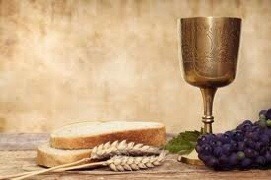 Paul is addressing one of the most important practices of the church and the individual. He will instruct them regarding partaking in communion. Rather than seeing this ordinance as a necessary, and even holy part of their church life, the Corinthian Christians had turned it into a way to honor the wealthy, thus neglecting the poor. It was a common practice in the early church to feast together before communion. In Corinth, they invited the wealthy to eat first and only after they had their fill did the poor get in line. In some cases, the food was gone and the rich were drunk. Suffice it to say, this was not an acceptable practice. Paul is writing to correct their behavior and to instill within them a proper understanding of communion.
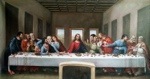 Everything in the life of Christ was working toward His final hour. A moment in time when He, through His death, would provide life for all who believe. Prior to the events of the cross unfolding, Jesus took time to have a last meal with His closest followers. It was at this meal that He established the sacrament of communion. He told his disciples the bread was to represent His body which would be broken to provide healing, and the fruit of the vine would represent His blood, that would be shed for the removal of sin.
 Abram’s encounter with Melchizedek is one of the most interesting and encouraging stories in Scripture. The scene is set for their meeting in the previous chapter, where we find Lot departing from Abram, and moving to the plains outside the city of Sodom. What seemed to be a brilliant business decision, turned out to be a costly moral one, as Lot is soon caught up in the ways of Sodom. When fighting breaks out between nations, Lot finds himself taken captive as a POW, and led to Elam where he will become a slave. The news of Sodom’s defeat, and Lot’s capture, reaches the ears of Abram, who gathers his 318 servants and heads out in hot pursuit. Abram is attempting to do with 318 farmers, what five armies could not do; defeat the forces of Chedorlaomer.
 Jim Gallagher