2 Thessalonians 3:9
“. . . not because we do not have authority, but to make ourselves an example of how you should follow us.”
 I don’t know who thought this was a good idea, but when I was in the eighth grade, all students were required to take a semester of Home Economics. The eighteen week course was divided between cooking and sewing. In the sewing section we learned the basics of operating a sewing machine and were required to make a pillow as a final project. Most of the students went to the local fabric stores and purchased a pillow pattern. I may have had a slight advantage in that my mom was a seamstress and actually taught textiles and design for fashion students at the university level. When I arrived home with my assignment, instead of purchasing a standard pillow pattern, she made me one in the shape of a surfboard. Needless to say, at the end of the term when I turned in a polka dot pillow, fin and all, I received the highest marks.
“. . . but to make ourselves an example of how you should follow us.”
Paul desired that the Thessalonians would receive the highest marks, on the day when they stand before the judgment seat of Christ. In order to ensure their success, he made himself an example. Their walk with the Lord was clearly patterned for them by looking at the way Paul lived. In this chapter alone, he sets the example as a man of prayer, as he prayed earnestly for them. As a man of the Word, not simply one who read and memorized it, but as one who was determined that it be shared with others. I love the phrase he uses in verse one, as he asked them to pray that “the Word of the Lord may run swiftly.” It was his desire that all would hear the Gospel, and all would come to faith in Christ. He was also an example in faith. He speaks of wicked men who are opposing them, and yet he is confident in the faithfulness of the Lord.
Finally, this chapter is filled with exhortations to work hard. That famous statement, “If anyone will not work, neither shall he eat” is found here, and Paul exemplified what it meant to work hard so as not to be a burden to others. My father-in-law and I were discussing basic economics when he reminded me, there is no such thing as a free lunch. Someone is paying for it. Paul wanted the Thessalonians to understand that as they worked diligently as unto the Lord, they would in turn be an example to others, showing what it means to follow Christ.
There are a lot of examples out there, but not all of them are worth following. If you want to succeed in following Christ, determine to follow the example Paul set, then go one step beyond, and make yourself a pattern that others may follow.
Pastor Jim
 When Hezekiah heard the report that his condition was terminal, and death was knocking at his door, he immediately began to pray. His prayer recounted the way he had lived his life in commitment to the Lord. All that was left was to beseech the mercy of God, for an extension of days.
 As this chapter opens, Judah is a on the brink of destruction. The Assyrian army, who had conquered all of Judah’s enemies, was encamped against the city of Jerusalem. The small army of Judah was no match for the Assyrian forces. It looked as though the nation would fall and the people would become prisoners of war. In the midst of this, Hezekiah saw what seems to be a universal struggle. The people who had made an initial decision to follow the Lord seemed to lack the power to walk it out. They had experienced the power of conversion, but were now facing obstacles bigger than their faith. Hezekiah poetically declares,
 One of the primary themes of Paul’s letters to the Thessalonian church is the return of Jesus Christ. Paul lived with the expectation that Christ would return in his lifetime, and urged others to always be on guard. He had warned in his first letter that, “the day of the Lord so comes as a thief in the night” (1 Thessalonians 5:2). Looking around at the condition of the world they lived in, through the lens of Biblical prophecy, had caused some of them to be alarmed, and even gripped with fear. Paul mentions how they were shaken in mind and troubled. The term ‘shaken’ would describe a ship being tossed to and fro by the raging seas. The word ‘troubled’ carries the idea of crying out for help. Paul had written to a group of Christians facing turbulent times, with the purpose of encouraging them with the “blessed hope and glorious appearing of our great God and Savior Jesus Christ.” Yet the message designed to give them hope, had actually robbed them of peace, filled them with fear, and was causing them to cry out in despair.
 Judah was facing their darkest hour. Isaiah records that Sennacherib’ king of Assyria, came up against all the fortified cities of Judah and took them. One by one the cities of Judah fell to the all consuming Assyrian forces. Now that same army had surrounded the city of Jerusalem and threatened to take it by force. Before sending armed men, Sennacherib sent his chief of staff to warn the people of the folly of resisting. His rationale was that since other nations had trusted in their gods, resisted Assyria and fell to the sword, Israel would suffer the same fate if they trusted in the Lord. It is understandable that the unbeliever thinks all gods are the same, the problem arises when the child of God fails to realize that YHWH is above all others.
 Isaiah is speaking of something that only God can do. Even today, we face physical and natural difficulties that all of our human resources are unable to solve. Many who are bound by these things find that life is more like a barren wilderness than a running spring. Some have tried all sorts of techniques and programs only to find they are powerless to change. What we need is more of an encounter with the God, who can make lame men walk and bring water to a parched and arid land.
 The Thessalonian Christians were going through great difficulties. Paul speaks of the tribulations and persecutions they were forced to endure. He also refers to sufferings, and their ultimate rest from these things will not happen until they are in the presence of the Lord. They are not alone in the these difficulties. Paul wrote to Timothy, explaining, “All who desire to live godly in Christ will suffer persecution” (2 Timothy 3:12). Jesus explained, in this world we would face tribulation, but He was greater than the world (John 16:33). It is the lot of all Christians to experience difficulties that try the genuineness of our faith. What strikes me, is not that they were facing trials, but that they received answers from the Lord. This entire letter is God speaking to the Thessalonians regarding the difficulties they are forced to endure.
 This verse contains an exhortation followed by a promise. The exhortation is to search the book of the Lord. Webster defines search this way, “to look into or over carefully or thoroughly, in an effort to find or discover something” My wife and I look at some things quite differently. When an item is misplaced I become frustrated, thinking that if it is not where it belongs, there remains an unlimited number places to look. She on the other hand begins to search. I think she sometimes enjoys the challenge. Inevitably, in a matter of minutes, she has located that which is lost. We should approach the Word of God the way an explorer or a excavator approaches life. We must understand, there are precious treasures tucked away in the Bible, and if we are diligent, we will find the ones that are designed for our present condition. I once heard of a man in search of gold. He spent years working his claim only to come up empty. Finally, in a moment of discouragement he sold the rights to his land and moved on. The new owner, within a few days, struck it rich. The first man had given up only inches away from the mother lode.
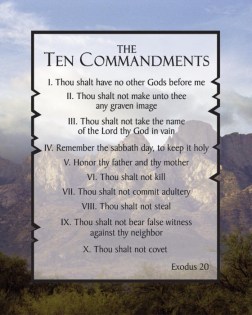 Israel, in Isaiah’s day, was in dire straights. The Assyrians were on a rampage, overthrowing any nation that stood in the way of their desire for global dominance. Israel watched as their neighbors were defeated and enslaved to the most bloodthirsty nation the world had ever known. In the midst of these threatening conditions, people began to offer solutions. The most common was to make an allegiance with Egypt to withstand the Assyrian invasion. Isaiah offered an entirely different remedy. He encouraged the people to understand, it was God who could save them. But in order for this to happen, they would have to look at Him very differently than they had been doing. He used three words to describe a proper relationship with God.
 Years ago, when our twin sons were infants, my wife woke me in the middle of the night. Having been up with the babies, she saw someone in our yard. Concerned that we might be dealing with a home invasion, my instinct was to grab something to protect myself and head into the yard. As I peered through the front window, I realized that it was actually a group of teenagers who were toilet-papering our house. I immediately thought of grabbing the garden hose, getting on the roof and spaying them down. The problem was, the garden hose was in the front yard where I had left it after its last use. Frustrated that I was unprepared for the surprise visit, all I could do was run outside, make myself known, and watch them run off. Thinking they might return to finish the job, I laid on the roof with the hose in hand for the next few hours, only to be disappointed by the fact that I had missed my opportunity. Paul reminds us that the return of Christ will be like an intruder in the night. The time to prepare for His return is not after His arrival, but in anticipation to His coming.
