1 Corinthians 11:22
“What! Do you not have houses to eat and drink in? Or do you despise the church of God…”
 Paul is addressing one of the most important practices of the church and the individual. He will instruct them regarding partaking in communion. Rather than seeing this ordinance as a necessary, and even holy part of their church life, the Corinthian Christians had turned it into a way to honor the wealthy, thus neglecting the poor. It was a common practice in the early church to feast together before communion. In Corinth, they invited the wealthy to eat first and only after they had their fill did the poor get in line. In some cases, the food was gone and the rich were drunk. Suffice it to say, this was not an acceptable practice. Paul is writing to correct their behavior and to instill within them a proper understanding of communion.
“What! Do you not have houses to eat and drink in? Or do you despise the church of God…”
First, Paul points out that coming to the communion table is different from coming to the dinner table. We must come looking for and expecting something different from when we gather to eat. The expectation is we are meeting with Jesus. Communion was not designed as a religious ritual, but as a means of experiencing fellowship with Christ. The last supper, when this ordinance was established, was a very intimate time. The disciples gathered around the table with Jesus as He spoke with them, and it was at that time, John laid his head in Jesus’ lap. Communion is primarily a time to draw near to Christ. It is through the cross we have access to the Throne of Grace, where we meet with God.
“Take, eat; this is My body which is broken for you; do this in remembrance of Me.”
Second, communion is a time of reflection. Jesus said, “do this in remembrance of Me.” The word remember carries the idea of bringing thoughts together or recollecting. Throughout the day we have scattered thoughts about Jesus. Our time with Him is interrupted by responsibility or distraction, but at the communion table we bring our thoughts into the captivity of Christ, and we focus upon what he has done for us. There are five points that we are encouraged to focus upon. First, we should look in. Paul encourages us to examine ourselves. There, with the cross in view, we look at our life to see if our practices are acceptable to God. It is important that this be done in the shadow of the cross, so we do not leave condemned, but forgiven. Are there practices in your life that need to be set aside in light of Christ? Second, we should look back. Communion affords us the opportunity to examine the cross and reflect upon Christ’s great sacrifice. When we see the brutality of the cross, we can then begin to understand the depths of His love. Each time the whip strikes His back, or the nails are driven, it is a reflection of Heaven’s love. Third, we must look up. The cross is not the end, but rather the doorway to heaven’s throne. It is through the cross, we have access to God. We are encouraged to come boldly to the Throne of Grace, where, in daily fellowship, we can receive pardon for sin, and grace to continue on in Christ. We have not only been saved from sin, we are also saved to Christ. We should be experiencing His life flowing into ours. This happens as we access the Throne of Grace. Fourth, we must look forward. Paul spoke of us “proclaiming the Lord’s death until he comes.” The great hope of the believer is that Jesus rose from the dead and will return one day for His church. He calls us His bride, and the marriage supper of the Lamb awaits the child of God. Communion should ever remind us, and prepare us, for the return of Jesus. Finally, we should look out. Again, Paul wrote that with communion we “proclaim the Lord’s death until He comes.” Communion is the Gospel. Jesus bled and died to save sinners, any and all who receive Him will be forgiven. While communion is a practice for the Christian, it is done in a way to illustrate our need for a savior and to draw men to Christ. The broken bread reminds us of what our sin did to Christ, the cup reminds us of what His blood does for us.
Whenever your church partakes of communion, you should make it a habit to be there, and to bring your unsaved friends.
Pastor Jim
Old Testament:
Job 7- What Are Words For?
Job 8- Look Back

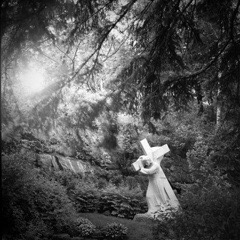 When writing to the Romans, Paul explained, the message of the Gospel has the power to save the sinner. It is when a person humbles himself and accepts that Jesus Christ died to do away with his sin, that he is saved. In order for a person to come to saving faith, he must hear the message and see the reality of it worked out in the life of the believer. Paul, understanding the importance of the Gospel, explains to the Corinthians the things he was willing to forgo, so others would hear about Christ and believe in Him.
 One of the controversies the Church in Corinth faced had to do with diet. Animals were offered to pagan gods, then the meat was sold at the local butcher shops. This created a real problem for many Christians. For some, their conscience bothered them knowing that the animal was offered to false gods, while for others the issue was much more tangible. Since the butcher shops were often located close to the temples, and the temples were places of sinful activity, some knew that visiting that area would lead them right back into sin. For others, the idol issue was something of their past, and they had no problem eating the meat with thanksgiving. To them, it mattered very little what the farmer did with the animal, since they received it with thanksgiving as from the Lord.
 The Corinthian Christians wrote a letter to Paul asking him some basic questions about how to live out their Christianity. One of those questions had to do with relationships between men and women. Since they lived in a pagan culture, they grew up with pagan examples of how to be single and how to be married. After coming to Christ, they realized God had different standards, and they wanted to learn His ideal for Christian relationships. This chapter is Paul’s response to their question. It is worth noting that Paul writes concerning three groups of people: the single, the married and the separated.

 God designed sexual intimacy as part of the marriage relationship. It is the most intimate of all acts and plays an important role in the love relationship between man and wife. In the book of Hebrews we are told, “Marriage is honorable among all, and the bed undefiled.”(Hebrews 13:4)
 Paul warns of the danger of pride. He refers to it as being puffed up; a term that has withstood the test of time, and is still used today. When we see someone who is filled with pride, we might say they are filled with self, puffed up, or even that they have a big head. Paul reminds us of the folly of elevating ourselves above one another, by exhorting us that what we have, we received from the Lord.
 Paul mentions four types of people in the opening verses of this chapter. He refers to mere men (some versions read natural man), babes in Christ, carnal men, and finally spiritual men. These terms represent a natural development in the spiritual life of an individual. Natural man refers to a person before they place their faith in Christ. The natural man is living, breathing, walking, talking, perhaps even loving, giving, sharing and caring, but the natural man is separated from God, and living in sin. It is when the natural man hears the message of the cross, recognizes his need for a savior, and places his faith in Christ, that his sin is forgiven and he is born again into the family of God. At that point, he becomes a babe in Christ. Like all babies, the new Christian must be cared for. He needs constant companionship, encouragement, example, and a diet of the simple teachings of the Word of God.
 The things God has planned for each of us are better than anything we could ever imagine. Rather than leaving us to our imagination, Paul declares these things are revealed to us by the Spirit of God. It is the desire of God that we know Him, and we understand the things He has planned for each of us.

