Revelation 7:3
“Do not harm the earth, the sea, or the trees till we have sealed the servants of our God on their foreheads.”
 Revelation 7 begins with four angels holding the winds of judgment in their hands, waiting to be released upon a Christ-rejecting world. Fortunately, before they are allowed to begin, another angel is released from heaven to seal those who belong to God. We are not told exactly what this seal looks like, but we know that it is a mark that God places upon the forehead of these believers. It indicates that they belong to Him. There is a similar picture to this found in Ezekiel 9, where prior to judgment coming upon Israel, a messenger of God clothed in linen, marks all who belong to God rescuing them from divine judgment.
Ephesians 1:13 “In Him you also trusted, after you heard the word of truth, the gospel of your salvation; in whom also, having believed, you were sealed with the Holy Spirit of promise . . .”
While it is clear, Revelation 7 is speaking of a particular group of people, sealed during the great tribulation, it is also true that all who trust in Christ receive a seal which marks them as God’s possession. That seal is the Holy Spirit, who indwells us at the moment we trust Christ for salvation. Paul tells us, upon receiving the indwelling of the Spirit, the love of God is shed abroad in our hearts.
Just yesterday, I was privileged to meet a woman and watch as she made a decision to trust Christ. She was beaming with joy so great, she could hardly contain it. All the pain and anguish of the difficulties of life, both past and present, seemed to be overshadowed by the intense joy that filled her upon receiving Christ. She was sealed with the spirit of promise.
Revelation 7:9-10 “After these things I looked, and behold, a great multitude which no one could number, of all nations, tribes, peoples, and tongues, standing before the throne and before the Lamb, clothed with white robes, with palm branches in their hands, and crying out with a loud voice, saying, ‘Salvation belongs to our God who sits on the throne, and to the Lamb!’”
Those sealed by the Lord did not simply stand around and discuss how they had been sealed. Instead, they looked upon the world they lived in, and saw multitudes in need of Christ, and they declared the Gospel. What an amazing thing it will be, to stand in heaven and meet those who you helped lead to Christ.
Recently, I met a woman, who when she learned I was from America, began to thank me for those missionaries who came to the former Soviet Union in the early 90′s. She and her husband, along with many friends, had come to Christ through the ministry of one such missionary. What she did not know, the man standing with me, was one of those early missionaries. Fresh out of High School, he had given a year of his life to take the Gospel to Eastern Europe. What joy filled her eyes as she met, not the man who led her to Christ, but one who symbolized for her, all who loved her enough to risk it all for the Kingdom. What a joy! One day we will be in heaven with saints from every tribe and tongue, who have been washed in the Blood of the lamb and sealed with the Spirit.
Pastor Jim
Old Testament:
Ezekiel 25- Feeling Special
Ezekiel 26- Prophecy
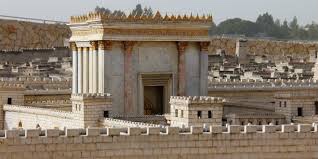 Ezekiel lived in Babylon as a prisoner of war. The nation of Judah had rebelled against Babylonian occupation and this rebellion cost them dearly. In 587 BC the city of Jerusalem and the Temple of God were burned to the ground. What had once been a glorious structure representing the majesty of God was now nothing more than a pile of rubble.
 Keep in mind as you read through Revelation, John is seeing the events on earth from a heavenly vantage point. Instead of the glamour of wealth and power, John sees what God sees, a hideous beast filled with blaspheme, violence and hatred. It seems as though the entire world is enamored with this ruler. Like Haman of old, in the book of Esther, the world has found a common scapegoat in the believers, and their hatred streams forth in persecution. As a means of both coercion and identification, the beast requires a mark to be given to every person. Without this mark, survival will be difficult, and persecution guaranteed. This mark is later identified as being a series of numbers.
 The book of Revelation is filled with symbolism. Some of the symbols are easy to understand because they are explained in the text, itself. For instance, in Chapter 1 we see Jesus in the midst of the lamp stands, then we are told the lamp stands represent the churches. Here in Chapter 12, the imagery is a bit harder to deduce. We are told of a woman clothed with the sun, who gives birth to a male child. Next, a red dragon, with seven heads, who draws a third of the stars from heaven, and awaits the birth of the child, that he might devour him. If we take a few minutes to unwrap the text, we will find that most of the imagery is, in fact, explained for us. Verse nine reveals the dragon is Satan, which makes the stars he drags, a reference to his angels. Verse five disclosess the male Child would rule the nations, making this a clear reference to Jesus. We are told He ascended to the throne of heaven. In verse 17, Satan makes war with the remnant of her seed. It would seem then, this reference represents Israel and the further offspring of the woman, and the Gentiles, who come to faith during the tribulation.



 Chapters 6-19 in the book of Revelation, describe the period known as the Tribulation. According to Daniel the prophet, it is a seven year period when the judgment of God is meted out upon the earth. The fact that this judgment is spread out over seven years is a testimony to the grace of God. Instead of being immediate and complete, this judgment is poured out slowly, in order to grant time for unbelievers to come to Christ. According to Verses 9-11, many will come to faith in Christ during this time. Sadly however, not all who are given the opportunity to come to the Lord do so. Some will ignore the warnings and attempt to avoid, or even hide themselves from judgment, rather than coming to the one who provides forgiveness. This is an all too common experience.
 Revelation 4 and 5 takes us on a heavenly tour, and with an all access pass, we are brought into the throne room of Jehovah God. There, we are privileged to observe as the saints and angels worship at His feet. Suddenly, the scene shifts from the throne to a scroll in the hand of God. All of Heaven seems fixated on this scroll and its contents. John is never told exactly what this scroll is, but it has been suggested by some, that it is the title deed to the earth.
