Isaiah 28:13
“But the word of the Lord was to them,
‘Precept upon precept, precept upon precept,
Line upon line, line upon line,
Here a little, there a little.’”
 I don’t know if it is “a guy thing”, but whenever my wife arrives home from grocery shopping and asks for help bringing the bags in from the car, I attempt to carry everything in at once. It may be the challenge or it may be out of laziness, but whatever motivates me, it is down right comical to see me laden down with groceries, attempting to open the front door. The fact is, there is a much better way to accomplish a big task, that is, one step at at time.
For many, the Bible seems like a massive undertaking. We look at it and have no idea where to start. Perhaps we have even attempted at times to become a student of Scripture, only to become discouraged by how little we understand. It is common to develop an attitude that we will leave the Bible for experts, then our devotional life becomes limited to reading books others have written about the Bible. Isaiah gives us a tip here on the proper approach to understwnding the Word of God.
“Line upon line, line upon line,
Here a little, there a little”
Many Christians attempt to read the Bible by randomly opening it and reading whatever text they happen to find. Can you imagine reading any other book that way? What if you read articles like that? Would you ever come to the authors intended understanding? The fact is, the best way to approach reading the Bible is to do so systematically. Since the Bible is a collection of books, the best place to start is in one of the four Gospel accounts. Read at least a chapter a day until you are finished, then select another and do the same. You will find that in no time you are beginning to learn and understand the Bible on your own.
Pastor Jim
 I recently watched an episode of a “Reality Show” where two individuals were in search of gold. They invested all they had, left their families, traveled to a foreign land, all in search of gold and in hopes of getting rich. Over the centuries, gold has been a highly sought after commodity. For many years, it was the standard by which a nation’s wealth was determined. Gold is not the only commodity man seeks after. Many have spent their lives in pursuit of resources that will make them rich, successful, powerful or at least happy. Perhaps the most sought after of all, is the pursuit of peace. In fact, it seems many would give up all else, in order to gain peace. In one of the most precious of all promises, Isaiah declares where peace can be found.
 Many places in the world are subject to devastating storms. Within the U.S., the northern states face blizzards, while the south is subject to hurricanes and the Midwest has its tornados. In order to be safe, when one of these natural disasters strike, certain preparations must be done ahead of time. One of the most important, is to have a structure that can withstand the severe cold or intense winds that come with these storms. Proper preparations go all the way back to when the house was built.
 Life is filled with distinctions. Gender, age, experience, education, skill level, and heritage are just a few things that set us apart from one another. Recently while traveling, it came time to board the plane, and distinctions were made. First class boarded first, followed by business class and priority seating. Finally, when sufficient time was given for these others to settle, a call was made for the rest of us. We have become used to a culture where distinction is made. However, when it comes to the kingdom of God there is perfect equality. No one man is more qualified for eternity than another. This equality shows itself both in the need for salvation, as well as the means of it.
 Tyre was an ancient coastal city situated on the Mediterranean, just north of Israel. Like all people, they were answerable to God for their actions, and would soon face the consequences of ignoring Him, and living by their own standards. Isaiah describes a time coming, when the Chaldeans, also known as Babylonians, would attack and drive them into the sea.
 Isaiah lived during interesting times. The northern nation of Israel was about to fall prey to Assyrian forces, while the southern nation of Judah was facing the threat of annihilation. Instead of turning from immorality and seeking God, the people were determined to continue in their wickedness. A great campaign was underway to fortify the cities to withstand enemy forces. They built reservoirs to hold water, stored up grain supplies, and made pacts with other nations in order to withstand the onslaught of the enemy. In all their efforts to prepare for battle, they forgot the most important step, they failed to turn to the Lord.
 Isaiah faced a season of life that filled him with pain, distress, fear and sleepless nights. This condition was brought on by the events that were taking place on the world stage. The Assyrians were mounting their forces and attempting to expand their nation into a world empire. They were known to be a particularly violent people who showed no mercy to their victims. As Isaiah heard reports of the nation’s around Judah falling victim to Assyria, he was filled with dread. This is not an uncommon experience. Watching reports of what is happening today on the national and international stage, will fill most of us with worry or perhaps even panic. While we can do very little about what is happening, we are in control of how we will respond. I think there are a few lessons we can learn from the prophet.
 Sometimes, the Biblical message is so important it is presented along with an unforgettable illustration. This is one of those cases. Isaiah’s warning, regarding the coming destruction of world powers by Assyria, was so critical, that he undressed and walked the streets of Jerusalem to declare it. While I do not recommend that exact approach, and we recognize that the true power behind the Gospel is the Gospel itself, we might want to at least consider how we might better illustrate the truths of Scripture, as we seek to share them with others.
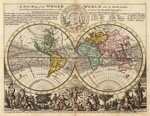 Isaiah takes us beyond his day to the future reign of Christ. In doing so, he promises a time when Egyptians, Israelites and Assyrians will follow the Lord and live in peace with one another. This might be referred to as the ultimate purpose of God, since He desires all men everywhere to be saved. If we look carefully at the church, and the commission we have received from Christ, we realize He wants ALL men EVERYWHERE to come to him for the free gift of eternal life. God designed the church to be assembled from people from every walk of life, and all people groups, who recognize Christ as Savior and follow Him as Lord.
 During the 8th century B.C., Ethiopia was a powerful nation, stretching across much of North Africa. Ethiopian forces were a stronghold against the rising threat of Assyria. It would be easy for Judah to think their safety could be secured by an allegiance with Ethiopia, in a stand against Assyria. Instead, God stirs Isaiah to speak a proclamation against Ethiopia, as a means of deterring Judah from placing their trust in things which cannot help them.
 Jim Gallagher