Meeting Melchizedek

Genesis 14:18-20
“Then Melchizedek king of Salem brought out bread and wine; he was the priest of God Most High. And he blessed him and said: ‘Blessed be Abram of God Most High, Possessor of heaven and earth; and blessed be God Most High, Who has delivered your enemies into your hand.’ And he gave him a tithe of all.”

/home/wpcom/public_html/wp-content/blogs.dir/b9a/30989304/files/2015/01/img_1302.jpgAbram’s encounter with Melchizedek is one of the most interesting and encouraging stories in Scripture. The scene is set for their meeting in the previous chapter, where we find Lot departing from Abram, and moving to the plains outside the city of Sodom. What seemed to be a brilliant business decision, turned out to be a costly moral one, as Lot is soon caught up in the ways of Sodom. When fighting breaks out between nations, Lot finds himself taken captive as a POW, and led to Elam where he will become a slave. The news of Sodom’s defeat, and Lot’s capture, reaches the ears of Abram, who gathers his 318 servants and heads out in hot pursuit. Abram is attempting to do with 318 farmers, what five armies could not do; defeat the forces of Chedorlaomer.

Miraculously, Abram is able, not only to defeat Chederlaomer, but to drive his forces as far north as Damascus. God has accomplished the impossible through the faithful and fearless service of a few men. It is here, the story gets really interesting. Upon returning home, Abram is met by Melchizedek, the King and Priest of Salem. This man, although only appearing briefly in the narrative of Genesis, becomes a key player in the overall story of Scripture. When we come to the New Testament, we are told the ministry of Jesus was patterned after the ministry of Melchizedek. Jesus, unlike the Jewish priests, was both a king and a priest. The encounter Abram had with him, is an illustration of the encounters that we must have with Christ.

Abram’s encounter with Melchizedek happens after a battle, that would have left any army exhausted, and before facing the king of Sodom, who would offer him great riches. It is here, Abram meets with Melchizedek, who offers him bread, wine and a blessing. As Scripture continues to unfold, we will find that bread and wine play a critical role.

Life for the believer is filled with spiritual battles. We face the trials and temptations of life, coupled with the difficulties of winning others to the Lord. This can become exhausting, and leave us vulnerable to the enemy’s attacks. The secret is to take a page from Abram’s book, being sure our service includes ample time with King Jesus, and our focus is on the cross. In communion, where we are told to remember Jesus, the bread reminds us of His body, broken for our sin, while the wine reminds us of the forgiveness we find in Him. It is critical, in the midst of battle, we learn to get alone with the Lord and allow Him to strengthen us.

Whatever challenges you may face today, spending time with Jesus will prepare you for it. Before you run out the door to face the next hurdle in life, be sure to take time to look into the Word, and up at the Lord.

Pastor Jim

 

Famine In The Land

Genesis 12:10
“Now there was a famine in the land, and Abram went down to Egypt to dwell there, for the famine was severe in the land.”

/home/wpcom/public_html/wp-content/blogs.dir/b9a/30989304/files/2015/01/img_1299.jpgLife is filled with ups and downs. Sometimes, it seems as if we are living under the sunshine of God’s favor, while other times, we seem to be under a dark cloud of difficulty. Abram and his family were facing a dark time. They were living as sojourners in the land of Canaan when famine struck. This was, no doubt, caused by lack of rainfall. They soon realized, their only course of action, was to head to Egypt. As they journeyed, Abram was gripped with fear. He knew the danger they were stepping into and feared for his safety. Believing that once the rulers of the land saw his wife, they would kill him, and take her. He devised a plan that would keep him safe. He would convince Sarai to claim she was his sister. It seemed as though the plan was working, until the Lord uncovered the sin of Abram.
As time went on, this would prove to be a low spot in the life of Abram, and one with some very heavy consequences. I think it would do us good to consider why this happened. What caused the father of faith, a man who left his home in obedience to the Lord, to lose faith and fail so badly? I think the answer has something to do with perspective. Instead of being led by the promises of God, Abram allowed his circumstances to guide him. It was the Lord who led Abram to Canaan, but it was circumstances that led him to Egypt. Whenever we are facing difficulties that are casting a shadow of doubt upon the promises of God, we should not flee from the promises, but cling to them more tightly. Whatever you are currently facing, no matter how difficult it may be, the solution will never be found in wandering from the Lord, but will be found in drawing nearer to Him.

Pastor Jim


Babel

Genesis 10:10
“And the beginning of his kingdom was Babel…”

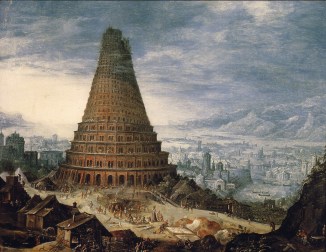
/home/wpcom/public_html/wp-content/blogs.dir/b9a/30989304/files/2015/01/img_1297.jpgGenesis is the book of beginnings. In it, we are introduced to many things which play a prominent role as the rest of Scripture unfolds. Here, in Chapter 10, we are introduced to the city of Babylon, which becomes a major player in the Biblical narrative.  It is mentioned 257 times in the Bible. We learn Babylon was built by a man named Nimrod (whose name means rebellion); he built Babylon in defiance of God. His purpose in building the city is recorded in Genesis 11:4

Come, let us build ourselves a city, and a tower whose top is in the heavens; let us make a name for ourselves, lest we be scattered abroad over the face of the whole earth.”

Babylon is important because of its symbolic representation of man’s false religious systems. The focus of the city of Babylon was a tower to the heavens. It was not an attempt to build a stairway to heaven, but a tower that depicts man making his own way to God.

Today, the word Babel means nonsense, and the ancient Hebrew word, Babel, means confusion. However, the word Nimrod chose  means gateway of God. What Nimrod called the way to God, Scripture calls confusion. They were confused because they based their system on works, thinking they were good enough, and if they tried hard enough, they would get to God. – God calls that confusion.

Fortunately, there is a gateway to God. It has been built, not on the achievements of men, but on the sacrificial work of Christ. Jesus said, I am the way (John 14:6) and I am the door (John 10:9), and on the cross He became for us the true gateway to  God. Instead of trying to earn our way to heaven, we can simply receive it by placing faith in Christ.

Pastor Jim


Cover It Up

Genesis 9:21
“Then he drank of the wine and was drunk, and became uncovered in his tent.”

/home/wpcom/public_html/wp-content/blogs.dir/b9a/30989304/files/2015/01/img_1295.jpgOnce the waters had resided and the ark settled, Noah and his family exited the ark to begin a new life. They would have to survey the land, build shelter, plant crops, and much more. It is interesting to me, of all the events that must have transpired, the Scriptures only focus upon a few. We read in Genesis 8, Noah offered sacrifice to the Lord. We can assume, after all he experienced, he was still a very godly man. We read in Chapter 9,  a covenant between God and man was re-established, based upon the shedding of blood. When we come to the story before us, having settled in the new world with his new life, we find Noah indulging in wine and becoming fall-down drunk. As we continue through the Bible, we will see clearly that drunkenness is both foolish and forbidden. In our text, it is not the sin of Noah that is the focus of our attention, but the sin of his son, Ham.

It seems Noah had so much to drink he passed out naked in his tent. Whether his son was looking to find error in his father, or he just stumbled upon him, we are not told. We do know, Ham found his naked father, and went off to tell anyone who would listen. The reaction of his two brothers is quite heroic. Instead of mocking, condemning, or making a spectacle of their father, they simply cover him up. In so doing, they are covering up his failure. The next morning, when Noah awakens, he realizes what has happened and speaks prophetically concerning his sons. A curse is promised to Ham, while blessing is promised to Shem and Japheth.

Proverbs 10:12
“Hatred stirs up strife, but love covers all sins.”

This story teaches us an important truth about dealing with sin. First, we learn that even the godliest of men can stumble. Second, we find it is not our responsibility to broadcast the sins of others, but to help them overcome sin. The actions of Ham did nothing more than ridicule the failure of his father, while Shem and Japheth work toward restoration. They did not condone the sin of their father, but sought to restore his dignity that he might get back to following the Lord.

Pastor Jim


Dark Times

Genesis 8:1
“Then God remembered Noah, and every living thing, and all the animals that were with him in the ark. And God made a wind to pass over the earth, and the waters subsided.”

/home/wpcom/public_html/wp-content/blogs.dir/b9a/30989304/files/2015/01/img_1293.jpgThe last time Noah heard the voice of God he was instructed to enter the ark and shut the doors. Since that time, forty-seven days have passed. These were days of difficulty, unrest, fear and anxiety, as Noah and his family stepped out into the unknown. In a time when Noah needed the voice of God more than ever, it seemed that heaven had gone silent. What a blessing it is to read “God remembered Noah…”



Perhaps it would be of value to consider what it means that “God remembered Noah.” First, it does not mean God had forgotten him. Often, in the midst of our darkest trials, we get the feeling God has forgotten us. We have ventured out in faith only to look around, and it seems, He has left us all alone. We must keep in mind, God had His eyes upon Noah every moment. The Psalmist wrote,

Psalms 121:4
“Behold, He who keeps Israel shall neither slumber nor sleep.”

And Jesus declared,

Luke 12:7
“But the very hairs of your head are all numbered. Do not fear therefore; you are of more value than many sparrows.”

As we read Noah’s story, it is also quite clear, that while God seemed to go silent, He remained in complete control of the circumstances. It was God who caused the rain, stopped the rain, and caused the waters to reside.

In the midst of our darkest days, we are no more alone than Noah was. God is carefully watching our every step, as well as controlling the circumstances around us. In those times of darkness, it is critical, that like Noah, we keep clinging to the promises of God as we await His deliverance.

Pastor Jim


Obedience

Genesis 7:5
“And Noah did according to all that the Lord commanded him.

/home/wpcom/public_html/wp-content/blogs.dir/b9a/30989304/files/2015/01/img_1292.jpg
Obedience is critical to any relationship with the Lord. If we are going to grow in Christ, experience the promises of God, and effectively witness to others about relationship with Jesus, we must learn obedience. Samuel told Saul that to obey is better than to sacrifice (1 Samuel 15:22), and Jesus declared, if we love Him we will do what He says (John 14:15). Noah is a great example of what an obedient life looks like. There are three things that stand out to me about his obedience.

First, Noah did what he was asked to do. When the divine command was uttered, Noah got busy. We do not read of him questioning God about the meaning of rain, or a flood, nor does he argue with God about the difficulty of the task. Instead, Noah got busy and built a boat.

Second, Noah did what he was asked to do, and much more. He was instructed to build an ark, fill it with his family members, and all the beasts of the earth. Noah did as he was told, but did not stop there. Peter informs us, Noah was a preacher of righteousness (2Peter 2:5). As he prepared the ark, he also preached to the people. He warned them of the coming judgment, and of the way of escape. True obedience will never cause us to do the minimum. Instead, a heart that wants to please the Lord, will do all things heartily as unto the Lord (Colossians 3:23) .

Finally, Noah relied upon the Spirit of God. God’s commands were impossible for Noah to accomplish in his own strength. Gathering together all of the animals, including the birds of the air, was a task way too big for any man. If you do not think so, take a quick break, run outside and try to catch a bird. The only way he could obey, was to rely upon the Lord. Instead of looking at the impossible, he understood there is nothing to hard for God (Jeremiah 32:17). Too often, we only see the impossibility of a task and fail to see the power of God. It is no more difficult for God to help you quit smoking, overcome addiction, share Christ with a relative, or serve in a Sunday school class, than it was for Him to get the animals to line up and march. In fact, it seems the animals always do what God asks, and it is only man who is often too foolish to obey.

Don’t get caught up with why you can’t, get caught up in Him who can.

Pastor Jim


Likeness

Genesis 5:1
“This is the book of the genealogy of Adam. In the day that God created man, He made him in the likeness of God.”

IMG_1500.JPG

The Bible teaches that man was originally created in the image of God. Since God is eternal, man was created to live forever. Since God is triune: Father, Son and Spirit, man was also created as a triune being: spirit, soul and body. Since God is holy, man was originally created without sin, placed in a perfect environment,

and enjoyed sweet communion with God. Tragically, we read man’s condition did not last long. Within a few verses of the narrative, we find the first man and woman giving into the tempter and sin entering the world. The effects of this sin were both immediate and far reaching. Immediately they were changed, knew their sin, and were separated from God. The far reaching aspect of their sin is seen, here, in Chapter 5.

Genesis 5:3
“And Adam lived one hundred and thirty years, and begot a son in his own likeness, after his image, and named him Seth.”

Man, who was created in the image of God, begot children that were created in his fallen image. The story of the Bible is now the story of redemption. God will do whatever is necessary to restore fallen men to relationship with Himself. The final step in His plan included the cross, where salvation was made possible, and sending the Holy Spirit to draw us to God.

Although we all bear the traits of fallen men, we can all be restored to God through simple faith in Christ.

Pastor Jim


Finding Grace

Genesis 6:8
“But Noah found grace in the eyes of the Lord.”

/home/wpcom/public_html/wp-content/blogs.dir/b9a/30989304/files/2015/01/img_1290.jpgThe story of the flood is a story of judgment and redemption. Mankind had turned its back on God. Moses is careful to describe the condition of the world at that time;

Then the Lord saw that the wickedness of man was great in the earth, and that every intent of the thoughts of his heart was only evil continually.” Genesis 6:5

People were living in open defiance of God. The line between the godly and the ungodly had become so blurred that the sons of God were marrying the daughters of men. The men of renown, the leaders of the ancient world, wanted nothing to do with the things of God. There was open demonic activity taking place among men. Jesus described a scene of such spiritual apathy that even Noah’s preaching of coming judgment, did not deter the people from their sinful lives. They continued on, as though they would never have to give an account to the God who created them. After 100 years of warning, the sky suddenly became dark, the rain began to fall, the earth began to rumble and split open. The judgment of God broke forth on the very people He had created to for fellowship. In the midst of this we read,

“But Noah found grace in the eyes of the Lord.” Genesis 6:8
As much as this is a story of God judging sin, it is also a story of God redeeming man. Noah was the recipient of the grace of God, which rescued him from wrath. Nothing has changed. God is still Holy and will forever judge sin. He is also gracious, providing a way for sin to be forgiven, and men to be delivered. We receive the grace of God when we choose to accept the pardon for sin He has provided through the death of Christ upon the cross. When we receive Christ, all our sins are washed away and we are rescued from wrath.

We see in Noah a picture of how this grace affects a man. We read that Noah “walked with God.” Walking with God is a common idiom found throughout the Bible. It is used to illustrate a person who is living a life that is well pleasing to the Lord. We read of three distinct things about Noah’s walk. First, he obeyed the Lord. Four times we read that “Noah did according to all that the Lord commanded him”. Not all that was commanded seemed to make sense. Instead of arguing, rationalizing, complaining or disobeying, Noah did as the Lord commanded. Second, we read that Noah’s faith impacted his family. Unlike Lot, Noah lived out his walk with God for others to see, and won his family members to the Lord. Too often our best Christianity happens at church, and we fail to live for Christ within the home. Finally, we read that upon exiting the ark, Noah offered sacrifice to the Lord. He realized that salvation was not based upon his good work, and he accepted the pardon that God provided.

Jesus told us, the times leading up to His return would be like the days of Noah. With evil increasing we must walk with the Lord all the more.

Pastor Jim


Offering

Genesis 4:2-5
“Abel was a keeper of sheep, but Cain was a tiller of the ground. And in the process of time it came to pass that Cain brought an offering of the fruit of the ground to the Lord. Abel also brought of the firstborn of his flock and of their fat. And the Lord respected Abel and his offering, but He did not respect Cain and his offering. And Cain was very angry, and his countenance fell.”

/home/wpcom/public_html/wp-content/blogs.dir/b9a/30989304/files/2015/01/img_1288.jpgAs the drama of Genesis unfolds, we are introduced to two of Adam’s sons, and given a glimpse into their lives and occupations. Abel, the younger, was a shepherd, while his older brother Cain was a farmer. It was not their occupations, but their character that determined their destinies. We read, Abel brought an offering of the flocks, while Cain brought the fruit of the ground; God respected Abel’s offering and rejected Cain’s. The question we must answer is why? What was wrong with Cain’s offering?

Two things stand out to me from the story. First off, back in the garden, God had already shown He rejected fig leaves as an acceptable covering for sin. Instead, He established a system of substitutionary sacrifice. This system will be further developed throughout Scripture, but will never change. We will see it in the Levitical system, established at Sinai, and it will have its ultimate fulfillment in the sacrifice of Christ on the cross. Never will the work of our own hands be a sufficient covering for sin.

The second aspect of this story which stands out, is the reason a substitute is necessary. Cain brought the fruit of the ground because he did not understand the far reaching effects of sin. He looked at his crops that represented hours of care and labor and thought they were an acceptable offering. This was because he failed to see they were grown in fallen dirt. As good as those vegetables may have been, at their core, they bore marks of the fall. The same is true with all works. My very best efforts are always tainted with sin.

From the beginning, God established a way for sinful man to have relationship with Him, and from the beginning, men have been trying to come their own way. The way to God is paved for us by the cross; entrance is as simple as trusting that Jesus died in our place. Isn’t it time to trust in Christ, instead of clinging to your own goodness as a means to access God?

It has been, and always will be, about His amazing grace

Pastor Jim


The Cunning Beast

Genesis 3:1
“Now the serpent was more cunning than any beast of the field which the Lord God had made. And he said to the woman, ‘Has God indeed said, “You shall not eat of every tree of the garden?”‘”

/home/wpcom/public_html/wp-content/blogs.dir/b9a/30989304/files/2015/01/img_1286.jpgThe scene in the garden quickly shifts, and we find Eve face to face with great temptation. This text not only explains how sin and death entered the world, but also serves as an illustration of the temptations a believer will face. The first thing to note is how the devil is described, he is called “cunning.” It is important to remember, whenever facing temptation, that every word out of the mouth of the devil is designed to deceive. Jesus called him the father of lies (John 8:44), so we should expect that he will twist the words of God, in order to lead us astray. As their discussion continues, we see three key truths about temptation.

First, we find the devil questioning the goodness of God. He implies that God is keeping something good from Eve. He suggests all the good stuff in the garden has been forbidden, and it is only the leftovers they are allowed to enjoy. In thousands of years, Satan has yet to change his game plan. He is still causing the Christian to doubt the goodness of God. Whenever we are facing temptation to sin, we think sin will bring us life. We forget it is the father of lies who is suggesting that sin will make us happy, while the God of love and grace, warns us that sin leads to death.

Second, notice that Satan calls into question the Word of God. God had promised death as a result of disobedience, while Satan promises life. He is still doing that. Whenever we come face to face with a warning, or even a promise from Scripture, it is not long before our mind is filled with doubt. We wonder if that promise is real, or if it applies to us, or if God is real, or if the Bible really means what it says. Paul explained the reason for our doubt: Satan is shooting fiery darts into the mind of the Christian (Ephesians 6:16). We might call these “darts of doubt,” whereby the devil is seeking to get us to question the promises of God. Once we doubt the validity of the Word, we are one step closer to disobedience. Keep in mind, billions and billions of graves scattered across the planet prove that God tells the truth, and Satan is a liar.

Finally, Satan is cunning and knows just what chord to strike. After questioning the goodness of God, and the Word of God, he goes after Eve’s desires. He promises she will become like God. We read further, that she saw that the tree was good for food, pleasant to the eyes and desirable. The Bible speaks of easily besetting sins. Those are the sins into which you are more prone to fall. James reminds us, when we are tempted, we are drawn away by our own desires (James 1:14). Because there are certain sins we are more prone to fall into than others, we need to be on guard. Eve fell because she was not on guard. We find her near the tree she was told to avoid, having a discussion about fruit that was forbidden, as well as facing it all alone. If we play around with temptation, we will always end up giving in. The key to victory is to build walls that will keep us from falling. Two such walls are confidence in the promises of God, and companionship with the people of God.

Let’s take to heart the failure of Eve, that we might have success as we seek to live for Christ in this New Year.

Pastor Jim