Ecclesiastes 12:13
“Let us hear the conclusion of the whole matter: Fear God and keep His commandments, For this is man’s all.”
 The book of Ecclesiastes is a bit like an experiment. Solomon looked at life the way a scientist does an experiment. He sought to discover the meaning of life by asking questions, doing research, creating an hypothesis, and drawing a conclusion. It is here, at the end, that he makes his discovery known to his readers. His conclusion, after years of experimentation, is that the purpose of life will be found in fearing God and keeping His Word.
Fearing God is a reoccurring theme in the Bible. It is first mentioned in the story of Abraham being asked to offer his only son to God. This was a test to determine if Abraham loved God more than anything else in life. The conclusion we draw is that fearing God means loving Him above all else and seeking to please Him, no matter the cost. Practically speaking, to fear God means we should do what His Word says, rather than what our emotions, others or circumstances tell us to do. When a person refuses to succumb to the pressure to compromise, expresses the kindness of Christ when mistreated, or reaches out to share the Gospel, they are acting in the fear of God.
Solomon linked fearing God with keeping His commandments. These things cannot be separated. In fact, Solomon is not suggesting two different roads, but rather that fearing God involves obeying His Word. The way to check whether or not we fear God, is to simply examine if we are obeying our Bibles. If there are things you are involved in that are forbidden, or if you are neglecting what is clearly written, then you are failing to properly fear the Lord.
Some experiments do not need to be repeated. They have already been proven, and the best thing for us to do is trust the research of those who have gone before us. Instead of blindly walking through life without meaning or purpose, take a lesson from Solomon and commit yourself to reading the Bible, and doing what it says.
Pastor Jim
 It is not uncommon for a person to go from church to church, and pastor to pastor, until they receive the counsel they want to hear; instead of the counsel they need to hear. I have known people to leave the church they have been attending simply because they received advice or admonishment they did not like. It is in those times, Solomon’s words seem to be most fitting. He declares, we are free to do whatever our heart desires, but we must understand, a day is coming when we will give account for those decisions, and the actions that followed.
 Years ago, I heard a story, whether it is factual, I do not know, but it told of a group of men who broke into a large department store in a metropolitan area. These cunning thieves did not actually steal anything. Instead they changed the price tags on everything. Items that were of little value were given high prices, while things of great worth, were sold for pennies. The next morning, when the store reopened, it did not take long to realize that things were a mess. The management determined, the only solution was to close for the day and reprice everything.
 Solomon spent his life as a student of human behavior. He appeared to be on a quest to find meaning and purpose to life. His observations led him to the conclusion that trials, or difficulties, are the lot of all men; both the righteous and the wicked experience times of sorrow, pain and suffering. When a tornado strikes a town, it makes no distinction between the believer or the unbeliever. Cancer strikes the godly, as well as the ungodly. Christians and non-Christians have both lost their jobs due to tough economic times. If there is no difference between the ailments that we suffer, what is the benefit of living a life committed to Christ?
 Something sinister happens to us when we sin and do not receive an immediate consequence. We begin to think God is OK with our behavior, even though the Bible clearly teaches it is wrong. When we are not struck by lightning or swallowed by a whale, we think we have gotten away with our sin, and can keep on with it, without consequences. If that is the case, we have forgotten the very nature of how sin works. Paul wrote,
 Adversity is part of life, and for the believer, it is something that should be embraced. It is not that we desire to suffer, but that we realize, God will use the difficulties we face to develop the character of Christ within us, and to shine the light of the gospel from us. As we work our way through the pages of the Scripture, we find the Bible heroes were forged through suffering.
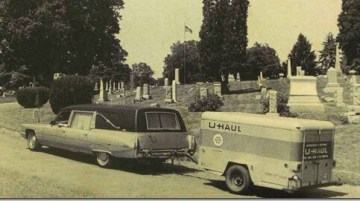 Back in the eighties, it was common to see bumper stickers on expensive cars that read, “He who dies with the most toys wins.” The sentiment was simple, life is about acquiring more, and happiness is found in the abundance of wealth. That might be a catchy saying, but the reality is, the only thing we win by accumulating more, is more. The Bible declares, there is much more to
 Solomon’s search for life has led him to the conclusion that life is better when we do not have to walk it alone. He gives four examples to illustrate his conclusion. These examples are more practical than they are poetic. First, he suggests that having a companion is better because we can get more work done. Second, if we fall down, we have someone to help us get back up. Third, we can warm one another, and finally, if attacked, we have a better chance of survival.
 Webster’s dictionary defines science as, “the accumulation of knowledge; particularly the knowledge gathered through the scientific method, which involves observation and experimentation.” In that regard, Solomon was a scientist of the highest quality. He spent much of his life in the pursuit of knowledge, through both observation and experimentation. He was a student of many fields of science, but perhaps, more than anything else, he studied human behavior. Watching the way fallen men and women behaved, caused him to come to the conclusion that humans are nothing more than highly evolved animals. Solomon’s conclusions were impacted by the lab he used for his experiments. Over and over he used the phrase, “under the sun”, which meant he was looking at things through the eyes of the natural, without any regard to the person, work, or Word, of God.
 A few years ago, I stumbled across a pretty cool website designed to help create photo albums. In a few minutes, I was able to design a picture book capturing a recent family trip. Ecclesiastes is a bit like a photo album, capturing the travels of Solomon, in pursuit of the meaning of life. Solomon had the unique combination of great wealth and intellect. As a result, nothing was beyond his reach as he searched for the meaning of life, in the midst of living. His journeys took him down many different roads. Sadly, he found no matter what road he traveled, he seemed to end at the same destination. A place he called “Vanity of Vanities.”
 Jim Gallagher