Psalms 61:1-2
“Hear my cry, O God; Attend to my prayer. From the end of the earth I will cry to You. When my heart is overwhelmed; lead me to the rock that is higher than I .”
 We cannot be certain of the occasion that stirred David to write this psalm. It may have been a time of great difficulty, opposition or trial. He may have been facing severe attacks from Saul, the Philistines or one of the neighboring kingdoms. It is also possible the struggles he faced were not external. It may have been that David was engaged in that great inner struggle between his desire to do what is right in the eyes of God, and his own human weaknesses. Whatever caused the dilemma, he concluded that the only solution was to cry out to the Lord. Crying out to God should include at least three things.
First, we cry out for deliverance from whatever it is that is attacking us. We need to realize, no matter what the cause, Jesus is the solution. If you are being plagued by consequences to your own actions, cry out to God. If you are being unfairly attacked because you have chosen to live for Christ, cry out to God. If you are under the stress of inward turmoil or temptation, cry out to God. He alone has the strength to deliver us from all things.
Second, cry out to God for forgiveness. Often the hardships we face are allowed by God to expose things that are amiss within us. We learn to justify sinful behavior or cover it up, as if we could hide it from the Lord. During times of great opposition, our own sinfulness is often exposed. Those things are brought to the surface so we can cry out to God for forgiveness. Sometimes, this can be done privately by dropping to your knees and confessing your sin to our Heavenly Father, who delights to forgive us. Other times, there is value in making your way forward at church and treating the stage as an altar, where you can cry out to God and confess your sin and recommit your life to Him.
Finally, we should cry out to God for more of Him. Difficulty reveals weakness and weakness should reveal our need for God. Our needs can be met when He pours His Spirit out upon us. Individually and corporately, the greatest need the Christian has is for a fresh and deeper work of the Spirit. Looking at the current condition of the world, as well as most Christians individually, I would say we are in need of revival. We need God to pour out, from heaven, a larger measure of His Spirit upon His church. Join with me as we cry out to God to be filled again with Holy Spirit.
Pastor Jim
 Sometimes knowing the setting in which a psalm was written is beneficial to understanding its content. Other times, like in this psalm, the setting is not given because the truth is universal. Whatever our condition, whether we would classify it as good or bad, blessing or trial, God remains the same and is always worthy of the highest praise. The truths tucked away in this psalm transcend every experience the child of God endures. Whatever state you are currently facing, it is a good idea to clap your hands and shout out the loudest praise.
 There are times in life when words seem like a raging fire building within us and we are almost forced to speak. This can be positive, like when Jeremiah wrote of being so discouraged he no longer wanted to share the words of God with anyone, until those words became like a fire within him and he could no longer contain them. Or this can be negative, like when gossip burns within us, pleading to be passed on to others; or when in the midst of an argument, we lash out with hurtful words that shatter someone we love.
 In this Psalm, we find David enduring the consequences of sin. Like all of us, he was drawn into something forbidden and chose to trespass, because sin always makes promises it cannot keep. He was, no doubt, hoping to find some level of pleasure by disobeying the law of God. Whatever enjoyment he derived from his sin, was soon eclipsed by the pain and sorrow sin always brings. Here we find David in travail of soul and under severe attack from his enemies. He describes himself as being pierced by arrows of conviction, being under the heavy weight of guilt, and even undergoing attack from others who think that he deserves the sufferings he is facing.
 We cannot be sure the exact situation that stirred David to write this Psalm, but we do know that he seemed to be under continual attack. From the start, he had to deal with those who continually came against him. His father neglected him, his brothers tormented him, the Giants ridiculed him, the king hunted him, and the neighboring nations sent armies to attack him. As a result, it would be fair to say David was an expert on warfare and he knew how to fight on many different fronts. In this Psalm, he reveals the secret behind his success. When under attack, David looked to God for defense.
 One of the great benefits of being a Christian is the promise that God will provide for the needs of His people. This same truth is repeated throughout scripture in a variety of ways. Abraham heard God say He would be his shield and his reward, the Levites were promised that God would be their inheritance, the widow was told her oil would be multiplied, and Jesus promised to care for us as He does for the lilies and the sparrows. It is not difficult to find promises declaring that God will meet our needs, but at times, it is very difficult to trust them.
 We cannot be certain of the situation that caused this psalm, but it is very clear the Psalmist was going through an extremely difficult season in life. He describes himself as being under severe attack and needing the Lord to be his fortress. He speaks of his troubles and his adversities, and his eyes wasting away in grief, as he cries before the Lord. He also goes into great length to speak of his emotional condition during this time. He describes himself as, “wasting away with grief, in both his soul and body” and being “like a broken vessel.”
  Years ago I injured my knee and required surgery. Before the operation, I was given a detailed description of the human knee. I learned how it was constructed, how it functioned and how mine was damaged. When the surgery was completed, I was even given a video of the operation. If I wanted to, I could have watched on the big screen as parts were cut away and replaced. I learned things I never really wanted to know.
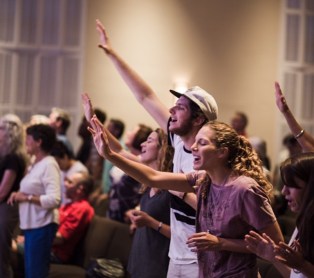 Life is filled with important things and with essential things. Often, what is important will overshadow what is essential. David was an important man with many responsibilities; he was a husband, father, musician, soldier and a king. Each role he played added new responsibilities and threatened his time with God. To guard against this, David learned to fall in love with the house of the Lord, because there he could experience the glory of God.
 It seems the Psalmist is exhorting the inhabitants of Jerusalem to open wide the gates for the coming Messiah. They should be living with an expectation of His coming. This expectation was based upon the promises of Scripture. The prophets foretold of a specific date in which the Messiah would enter the city riding upon a donkey, and be received with worship by the people. As the narrative of scripture continues to unfold, we find that the Messiah came as predicted, but very few of the people were ready for Him. Some were so deeply set in their ways, that when He arrived, they dismissed Him completely.
 Jim Gallagher