Revelation 19:1
“After these things I heard a loud voice of a great multitude in heaven, saying, ‘Alleluia!’”Revelation 19:3
“Again they said, ‘Alleluia!’”Revelation 19:4
“And the twenty-four elders and the four living creatures fell down and worshiped God who sat on the throne, saying, ‘Amen! Alleluia!’”Revelation 19:5
“Then a voice came from the throne, saying, ‘Praise our God,’”Revelation 19:6
“Alleluia! For the Lord God Omnipotent reigns!”Revelation 19:7
“Let us be glad and rejoice and give Him glory, for the marriage of the Lamb has come,. . .”
 In Revelation 19, the scene in heaven is one of exuberant praise. We read of a great multitude joining in worship, and giving glory to the Lord. While there are many reasons to worship God, their praise stems from the fact that the marriage supper of the Lamb has come. To help us understand the relationship we have with God, the Bible uses a number of illustrations. We are referred to as the ‘children of God’, the ‘body of Christ’, the ‘church’, or ‘assembly of those who have been called out of the world’. Perhaps the most intimate of all is when the Bible refers to the Christian as “the bride of Christ.” Paul wrote to the Corinthians,
“For I am jealous for you with godly jealousy. For I have betrothed you to one husband, that I may present you as a chaste virgin to Christ.” 2 Corinthians 11:2
In ancient Jewish culture, the greatest of all celebrations was the wedding feast. The same is often true today. Being a pastor, I have an interesting perspective at weddings. As the congregation turns to watch the bride enter the room, I usually turn and look at the face of the groom. It is amazing to see his face the moment he sees her, and watch him fill with joy. There are times when the joy becomes so great, tears fill his eyes. In those times, I cannot help but think of the joy in the face of Jesus, when He is finally reunited with His bride; and we will forever be with the Lord.
In ancient times, when a man and woman committed to marry one another, they would be betrothed. Betrothal, unlike engagement, involved being legal bound. It was not something that was cast aside on a whim, but would require a legal document in order to bring it to an end. When you received Christ, you were betrothed to Him. While the wedding day and it’s celebration remain in our future, we are bound to Him by love. He is in heaven, anticipating the day when we will be united with Him. We should live on earth with that same anticipation.
Pastor Jim
 King Nebuchadnezzar’s dream serves as a timeline of world kingdoms, from the time of Daniel until the return of Christ. The image refers to six kingdoms, five that are temporary, and one that will last forever. Four of the six have already come and gone, while the final two are still in our future. The fulfillment of the first four gives us assurance of the fulfillment of the final two.
 I remember the first time I heard someone teaching the parable of the ‘Sower and the Soils.’They referred to the person represented by the shallow ground as a “Firecracker Christian.” That is, someone who starts out with a bang, but burns out before too long. Sadly, the landscape is filled with believers just like that. It is refreshing to read that Daniel continued in his commitment to the Lord. His life becomes a good example of how to persevere in our walk with the Lord. There are a number of key components necessary for any who desires to remain committed until the end.
 As John begins to describe the fall of Babylon the Great, he hears a cry from heaven calling the people of God to come out, and no longer share in its sins. Babylon here is referring to more than a city in modern Iraq, it refers to the world system that is opposed to the ways of God. The call then is for the people of God to leave the ways of the world, to live in step with the ways of God. This is not a one time call, but is repeated time and again within the pages of your Bible. We were saved, not to continue in a destructive lifestyle, practicing the things that Jesus died to free us from, but to live a new life on a higher plain, where we seek in every area of life to bring pleasure to God.
 As the prophecies of Ezekiel come to a close, he describes the allotments of land that will be given to each of the tribes of Israel. It is striking to me that seven times in the chapter theses districts are called “holy.” The inheritance the Lord gives to His people is always holy, and the life we live should be lived in holiness.
 Jerusalem sits atop the mountain range known as mount Moriah. The city is surrounded by valleys, and is supplied with water through various springs, because there are no rivers that flow through the city or surrounding hillsides. Ezekiel is seeing into the future, to the time of the millennial reign of Christ. As Jesus sits upon the throne of David to rule the nations, the topography of Jerusalem is changed. A stream flows from the temple of God into the Kidron Valley, then turning south continues past the Hinnom Valley, heading toward the Dead Sea. What Ezekiel is seeing is both literal and symbolical. His vision is a beautiful picture of God, as the Source of life for a world that thirsts for spiritual truth, including forgiveness and salvation.
 As the angel explains the images John sees, he makes reference to the Book of Life. This book is mentioned again, in Revelation 20:15, as the guest list of heaven. All, whose names are written in this Book, will have access to heaven; those who do not, will be cast out to eternal judgment. If there is one thing you want to be certain of in this life, it is that your name is in the Lamb’s Book of Life. The question is, how do we get our names in that Book?
 Ezekiel is establishing some rules that will guide the people as they worship at the Temple. Some of these guidelines were clearly spelled out by Moses hundreds of years earlier, while others seem to be brand new. One such regulation required the people to leave the city from the opposite gate from which they had entered. If they came in from the south, they had to leave from the north, and vice-versa. No clear explanation is given, but it is not too difficult to draw some application for the believer today. Simply put, we should leave worship different than how we arrived.
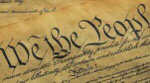 Recently, I was captivated by the different titles given to political leaders. In one news segment, I saw references to presidents, kings, prime ministers and even a supreme ruler. It is interesting the view men have of rulers. In some settings, they are seen as gods, while in other settings, servants of the people. Here, in Ezekiel, we get a glimpse into how God views those who rule over men. He sees them as representatives of Himself, and expects them to set an example for the people of what it means to be committed to Him. In God’s economy, a ruler of the people must first be a follower of YHWH. Israel’s greatest leader was described as a man after God’s heart (Acts 13:22). This evidenced itself in a desire to please God and properly represent Him to the people.
 Recently, I had the privilege of standing on Tel Megiddo, the ruins of the ancient city of Megiddo. It overlooks, what is often referred to as, the valley of Armageddon. The experience was almost surreal. As I stood there, contemplating the events described in Revelation 16, I could see smoke rising in the distance, from tires being burned in protest to the fighting in Gaza and southern Israel. The silence of the moment was suddenly interrupted as the entire valley was filled with the roar of an Israeli fighter jet flying past. It was not difficult to imagine what the scene will be like when men gather in one last effort to eradicate God. Hundreds of years before Revelation was written, the Bible prophesied of this event.
 Jim Gallagher