2 Corinthians 13:5
“Examine yourselves as to whether you are in the faith. Test yourselves. Do you not know yourselves, that Jesus Christ is in you?”
 This verse carries two vital commands. First, we are told to examine ourselves, then we are told to test ourselves. Both carry the idea of looking at our lives in the light of the Word of God, to determine whether or not we are truly saved. Not all exams are of equal importance, but this is a test we must not avoid, or fail. What is at stake is not a low-grade in class, or the possibility of summer school, but where we will spend eternity.
“Do you not know yourselves, that Jesus Christ is in you?”
The first question on the test is whether or not you have received Christ. John wrote, “But as many as received Him, to them He gave the right to become children of God, . . .” (John 1 :12). He went on to explain that we receive Him when we believe. It is vital to ask yourself: have you recognized you are a sinner, that your sins have eternally separated you from God, and there is no effort that can be made on your part to remove those sins? Then we must realize, Jesus Christ went to the cross in order to provide a way for sin to be forgiven and removed. If you will look to the cross, confess your sin, and believe Jesus died for you, then Christ is in you.
“You believe that there is one God. You do well. Even the demons believe—and tremble!” James 2:19
Paul wrote to people who believed they were saved. Perhaps many of them went forward, responding to an altar call, or prayed with a prayer-team member after hearing a message of salvation. Some of those who prayed may have gone out the doors and right back into the sin-filled lifestyles in which they had been living. They may have placed their confidence for eternity in a raised hand or a walk forward. James reminds us, there is a faith that saves and a faith that does not save. Paul put it like this,
“ . . .that if you confess with your mouth the Lord Jesus and believe in your heart that God has raised Him from the dead, you will be saved.” Romans 10:9
Believing with the heart is more than making a one time confession; it involves the surrender of a life to Jesus. Heart believing is ‘trust in and reliance upon’. The person who has truly believed on Jesus, is the person who is walking after Him, and being changed by Him. “By this we know that we are in Him. He who says he abides in Him ought himself also to walk just as He walked.” 1John 2:5b-6
Another important part of this exam is to look at your life before and after you made a decision to follow Jesus. How has it changed? John spoke of two very important changes that will take place in a person who is truly saved. First, he spoke of us “walking in the light.” Darkness and light are often used in the Bible to speak of sin and holiness. We are told to cast off the works of darkness or to have no fellowship with the fruits of darkness, while at the same time, being told to walk in the light. Since receiving Christ, what sins have you cast off? Are you still looking at the same things, going to the same places, drinking the same stuff? Or have you begun to exam your life in light of the cross? The best way to cast off the works of darkness is to look at the life of Christ, and to live for the things that are pleasing to Him.
“Now by this we know that we know Him, if we keep His commandments.” 1 John 2:3
John mentions another vital question on our exam. He writes, the way to discern we know Him, is that we are doing what His Word says. As you read your Bible (which you should do daily) it is important, not only that you mark it, but that it marks you. You should allow the Bible to write on your life. How has your private life, family life, public life, and church life been changed by the daily reading of the Bible? Are you loving your spouse, raising your children in the things of the Lord, seeking to influence your neighbors, co-workers, and friends to follow Christ? Are you attending and serving at your local church? Simply put, are you letting God’s Word redirect your living? These are not things to take lightly. This is not an exam that you can afford to fail. It is critical that you honestly evaluate your life, not in light of what you think, but in light of what the Bible says, and ask yourself “Am I ready to face eternity?”
Pastor Jim
 Every few years someone writes a book about how they died, went to heaven, and returned to tell about their experiences. The story usually includes something about radiant light, warm feelings, and the awareness of all their loved ones awaiting their arrival. The authors are heralded as experts on the subject of the after-life and their books often become best sellers. Two thousand years ago Paul had an experience where he was “caught up” into heaven. As he reluctantly relates his story, two things stand out to me.
 Part of the reason for writing this letter, was Paul’s authority as an apostle was being challenged. When he came to Corinth, Paul chose not to receive a salary from the Corinthian church, instead he worked with his hands, and received support from the churches in Macedonia. He also chose not to use his great intellect or skills as an orator to persuade the people, but resolved to emphasize the simplicity of Christ, and relied upon the work of the Holy Spirit. As a result, after his departure, many ridiculed him and his teaching, calling his authority into question. Rather than responding to the criticism by referring to the seminary degree, the books he had written, or churches he started, Paul reminds them of the difficulties he faced in order to bring the Gospel to a lost world. This passage was admittedly difficult for the Apostle to write. He was not one who derived pleasure from boasting of his own accomplishments. As difficult as it may have been, I am glad he wrote it. For it reveals the hardships he was willing to endure for others to come to Christ.
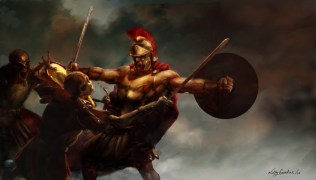 The word ‘walk’ is a common idiom in the New Testament used to illustrate the way we live. Paul is reminding us that whether we are believers or not, we live in the natural world. Believer and unbeliever alike, breathe the same air, eat the same food, and need the same rest. Having said that, Paul goes on to remind us that, although we live in the natural world, we fight a spiritual battle. He does not use the word WAR, as a hook for his sermon, instead he is describing the everyday life of the Christian. From the moment we rise each and every day, we are in the midst of spiritual battle. One of the factors making this battle so difficult, is that it takes place on two fronts. We all battle against our own flesh. We must fight to resist temptation, overcome sin, and live as godly ambassadors of Christ. At the same time, we are battling to see our friends, family, neighbors co-workers, and acquaintances come to Christ. These battles are not won by natural means, but with spiritual weapons.
 As Paul was writing this letter, conditions in Jerusalem were very difficult. Persecution, famine, and perhaps a bit of mismanagement, had left the church in Jerusalem financially destitute. In order to help those in need, Paul assisted in organizing a financial gift from the gentile churches. This passage lays out the guidelines for the giving and receiving of that gift. The principles Paul presents should help to govern our giving, which we often refer to giving as tithing. The word “tithe” means tenth and refers to the Old Testament Law where the children of Israel were required to give a tenth back to the Lord. The New Testament, while not requiring a tenth, does clearly teach the need to “give back” to the Lord.
 Unfortunately, sadness is a common feeling. We have experienced it in all its varying levels and intervals. We have had little things happen that caused us to frown and go quiet, and we have had deeper experiences that gripped us with sorrow and caused us to weep or even wail. Paul is speaking here, not of the sorrow that comes from your favorite team losing a game, or even losing someone you love, he is speaking of the sorrow that comes upon a person when they realize they have sinned against God. The Psalmist wrote of a time when he was overcome with that kind of sadness;
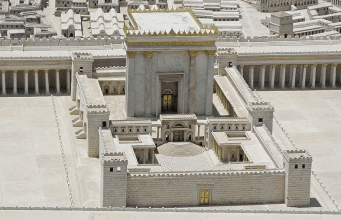 Although this verse is tucked away in a passage not well trodden, this portion of the text is fairly well-known. It is not uncommon to hear this verse quoted, even among those who have not chosen to surrender their lives to Christ. When donuts are on the table and we are about to indulge, we might hear someone say, “You know our bodies are the temple of the living God, we should not defile the temple.” While it is true, what we eat can have an effect upon how we feel, and thus distracts from what we are capable of accomplishing, that is not the primary message of this passage. Paul is talking about the danger of establishing relationships that will lead us astray. He wrote,
 A few years ago, I watched a very interesting story on the news. An armored vehicle, after leaving a local bank, had neglected to properly close the rear truck door. Upon making a turn, bags of money fell out of the truck and broke open on the street. People, seeing what had happened, went nuts, rushing into the street, picking up cash and shoving it into their pockets. In the midst of the chaos, a young boy grabbed a handful of coins and ran off. That night, he felt so guilty he could not sleep. The next day at school, the little boy dropped eighty-five cents on his teacher’s desk and told her about the event. She, wanting to encourage him for doing the right thing, contacted the bank to arrange for the return of the money. Since more than $200,000 was lost that day, and only eighty-five cents returned, the bank wanted to honor this young man and asked him to come to the bank to receive an award. When the mayor of the city heard of his deed, he also wanted to honor the child with a public gathering. Later, word reached the executives at Disney, who decided to honor the young man. They invited him, and his whole class, to Disney World; all expenses paid. What a remarkable picture of grace. One young man took what did not belong to him and gave it back to the rightful owners, and in return, was richly honored and showered with blessings.
 A few years ago we purchased a pool table for the kids as a Christmas gift. Because of the size of the table it was not practical to wrap, so we set it up in the middle of the living room, threw a table-cloth over it and set our breakfast on it. Our disguise worked. The kids went about the morning without even noticing there was a huge gift right under their noses.
 Have you ever looked around at the circumstances you are facing and wondered what God is doing in your life? Why it is that you are facing these particular trials, while someone else seems to be immune to them. The answer to that question is tucked away in this verse. Paul writes,
 Jim Gallagher