TODAY’S DAILY READING: Genesis 15-16 & Matthew 8
Old Testament: Genesis 15- Agents Of Shield
Genesis 15:1
“After these things the word of the Lord came to Abram in a vision, saying, ‘Do not be afraid, Abram. I am your shield, your exceedingly great reward.’”
 Abraham had every reason to be afraid. He had just mounted a surprise attack against the forces of king Chedorlaomer and stole back all the spoils of Chedarlaomer’s victory over the king of Sodom. It seems obvious, this king would soon return with his armies and attempt to wipe out Abraham. I love… Read More
Genesis 16- God Who Sees
Genesis 16:13
“Then she called the name of the Lord who spoke to her, You-Are-the-God-Who-Sees; for she said, ‘Have I also here seen Him who sees me?’”
 We have four sons and had to select names for each of them. When making our decisions, we looked through name books, considered family names, then ultimately chose names that we liked. Very little consideration was given to what, if anything, the names actually meant. In Biblical times, names mattered much more than they do today. A person… Read More
New Testament: Matthew 8- Why Are You Afraid
Matthew 8:26
“Why are you fearful, O you of little faith?”
Out on the Sea of Galilee, in the midst of a great tempest, we find the disciples fearing for their lives. When they cry out to Jesus for help, He responds with a question. “Why are you afraid?” Naturally, they had much reason to fear. The storm was great, many in the boat were unaccustomed to the sea and it’s ways, and fear has a way of… Read More

 Abram’s encounter with Melchizedek is one of the most interesting and encouraging stories in Scripture. The scene is set for their meeting in the previous chapter, where we find Lot departing from Abram, and moving to the plains outside the city of Sodom. What seemed to be a brilliant business decision, turned out to be a costly moral one, as Lot is soon caught up in the ways of Sodom. When fighting breaks out between nations, Lot finds himself taken captive as a POW, and led to Elam where he will become…

 Life is filled with ups and downs. Sometimes, it seems as if we are living under the sunshine of God’s favor, while other times, we seem to be under a dark cloud of difficulty. Abram and his family were facing a dark time. They were living as sojourners in the land of Canaan when famine struck. This was, no doubt, caused by lack of rainfall. They…
 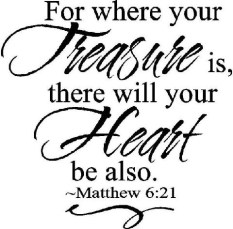 The longer I live, the more I have come to realize, so much in life is passing. Things I once coveted and had to have, are bundled up and given to the Salvation Army. That “new car smell” has been replaced with “what’s that smell?” Even relationships that were once so close, have grown distant. The words of Christ shout a deafening cry,
 Once the waters had resided and the ark settled, Noah and his family exited the ark to begin a new life. They would have to survey the land, build shelter, plant crops, and much more. It is interesting to me, of all the events that must have transpired, the Scriptures only focus upon a few. We read in Genesis 8, Noah offered sacrifice to the Lord. We can assume…
 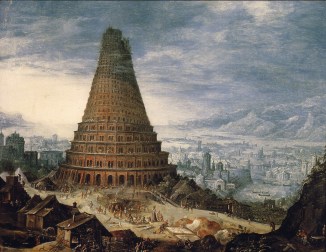 Genesis is the book of beginnings. In it, we are introduced to many things which play a prominent role as the rest of Scripture unfolds. Here, in Chapter 10, we are introduced to the city of Babylon, which becomes a major player in the Biblical narrative. It is mentioned 257 times in the Bible. We learn Babylon was built by a man named Nimrod (whose name means rebellion); he built Babylon in defiance of God. His purpose…
  Matthew 5-7 contain one continuous message that Jesus preached to His followers on a hillside overlooking the Sea of Galilee. Although it is called a sea, it is actually a lake. The Greek word for sea and lake are the same word.
 People seem to be fascinated with fighting. I can remember being in Jr. High School and hearing the word “FIGHT” resonate across the playground. All activities stopped and the whole student body ran in an attempt to get a front row seat to view the scene. Things have not changed; people gather to watch boxing matches, UFC events and even hockey…
  The Bible teaches that man was originally created in the image of God. Since God is eternal, man was created to live forever. Since God is triune: Father, Son and Spirit, man was also created as a triune being: spirit, soul and body. Since God is holy, man was originally created without sin, placed in a perfect environment, and enjoyed sweet communion with God. Tragically, we read man’s condition did not last long. Within a few verses of the narrative, we find the first man and woman giving into the tempter and sin entering the world. The effects of this sin were both immediate and far reaching. Immediately they were changed, knew their sin, and were separated…
  The story of the flood is a story of judgment and redemption. Mankind had turned its back on God. Moses is careful to describe the condition of the world at that time;
 The scene in the garden quickly shifts, and we find Eve face to face with great temptation. This text not only explains how sin and death entered the world, but also serves as an illustration of the temptations a believer will face. The first thing to note is how the devil is described, he is called “cunning.” It is important to remember, whenever facing temptation, that every word out of the mouth of the devil is designed to deceive. Jesus called him the…
  As the drama of Genesis unfolds, we are introduced to two of Adam’s sons, and given a glimpse into their lives and occupations. Abel, the younger, was a shepherd, while his older brother Cain was a farmer. It was not their occupations, but their character that determined their destinies. We read, Abel brought an offering of the flocks, while Cain brought the fruit of the ground; God…
  Those ancient travelers who went in search of the Child Jesus, form a valuable illustration of true worship. Their worship included at least five ideas we would do well to imitate.
 The first verse of the Bible introduces us to its main character: God. This verse is not a philosophical statement, but an axiom upon which all other statements will be based. As we venture through the Bible together, we will read of the great exploits of God. We will hear of Him speaking to men, parting seas, knocking down walls, vanquishing enemies, stopping time, raising the dead, and providing salvation for…
  The Biblical account of the origin of life is fascinating and filled with wonder. We read, all that exists was brought forth with nothing more than the voice of God. He spoke and mountains formed, the seas were birthed, and life began. Of all the wonders of creation, none is more fascinating than to read, after six short days God rested. If the only energy expended in creation…
  I did not grow up going to church. At the age of 15 years old, I had never seen a Bible. A close friend of mine went on a family trip to visit his grandmother, who apparently was a believer, although I had no idea what that meant. Upon his return, he told me he thought we needed to be “better”. He told me he was going to begin reading the Bible. I decided I would join him in this…
  Since ancient times, precious metals have been purified using intense heat. The process involved a craftsman stirring a crucible filled with molten gold. Flames, reaching an excess of one thousand degrees, would liquify the gold and send the impurities to the top. The craftsman would then skim off the impurities, thus purifying the gold. The tradition remains largely untouched…
 The book of Malachi brings the Old Testament to a close. For a period of 1,100 years God at various times and in diverse manners spoke to His people through the prophets. That time had now concluded and for the next 400 years heaven was silent. It was not until the angel appeared to Zechariah and Elizabeth, that this silence was broken. Knowing that…
  Proverbs 31 is a section of Scripture most often taught at women’s conferences or retreats, because it goes to great length describing a virtuous woman. A more careful look will reveal this passage was actually instructions to the King, by his mother. It was her attempt to teach him how to find a godly wife. We find not only the characteristics that a virtuous woman ought to pursue, but also the…
  Years ago, I heard a story of a farmer whose cow, after a long and arduous labor, gave birth to twins. He ran into the farmhouse to give the news to his wife, who reminded him of the goodness of God and encouraged him to give one of the calves to the Lord. He agreed immediately, but took some time to make the decision as to which calf would be his and which one would belong to the Lord. After…
  Malachi has a lot to say about marriage. He warns the people of the danger of marrying badly, by choosing an ungodly spouse. He refers to marriage as both, “The Lord’s holy institution which He loves,” and as a “Covenant.” He exhorts husbands to think of their wife as a companion, and to be careful not to deal treacherously…
  This Proverb takes us to the natural world, in order to illustrate spiritual truths. The behaviors of four creatures are used to help us understand how to walk with the Lord.
