What Did You Say?

James 3:5
“Even so the tongue is a little member and boasts great things.”

The largest mammal on the planet is a blue whale, whose tongue can weigh upwards of 2.5 tons. This is approximately the size of an adult elephant. In contrast, the human tongue, on average, is about 4 inches long and weighs less than 4 ounces. The tongue is certainly not one of the strongest muscles in the human body, yet it is perhaps the one capable of the most destruction. Many of us grew up with hearing “sticks and stones can break my bones, but words will never hurt me,” only to find that some of the deepest hurts we have ever felt, were caused by the unkind words of another. James explains, one of the great problems we all have is that with the same tongue we bless God and curse men.

The Bible points out the sinful uses of the tongue, of which we are all guilty:

COMPLAINING – Philippians 2:14 “Do all things without complaining and disputing . . .”

BACKBITING – Proverbs 25:23 “The north wind brings forth rain, and a backbiting tongue an angry countenance.”

GOSSIP – Proverbs 18:8 “The words of a talebearer are like tasty trifles, and they go down into the inmost body.”
                 Proverbs 26:20 “Where there is no wood, the fire goes out; and where there is no talebearer, strife ceases.”

TEASING – Proverbs 26:18-19 “Like a madman who throws firebrands, arrows, and death, is the man who deceives his neighbor, and says, ‘I was only joking!’”

PROFANITY – Colossians 3:8 “But now you yourselves are to put off all these: anger, wrath, malice, blasphemy, filthy language out of your mouth.”

BLASPHEME – James 2:7 “Do they not blaspheme that noble name by which you are called?”

We are all aware of the sins of the tongue, are guilty of committing them, and have been hurt by them. The question is, how can we avoid them? Jesus tells us the sins of the tongue are a matter of the heart.

Luke 6:45 “A good man out of the good treasure of his heart brings forth good; and an evil man out of the evil treasure of his heart brings forth evil. For out of the abundance of the heart his mouth speaks.”

The solution then, to overcoming the sins of the tongue, is to focus on what is coming into our lives, and finding residence within our hearts. A number of years ago, a friend of mine was counseling a man who was struggling with outbursts of wrath (anger issues). He could not control his tongue and would lash out at his family. As they finished their conversation and walked to the car, he saw that the passenger seat was filled with hard-core secular music cassettes; the kind that makes you want to bang your head against a wall. He had uncovered part of the cause of the problem. Constantly filling his head with screaming, made it a lot easier to scream at others. In the same way, if you have a problem with profanity, take inventory. What are you putting into your head? If you struggle with gossip, stop listening to it and you will stop spreading it. Garbage in garbage out! The more you fill your mind with the things of God, the more you will find that your tongue is used to bless God and be a blessing to others. Philippians 4:8 “Finally, brethren, whatever things are true, whatever things are noble, whatever things are just, whatever things are pure, whatever things are lovely, whatever things are of good report, if there is any virtue and if there is anything praiseworthy—meditate on these things.”

Pastor Jim

Questions for James 3 
1. In verse 1, James begins with a warning to anyone who aspires to be a teacher of God’s Word. What is the warning? 

2. In the Bible, the ministry of pastor-teacher carries a tremendous responsibility to teach what God’s Word says and not offer any opinions. Where the Bible is silent, it is important that we are silent. Where the Bible speaks, it is important that we speak. Are you in a teaching or leadership role? If so, how are you affecting those you lead? 

3. Continuing through to verse 12, James teaches us how destructive our tongues can be. He uses very familiar illustrations in verses 3-5 to show us that even though the tongue is small, it boasts great things. In verse 6, he says the tongue is a fire, a world of iniquity, it defiles the whole body, and it is set on fire by Hell! In other words, the tongues wickedness has its source in Hell itself. Verse 8 tells us that “no man can tame the tongue.” Here are some examples of an untamed tongue: manipulating, flattery, complaining, false teaching, exaggerating, and lying. The acronym T.H.I.N.K. will help you before you speak. Ask yourself is it true? Honest? Intelligent? Necessary? And Kind? If what you are about to say is missing just one of these ingredients then keep your tongue in between your wisdom teeth. 

4. Our flesh tells us, “If no man can tame the tongue then why even bother trying?” We will never achieve perfect control of our tongue. Even so, the Lord Jesus promises us that the Holy Spirit “may abide with us forever.” We cannot fight the fire of our tongue in our own strength but the fruit of self-control can. Are you reacting in a hateful manner when you get offended? Are you lashing out when you are criticized? Remember Christian, you have the Holy Spirit, the Mighty Counselor. 

5. In verses 13-18, James teaches us the contrast between wisdom from God and the wisdom from Satan. As a Christian, wisdoms’ question to us is, “How much have I come to agree with God?” We can measure wisdom by a person’s character and the way they act. The devil inspires things like foolishness that leads to disorder, gossip that leads to conflict and strife, and self-seeking that leads to greed. The wisdom from God leads to peace and goodness. Our society today says, “Go for it, assert yourself, set high goals to attain, and you are the captain of your own ship.” God says, “No man can serve two masters.” Are you tempted by the wisdom of the world? Remember God loves peacemakers. (Matthew 5:9) 


Old Testament:
Jeremiah 31- Everlasting Love
Jeremiah 32- Locked Up

Work In Progress

James 2:14  “What does it profit, my brethren, if someone says he has faith but does not have works? Can faith save him?”

James 2:17 “Thus also faith by itself, if it does not have works, is dead.”

James asks a very important question, “What is the profit of faith without works?” He then adds, “Can that faith save?” To help lead us to the right answer, he uses an illustration which reminds us that talk of food will not always satisfy the appetite of a hungry man. In the same way, a dead faith cannot produce life. Right away James recognizes there will be objections to his teaching; some will say, “You have faith, I have works.” This seems to be the objection of those who think there is more than one way to God. They might say, “I am glad you have found something that works for you, but I don’t need that. I am a good person, and when I die, I will go to heaven because of the good things I have done.” James is in no way saying our good deeds will get us into heaven, but that true faith is always accompanied with good works. The person who truly believes, will have actions that support his claims.

Throughout history, James has gotten a whole lot of grief for writing this passage. Some have even gone so far as to suggest that this book does not belong in the Bible. I think it is important that we see James is not presenting a different doctrine than the rest of Scripture, but is in fact, explaining more clearly, the doctrine of justification by faith. James is not alone in teaching that faith without works is dead.

JEREMIAH TAUGHT IT

Jeremiah 7:8 “Behold, ye trust in lying words, that cannot profit.”

JOHN THE BAPTIST TAUGHT IT

Matthew 3:7-8 “But when he saw many of the Pharisees and Sadducees coming to his baptism, he said to them, “Brood of vipers! Who warned you to flee from the wrath to come? Therefore bear fruits worthy of repentance”

PAUL TAUGHT IT

Galatians 5:6 “For in Jesus Christ neither circumcision nor uncircumcision avails anything, but faith working through love.”

Titus 1:16 “They profess that they know God; but in works they deny Him, being abominable, and disobedient, and unto every good work reprobate.”

Ephesians 2:8-10 “For by grace are ye saved through faith; and that not of yourselves: it is the gift of God: Not of works, lest any man should boast. For we are his workmanship, created in Christ Jesus unto good works, which God has before ordained that we should walk in them.”

PETER TAUGHT IT

2 Peter 1:5 “And beside this, giving all diligence, add to your faith virtue; and to virtue knowledge; . . .”

JOHN TAUGHT IT

1 John 2:4 “He who says, ‘I know Him,’ and does not keep His commandments, is a liar, and the truth is not in him.”

JESUS TAUGHT IT

Luke 13:3 “I tell you, no; but unless you repent you will all likewise perish.”

Matthew 7:19-20 “Every tree that does not bear good fruit is cut down and thrown into the fire. Therefore by their fruits you will know them.”

Matthew 7:21-23,26,27 “Not every one that says unto me, Lord, Lord, shall enter into the kingdom of heaven; but he that does the will of my Father which is in heaven.”

James goes on to explain his teaching by stating, faith cannot be seen without action, “I will show you my faith by my works.” He then uses one of the most powerful sermon illustrations ever given. He declares the demons, who believe in God, show by their actions, they are not followers of God. In contrast to the demons, James reminds us of the father of faith. Who showed the reality of his faith with His obedience to the word of God. His action of placing his son on the altar, showed in a striking way, that God was his chief love (Genesis 22:1-12).

Jesus declared, the first commandment is to love God with ALL. This is evidenced in our lives, not simply by words, but by actions. With one final illustration, James brings up Rahab the harlot. Her past life was marked with open sin, although no details are given as to what led her down that path. All we know is when presented with the opportunity, she chose to depart from her old way of life, and determined to join with the believers and follow God. What about us? What are the works that show an account of our faith? In Matthew 7, Jesus stated, we must do the will of the Father. The first work to add to our faith is simple obedience.

Read your Bible and do what it says. When you come to a text that convicts you, make some changes in your living. It is not the change that saves you, but the saved will certainly change.

Pastor Jim

Questions for James 2 
1. In our society we often treat a well-dressed, impressive looking person better than someone who looks mangy and down at the heels. We would rather identify with the prosperous people than with the presumable failures. In verses 1-7 Pastor James rebukes acts of favoritism and prejudice. Here are 8 reasons why showing favoritism to the rich is wrong: 
a. It is contrary to the teachings of the Lord. 
b. It results from evil thoughts. 
c. It insults people made in God’s image. 
d. It’s a by-product of selfish motives. 
e. It’s contrary to the Biblical identification of love. 
f. It shows lack of mercy to the down trodden. 
g. It’s sin. 
Are you easily impressed by status, wealth, or fame? Are you partial to the “haves” while paying no attention the “have nots?” 

2. God views all people as equals. Before Him we all stand on one level. By honoring someone just because he or she wears expensive clothes and drives a fancy vehicle we are making appearances more important than character. Does poverty make you uncomfortable? The Lord tells us a parable of the Pharisee and the tax collector (Luke 18:9). The Pharisee said, “God, I thank you that I am not like other men.” Do you ever have the point of view that you are superior to the poor person? As Christians, we must live as the Lord requires. We are not to be playing with the lifestyles of the rich and famous but to love all people regardless of whether they are rich or poor. 

3. The Lord Jesus taught us the golden rule in Matthew 7:12, “Whatever you want men to do to you, do also to them.” In verse 8, how do we fulfill the royal law in the scripture? 

4. Verse 13 is a powerful verse. In essence, there will be no mercy for you if you have not been merciful to others. We should not withhold mercy and forgiveness from others after having received it ourselves. Is there someone you are withholding forgiveness to? Turn to Matthew 6:14, 15 and Ephesians 4:31, 32. 

5. Verses 14-26 can be summed up by “faith without works is dead.” James is telling us that true faith transforms our behavior as well as our mind. True faith always results in good deeds. Our simple faith brought us to salvation and our active obedience proves that our faith is genuine. Are you someone who professes to be a Christian but does not minister deeds of loving service? 


Old Testament:
Jeremiah 29- Promises
Jeremiah 30- Journey Of A Lifetime

Praise God

Hebrews 13:15-16“Therefore by Him let us continually offer the sacrifice of praise to God, that is, the fruit of our lips, giving thanks to His name. But do not forget to do good and to share; for with such sacrifices, God is well pleased.”

Worship is a very important part in the growth of every Christian. Many times, we measure God in light of the difficulties we are facing. We think there is little, or no hope for us, because our problem seems massive. It is in worship that we are able to see our life in light of the nature of God. We need to magnify God (which does not mean to make Him bigger, but to bring Him into focus) so we see life in light of His great love, mercy and power. As we magnify Him, we will see how little our problem is, compared to His ability. That becomes the source of great peace during trying times.

Here, in Hebrews 13, we see a couple of key elements that should be part of the worship life of the believer. First, we are told to offer the sacrifice of praise. Music is an amazing medium. Things that are often difficult to remember, seem to become fixed in our minds when put to song. How many times have you had a song “stuck in your head”, and no matter how hard you try, you cannot seem to get it out? I do not consider myself to be poetic in the least. In fact, I find it difficult to express to God the way I truly feel, but there are so many worship tunes that seem to say what I am feeling. When we gather for corporate worship, and I am able to follow the musicians as they play, I feel like my heart is finally able to express the things I wanted to say to God, but could not find the words.

Second, we are told worship must include thanksgiving. Just prior to these verses, we are warned against covetousness. To “covet” is to want what we do not have. It is often driven by failing to be content with what the Lord is currently doing in our lives. The children of Israel were known for grumbling and complaining during their wilderness travels. Instead of looking at what God was doing: providing water from rocks, miraculous food from heaven, a cloud covering from the sun, and a heavenly night-light to lead them, they chose to focus on the things they felt He was neglecting to do. They constantly complained about His provision, and threatened to turn from the Lord every time things got tough. Instead of focusing on the things that do not seem to be going your way, get your eyes on the Lord, and begin to thank Him for all He has done and is doing.

Finally, a life of worship, is a life that not only looks up, but also looks out. When we see God as He truly is, we cannot help but develop His heart for others. We are exhorted to include doing good to others, and sharing the things God has given us to benefit them. Worship is not something that is exclusively singing. While song is a great way to express how we feel about Him, it cannot be the only way we express praise. We must express it in actions toward one another. The Levitical Priesthood was composed of singers and musicians, but also included people who set up the tent, made the incense, baked the show bread, and a long list of other requirements, to make corporate worship possible. In God’s economy, those things are as much worship as playing guitar or leading in song. At our church, there are many who worship in the kitchen making coffee, or bring refreshments to make fellowship better. Others worship in the parking lot, assisting people to find a spot, and still others worship by inviting friends and neighbors to hear about Christ.

Don’t forget, doing good and sharing is as important to your worship life as singing, playing musical instruments, or expressing thanks

Pastor Jim

Questions for Hebrews 13 
1. Verses 1-4 address loving one another. Are there any commands in these verses that the Lord is addressing in your life right now? 

2. Covetousness-wanting something you don’t have in a way that makes it more important than God. Perhaps you believe you can’t be happy without the thing that you’re coveting, or that all your problems would be fixed if you just had that something. Read verses 5-6. What are the antidotes to coveting found within these verses? 

3. God sets leaders up within the church, not simply to preach and teach, but also to serve as examples of how to walk with God. What things does verse 7 and 17-19 tell us to do concerning our leaders in the local church? 

4. Read verse 8. Why is it such a good thing that Jesus never changes? 

5. Look at verse 9. Religious ritual is not a good foundation for our hearts. How should we establish our hearts? 

6. The theme of Hebrews is that Jesus is better. Here we see again that He offered a better sacrifice (Himself) than the Old Testament priests offered (livestock), and that He offered once for all. Look at verse 15-16. What kinds of sacrifices is God interested in now? 

7. Read verses 20-22. The author both prays for the Hebrews (talks to God about them), and then exhorts the Hebrews (talks to them about God). Do you do both of these things for the people in your life? Note the things that are prayed for and incorporate these into your prayer life for others. 

8. Note verse 25. What a great way to end this letter!


Old Testament:
Jeremiah 25- Unstoppable
Jeremiah 26- Hope

Bitterness

Hebrews 12:15
“. . . looking carefully lest anyone fall short of the grace of God; lest any root of bitterness springing up cause trouble, and by this many become defiled; . . .”

Bitterness is the byproduct of being unwilling to forgive. We are warned against allowing bitterness to take root in our lives, thus springing up and defiling us. Roots, for the most part, are the unseen part of the tree. We understand for a large tree to be able to support itself, its roots must go deep and spread wide. Bitterness begins to develop its root system in us the moment we choose to keep record of wrong, rather than forgive the wrong doings of others. While we are able to continue on for some time unaffected by it, this unforgiveness will soon spring up and bitterness will reveal itself.

It seems to me, bitterness may have been one of the chief causes behind Moses’ failure, which kept him from entering the promised land. Scripture records that the children of Israel once again complained about their circumstances in the desert. They were thirsty, and rather than trusting in the provision of God, they looked to Moses and began to complain that their needs were not being met. Moses went to the Lord with the problem and was told to speak to the rock and water would be provided for the people. Instead of speaking to the rock, Moses unleashed his fury on the people, then in his rage he struck the rock. God, in His mercy, provided for the people. However, Moses was disciplined for his disobedience; he was forbidden to enter Canaan. The punishment might seem severe if we do not keep in mind that the spiritual leaders must rightly represent the Lord to the people, or they will develop a wrong view of God. This was not the first time God provided water in the wilderness, He had done it years earlier, and in response, Moses named the place “Meribah” meaning contention.

This has always struck me. Moses took a stick, struck a rock and water, enough for two million people, was provided in the desert. Rather than naming the place “God is Awesome” or “Great Provision”, or something else that would forever remind the people of how amazing the Lord is, Moses chose to remember the failure of the people. Now we find him, years later, facing similar circumstances. His unforgiveness has birthed bitterness, and his bitterness springs up as he lashes out in rage against the people.

While bitterness is the byproduct of being unwilling to forgive; forgiveness stems from looking at the cross and realizing all that Jesus has forgiven you. The forgiveness of God is complete. Paul wrote, our sins were nailed to the cross never to be brought up again. Forgiveness means to treat someone as though they had never done the thing that hurt you, or that has made it hard to be kind to them. Choosing to forgive is sometimes very difficult, but being unwilling to forgive has much greater consequences. If there is anyone who you are harboring bitterness toward, take some time right now and pray that God would help you to forgive them and treat them as though they had never hurt you in the first place. Do it now before the roots take hold of you.

Pastor Jim

Questions for Hebrews 12 
1. Our Christian life is pictured as a race which requires Endurance in verses 1-3. What things slow you down in your race? What things does the author encourage us to do in these verses to help us run our races? 

2. In verses 4-11 we read that if God is really our Father, we will experience discipline and correction from Him. In verses 10-11, what is the stated purpose of the correction and testing that God brings us through? 

3. Read verses 12-15. In these verses we are given many practical instructions for our lives both as individuals and in relationship with others. According to verse 15, what two dangers are there for us to avoid having fruitful lives? 

4. The rest of the chapter gives examples from the Old Testament that serve as stern warnings against ignoring the voice of God, who is ultimately the Judge of all. According to verses 28, how do we live a life pleasing to God? 

5. Look at verse 29. How is this truth about God a good thing? How can it be a scary thing? 


Old Testament:
Jeremiah 23- Study Time
Jeremiah 24- A Life Change

Faith

Hebrews 11:1-2
Now faith is the substance of things hoped for, the evidence of things not seen. For by it the elders obtained a good testimony.”

We have arrived at one of the most amazing chapters in all of the Bible. It has been aptly entitled, “The Hall of Faith.” It records incidents from the lives of many Old Testament saints who, in the midst of extreme difficulty, chose to put confidence in the Lord. Whenever we are faced with trying times, we have the choice between trusting in circumstances, emotions, or the eternal Word of God. Another way of looking at it, we can trust in what we see, or in what He says. These men and women chose to put confidence in the Words of God, and by doing so, have obtained a great testimony. We are told, although they have long since died, their lives still speak to us today. They are saying, no matter what you are facing, you can trust the promises of God. Let’s take a moment to admire a few of the influences confidence in God’s promises, brought about in the lives of those who trust in His Word.

Hebrews 11:3 “By faith we understand that the worlds were framed by the word of God, so that the things which are seen were not made of things which are visible.”

Over and over again we will read of the fruit of faith. The phrase “by faith…” is repeated 19 times in this chapter. Verse 3 is its first occurrence where we are told, understanding of things we could never grasp on our own, is found by putting confidence in the promises of God. One of the great dilemmas in life is confusion; not knowing how to handle a situation because we have never faced it before. The devil seems to have a field day when we are faced with confusion. He uses it to fill us with fear, anxiety, and even depression. What a joy to know that by faith we can understand the ways of God. The solution in our trying times is to go to the Word of God, locate the promises of God, and cling to Him.

Hebrews 11:13 “These all died in faith, not having received the promises, but having seen them afar off were assured of them, embraced them and confessed that they were strangers and pilgrims on the earth.”

We read, by faith Abel offered, Enoch walked, Noah prepared, Abraham obeyed, Sarah was strengthened, Isaac and Jacob blessed, Joseph instructed, Moses refused, Israel entered, and Jericho collapsed. All of the great accomplishments of these men and women were brought about not because they had strong gifts, perfect circumstances, helpful friends, or super human strength. They accomplished great things because they chose to trust in the promises of God, and those promises never fail. I wonder how our lives will be recorded? If we are to honestly evaluate how we are living, how would we finish the sentence “by faith he/she …”

Whatever you are facing, there is a promise for that, and that promise along with the Spirit of God will enable you to live a life that will prove to be a good testimony to those who follow. Put your trust in the promises of God today.

Pastor Jim

Questions for Hebrews 11 
This chapter is sometimes called “the hall of faith”, because it recounts the lives of characters in the Bible who trusted in God’s Word. They are recorded here as examples for us to follow. Warren Wiersbe defined faith as “confident obedience to God’s Word in spite of circumstances or consequence.” Remember, faith just means trusting God in what He says. 

1. In verse 1 faith is defined. When people observe us trusting in God and in the work of His Son, it is evidence to them that He is real. Do people find evidence of God by looking at your life? 

2. Cain and Abel both offered different sacrifices to God. However, God was pleased with Abel’s and not Cain’s. According to verse 4, why? Read Genesis 4:1-13 for more info on Cain and Abel. 

3. Enoch is mentioned in Genesis 5:18-24. His life is very different from the rest of the characters in the Genesis 5 genealogy: they all die, but He does not; he is simply taken by God. According to verse 5 of Hebrews why did God take Him? Look at verse 6. How can we please Him like Enoch did? 

4. Look at verse 7. Noah was warned by God of the coming judgment of the flood, and spent 120 years building the ark. He responded to what God said, although there was no outward evidence. When God speaks to you about doing something, are you “moved with Godly fear”? Actions speak louder than words. Do you respect God enough to obey Him? 

5. Verses 8-19 speak about the life of Abraham and Sarah (covering Genesis 11-25), and many of the ways that they trusted in God. 
a. What does verse 8 tell us about the uncertainty that Abraham experienced when God called him? Have you ever felt that way in your walk with God? 

b. According to verse 10 and 14-16 what was Abraham really looking and waiting for? 

c. When God told Abraham to offer Isaac, according to verse 19, what did He believe God would do? 

6. In verses 24-26, we see that Moses willingly laid aside the ease and luxury of being a prince of Egypt. Why did He do this? What three other things from Moses life are recorded as ways that he trusted in God? 

7. Not everyone who trusts in God sees an earthly victory. Read verses 35-40. What do we learn from their lives about being faithful in difficult times? 


Old Testament:
Jeremiah 21- Way Of Life
Jeremiah 22- Responsible

The Book

Hebrews 10:7
“Then I said, ‘Behold, I have come— In the volume of the book it is written of Me— To do Your will, O God. ’”

Years ago I had a friend who worked in a local book store. Part of his job was to be familiar with the books so he could answer questions and make recommendations. The problem was he really did not enjoy reading. His solution was to read the book jackets which often gave a brief summary of the content of each book. While that did not make him an expert by any means, it did give him a good idea of what to expect if and when he ever ventured into reading one of the books. If the Bible contained an inspired summary of its content it would be but one word: Jesus.

John 5:39 “You search the Scriptures, for in them you think you have eternal life; and these are they which testify of Me.”

While the Bible touches on, and even addresses, a wide variety of topics, it is primarily a book about salvation. The Old Testament is filled with promises of a savior coming to provide atonement for sin, and the New Testament tells the story of the Savior. The more you know the pages of your Bible, the more you will know Jesus. He is found on every page and in every story. Sometimes He is the main character of the event, other times He may rest in the shadows in the form of a type or illustration, but He is always is there. As you read the Word, be careful to observe the context so as not to make the Bible say something it does not mean, but also be careful to look for Jesus.

As you continue through Hebrews, keep in mind one of the key themes of this letter is that Jesus is better. That is why He is being contrasted with the Old Testament laws, covenant, priesthood and sacrifices. They all served the purpose of pointing to Christ, He serves the purpose of fulfilling the Law and sacrifices. As a result, we no longer live under them, but live in a relationship of grace.

Pastor Jim

Questions for Hebrews 10 
God intentionally created the Old Covenant sacrificial system incomplete. It was to be a shadow of the perfect sacrifice of Jesus. Jesus is better. 
1. Verse 1. Can it grow and mature and perfect us? 

2. Verse 4. Is it possible to remove sin by killing animals? 

3. Verse 5-8. Is God interested in sacrifice for sacrifice’s sake? Does He take pleasure in it? 

4. Verse 7-9. Psalm 40:6-8 is quoted here. It is a messianic psalm, a psalm that foretells details about the coming King and Priest of God’s people. Is it clear through these verses that God always intended to replace the OT sacrificial system when Jesus came? 

5. Verse 10-14. How often must Jesus offer himself? Was His sacrifice complete? Is it complete for you? 

6. In verses 19-25, we are told that because of Jesus’ perfect sacrifice; we can draw near to God with full confidence. What else are we told we should be doing? 

Old Testament:
Jeremiah 19- Shards Of Clay
Jeremiah 20- Get The Word Out

The Tabernacle

Hebrews 9:23“Therefore it was necessary that the copies of the things in the heavens should be purified with these, but the heavenly things themselves with better sacrifices than these.”

Hebrews is dealing with the superiority of Christ. Here in Chapter 9, we see Christ is clearly superior to the Old Testament sacrifices, for they must be offered continually, but He was offered once to take away sin. We are even told, while it is appointed for all men to die once, then to face judgment, Jesus took the penalty on the cross, rescuing all who believe in Him from the judgment to come.

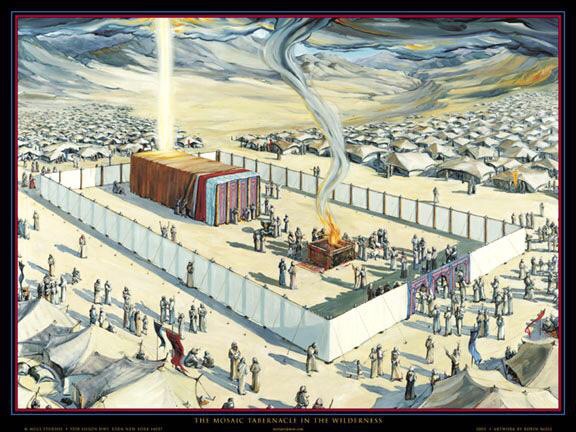
In discussing the superiority of Christ, the furnishings of the Tabernacle are listed; we are told they are “copies of heavenly things.” In fact, the Tabernacle and it’s furnishings, become a perfect illustration of the way of salvation. In Exodus, as the Children of Israel are working their way from Egypt to Canaan, God gave them plans for building the Tabernacle. This building would serve the purpose of making a way for man to be in right relationship with God.

The Tabernacle measured 15’x15’x45′ and was surrounded by a linen fence. Linen is not a durable fencing material. It is safe to say, none of our houses are surrounded by linen fences. The purpose of this fence was to symbolize the holiness of God, reminding the people they could not have access to God. However, on the eastern side of the fence, was an opening large enough for all to enter. Jesus told us, He was the doorway to heaven (John 10:7). Although God is holy and men are sinful, Jesus has provided a way, for any and all who will come to Him, to be forgiven and restored.

Once a person walked through the gateway, they would be face to face with the altar of sacrifice. This would remind them they are sinners in need a Savior. Just as the innocent animal was sacrificed for the guilty sinner, so Jesus, the Lamb of God, went to the cross to make a way for us. Right behind the altar was a large basin in which the priests would wash. Paul compared the Bible to water that washes the believer. Jesus told us that after He has cleansed us, we still need to have our feet washed (John 13:10a). The Word of God is the Christian’s cleansing agent. As we walk through this life, we get dirty, the Bible cleanses our mind and refreshes our spirit.

Inside the Tabernacle were five important pieces of furniture, each one symbolic of relationship with God. The Lamp-stand shedding its light, was symbolic of the work of the Spirit illuminating the Word, and was of God. The show bread speaks of Jesus as the bread of life, the incense altar is a picture of the prayers of the saints, and the Ark and mercy-seat, of the intimacy of relationship with God.

It can be helpful to use the Tabernacle as a roadmap, reminding us of our relationship with God that we now have because of the work of Christ. The High Priest, who alone entered in behind the veil once a year, speaks to us of the access we now have daily, to the very presence of God. Let’s take advantage and spend time with Jesus today.

Pastor Jim

Questions for Hebrews 9 
Again, the larger theme of Hebrews is that “Jesus is better”. In this chapter the author is continuing an idea begun in chapter 5 that Jesus is a better High Priest than the high priest from the old system. 

1. In verses 1-5 the author brings up some of the details of the old priesthood, but says that he cannot go into detail. If you would like a little better understanding, read Exodus 25. 

2. Read verses 6-8. The innermost part of the tabernacle was called the “Holy Place”, the “Holy of Holies”, or the “Holiest of All”. God’s presence was in this place over the Mercy seat on top of the Ark of the Covenant. How often could the High priest enter here? What did he need to do first? Could anyone else? 

3. As we consider the old tabernacle and priesthood, note the first three words of verse 9. What does this tell us about them? Also see verse 23-24 later in the chapter. 

4. In verse 11, what do we learn about the tabernacle that Jesus minister in? 

5. Note verse 12. Who brings the greater sacrifice to God? 

6. Note the word conscience in verse 9 and 14, and note verse 22. What does Jesus blood have the power to do that no other sacrifice can? 

7. Read verses 24-28. How often does Jesus have to die for sin? Read John 19:30. 


Old Testament:
Jeremiah 17- Bedrock To Build On
Jeremiah 18- Not Listening

The Main Thing

Hebrews 8:1
Now this is the main point of the things we are saying: We have such a High Priest, who is seated at the right hand of the throne of the Majesty in the heavens, . . .”

Under the Levitical priesthood, on the Day of Atonement, the High Priest would enter into the Holy of Holies bringing atonement to the Lord on behalf of the people. His job was basically to represent the people to the Lord, and the Lord to the people. If memory serves me, I believe the Latin word for high priest means “bridge builder.” The role of the priest was to make a way for man to be right with God. Hebrews 8 reminds us, Christ is our High Priest and having made a way for us to be right with God, He is in heaven representing us to the Father.

As the High priest’s garments were stained red with the blood of the sacrifice, so Christ bears the scars of the cross, as a reminder of the atonement provided at Calvary. When we sin and the devil brings charges against us, our High Priest bridges the gap, perhaps by showing His scarred hands and feet, declaring that the price has been paid, and forgiveness is given.

When we are facing trials, obstacles or temptations, and it looks as though we may fail under the pressure of the test, our High Priest stands in the gap and prays for us. Like Aaron and Hur holding up the hands of Moses, Jesus holds up our hands that hang down and strengthens our feeble knees. It is His constant prayer and encouragement that enables us to press through the trials and onward with the Lord.

With eyes of love, our High Priest watches our every move. Not because He is hoping we will fail and He might rebuke, correct, and chasten us, but because He loves us as a father loves his son. There is never a moment when we are beyond His gaze. In one of the most magnificent promises in the Bible, we are told He sings over us (Zephaniah 3:17). Imagine the throne room of God, where the songs of the saints accompany the angelic choruses giving praise to Jehovah God. Then a voice rises high above all others and begins to sing a love song, and you are the subject of His song.

It is no wonder the writer of Hebrews declares that this is a better covenant.

Pastor Jim

Questions for Hebrews 8 
The continuing theme of Hebrews is that “Jesus is better.” In this chapter the idea of Jesus as a better High Priest is continued. In particular: 
1. In verses 1-2, we see another reason why Jesus’ priesthood is better. What is it? 

2. Look at verses 3-5. The Levitical priesthood according to these verses is a “shadow” of heavenly things. What is the difference between a shadow, and the thing which casts the shadow? What does this mean when you consider Jesus’ priesthood vs. the old one? 

3. A covenant is a legal agreement wherein the parties involved promise to “hold up their end of the bargain”. Read verses 7-9. What was the problem with the first covenant? 

4. Read verses 10-12. The New Covenant exceeds the Old Covenant in that God is making all of the promises; the old covenant failed when people failed, but the new covenant is based on God’s ability. 
a. What does God promise to do for us in verse 10? 

b. What is the result of this in verse 11? 

c. Finally what does God promise to do in verse 12? 


Old Testament:
Jeremiah 15- Wrong Way
Jeremiah 16- Welcome Home

The Encounter

Hebrews 7:1
For this Melchizedek, king of Salem, priest of the Most High God, who met Abraham returning from the slaughter of the kings and blessed him, . . .”

Abraham and his nephew, Lot, experienced great blessings from the Lord. When they first arrived in Canaan they had very little, but as the years passed, they acquired great wealth. As nomadic farmers, great success meant an increase in livestock and increased livestock meant a need for larger pasture lands. Soon their wealth became so great they were forced to separate. Abraham chose to continue to live the simple life of a farmer, while Lot left the family business and began to dwell with his family in the city of Sodom. Sodom, and her sister city Gomorrah, was known for the wickedness that was practiced within the city walls. The king of Sodom had been conquered by Chedorlaomer, a powerful king of Mesopotamia, and along with other kings, paid annual tribute to keep from being attacked. A group of these cities including Sodom, elected to stop paying tribute and stand their ground. Soon, Chedorlaomer and his forces attacked the rebel cities and overthrew them. As the saying goes, “to the victor goes the spoils”, and Lot, along with the inhabitants of Sodom and all their wealth was taken captive. When news of this reached Abraham, he gathered his servants, other shepherds and farmers, and they went in pursuit of Chedorlaomer and his army. Overtaking them in the night, Abe and his men were able to do what the armies had failed to do, they miraculously conquered the enemy forces, and rescued the captives.

It was on the return from this great battle that Abraham met Melchizedek, king of ancient Jerusalem. Weary from battle, and perhaps somewhat frightened at the idea of the retaliation that may arise from Chederloamar’s troops, Abraham has one of the most interesting encounters of his life. We are told Melchizedek meets him with bread, wine and a blessing. The writer of Hebrews tells us Melchizedek is a type of Christ, and his actions illustrate the work of Christ. As the weary warrior is ministered to by bread and wine from Melchizedek, so the Christian is strengthened for future battle at the communion table. It was the night before His death when Jesus took bread and wine and instituted the sacrament of communion. He told us that as often as we want, we can partake of these elements and remember the work of the cross. My sins broke His body, and His blood cleanses me of my sins.

No matter what struggles, battles, or obstacles you may be facing, the secret to your success is found at the cross. Take some time today to reflect upon all that Jesus has done for you at Mount Calvary, and there at His feet, pour out your heart to Him.

Questions for Hebrews 7

The overall theme of Hebrews is that “Jesus is better”.  It seems that the Hebrew believers being addressed are thinking of returning to Judaism, and the author makes the case that Jesus is better than that old way of life.  Here he is continuing an idea that started in chapter 5:  that Jesus is a better High Priest.  And so that you don’t get lost, a priest was an essentially a person with two jobs:  represent God to the people, and represent the people to God.

  1. In verses 1-3 we read of Melchizedek.  He is a type or a shadow of Jesus.  In what ways in these verses do we see that Melchizedek is like Jesus?
  2. Read verses 4-10.  Israel had 12 sons.  One of these sons, Levi, was given a privilege that no son from another tribe could ever have – the priesthood.  All of the other sons would pay tithes to the Levites as they ministered spiritual things to the rest of the tribes.  How in these verses do we see that the Melchizedekian priesthood was greater than the Levitical priesthood?
  3. Note the logic of verse 11.  What does it say about Jesus being better?
  4. Read verses 13-17.  Jesus is not of the Levitical priesthood because He did not come from the tribe of Levi, but from Judah.  What is these verse show the superiority of Jesus’s priesthood?
  5. The Levitical priesthood was “under the law”.  Jesus priesthood through Melchizedek predates the law.  What is the inherent weakness of the law shown in verses 18-19?  What is the strength of the new covenant at the end of verse 19?
  6. Look at verse 24-25.  How far does Jesus salvation reach?  What does He live to do for us now?
  7. Read verses 26-28.  One of the inherent weaknesses with the Levitical priesthood was the weakness and mortality of the men that made up the priesthood.  How does Jesus exceed them?

Pastor Jim
Old Testament:
Jeremiah 13- It’s Ruined
Jeremiah 14- Wanderer

Falling

Hebrews 6:4-6
“For it is impossible for those who were once enlightened, and have tasted the heavenly gift, and have become partakers of the Holy Spirit, and have tasted the good word of God and the powers of the age to come, if they fall away, to renew them again to repentance, since they crucify again for themselves the Son of God, and put Him to an open shame.”

When Jesus was in the wilderness he faced three severe temptations from the devil. Through His experience we learn a lot about how the devil seeks to trip up the Christian. One of his most effective tools is to twist the Scriptures into saying something they do not mean. This passage in Hebrews carries a very strong warning to all concerning the danger of falling away from the Lord. But the devil has used it to fill numerous Christians with fear over their past failures, or current struggles. Let’s take a minute or two to examine its content.

First, notice the text is clearly describing a believer. The person being warned is one who has been enlightened, has tasted the heavenly gift, and been a partaker of the Holy Spirit. The words enlighten and partake are used elsewhere in Hebrews referring to believers. To “fall away” is an idiom used to speak of returning to the sins from which we have been delivered. Earlier in the chapter we were told one of the elementary principles of Christianity is repentance, or turning from our sins to follow Christ. The person described here has turned from Christ and gone back into sin. Finally, notice the word “impossible”. It is a compound word, meaning able with a negative prefix. It means there is no way for something to be accomplished. it does not mean that it is unlikely, or difficult, but that a person who goes back to sin cannot return again to the Lord.

As I mentioned, this is both a strong warning, as well as a text that the devil has used to beat down the struggling believer. On many occasions, I have been approached by believers who had once walked with the Lord, only to backslide for long periods of time. They have now come back to the Lord, but come across this verse and begin to doubt their salvation. I think the key to this text is the word “impossible”. It is employed because of the gripping nature of sin, and the deceitfulness of the human heart. Falling away is not something that happens suddenly; but something that is the result of neglecting the Word, prayer, fellowship, and service. It is something caused by sowing little seeds of sin over a long period of time. When we first begin the downward slide, the Spirit of God speaks to us, warning us, and convicting us. It is only when we ignore the warnings and harden ourselves against conviction, that we can continue to sin. The problem with hardening our hearts, is that our hearts become hard. Soon, we cannot hear the voice of God, or sense the conviction of the Spirit. We have seared our conscience with an iron, and the voice of God is lost to us. At that point, even when confronted directly by others, we are so hardened, we keep going on in sin, unwilling to listen or repent. For that person, renewal is impossible. Before fear strikes you, keep in mind, it is not the only thing that is impossible.

Jesus said it is impossible for the rich to be saved because they trust in riches, yet many wealthy men and women have laid down their riches to trust in Christ alone. Salvation itself is impossible. There is no way sinful man could ever be restored to fellowship with a holy God. But Jesus reminded us that,

“The things which are impossible with men are possible with God.” Luke 18:27

While it is true, sin will harden our hearts; we are capable of becoming so hardened we will not listen to the conviction of the Spirit, the warnings of the Word, or the pleas of others. It is also true, the Bible is filled with stories of those who have fallen into sin and returned. One of the most well-known of all the parables Jesus told, is the story of the Prodigal Son (Luke 15:11-24). It is the story of falling away and returning. It is so well-known because it strikes a chord in all of us. We might go so far as to say, the whole Bible is the story of falling away and returning.

If we are to properly apply this text, we must take serious the warning against sin. We must examine ourselves to see if we have been hardening ourselves against the warnings of God, and we must repent. If we have returned to the Lord, we must accept the grace of God and not think we are destined to live as second class Christians, unable to ever truly experience His grace or be used by God.

Pastor Jim

Questions for Hebrews 6

In chapter 5 the author brought up the Old Testament character Melchizedek, and said that Jesus was a priest like him.  But before the author gets back to this at the end of chapter 6, he goes on a sidetrack, and has some words to say to the Hebrews about not growing up as Christians.

  1. In verse 1 and 2, basics of the faith are brought up, and also the idea that we build on these basics till we grow to maturity.  What is the foundation of Christianity? 
  2. Verses 4-8 provide a stern warning against turning away from Jesus (remember that the theme of Hebrews is that Jesus is better, so why go back?).  It is especially frightening when he says that if we do it is impossible to be renewed to repentance.  When we consider our own lives and times we have failed the Lord or turned from Him, we can fall into despair reading these verses.  For encouragement read Matt 19:26.
  3. However in verses 9-10 we see that God is faithful to both see and reward our service to Him.  How are you serving God’s people?  Are you storing up rewards from Him?
  4. In verses 11-12 we are exhorted to not just serve, but to continue to do so till the end.  In order to do this, who are we to imitate or follow the example of?  Read Gal 6:9.
  5. God made wonderful promises to Abraham.  What did he do before he saw these promises fulfilled in his life? (verse 15)
  6. What do you learn about God’s character in verse 18?

Old Testament:
Jeremiah 11- Should I Follow My Heart?
Jeremiah 12-Do The Wicked Prosper?