Numbers 19:2
“This is the ordinance of the law which the Lord has commanded, saying: ‘Speak to the children of Israel, that they bring you a red heifer without blemish, in which there is no defect and on which a yoke has never come.'”
 A heifer is a cow. One that is entirely red in color would be extremely rare, and as a result quite valuable. As part of Israel’s purification process they were to take a red heifer and offer it outside the city. Once it’s blood was symbolically sprinkled on behalf of the people, the priests were to wash with water and stay away from things that would defile them, making them unfit for service. Anyone who became defiled would need to go through a purification process that required both cleansing and a period of time. It is not difficult to see the symbolism here, or to relate this to the work of Christ and the walk of the believer.
Jesus is the represented by the red heifer, sacrificed outside the city. His blood was shed as a means of providing cleansing for sin. Once we receive Christ, we need a regular washing with water, which comes through the daily reading of God’s Word. If we desire to remain pure and useful for ministry, we need to avoid things that will make us unclean. If we happen to stumble into an area of sin, the solution is to go back to the cross where we confess our guilt, and get into the Word where we are strengthened to overcome sin. Take whatever time is necessary to be restored that we might once again become effective in ministering to others.
Pastor Jim

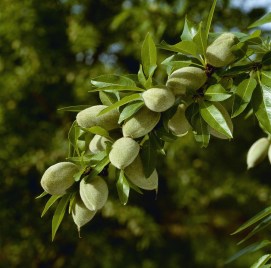 A miracle is defined as an unusual or wonderful event that is believed to be caused by the power of God. In other words, it is something that could not happen if God did not infuse His power into the situation. That is exactly what transpired here. To determine the validity of Aaron’s calling and ministry, God infused His power and made something that was incapable of bearing fruit, become fruitful. Aaron’s rod, which was nothing more than an old tree branch, suddenly came to life and produced blossoms and yielded ripe almonds.
 Korah and his disgruntled ministry team were upset with the leadership of Moses, and discontent with the opportunities they were given to serve the Lord. They soon formed a club and brought their complaints to Moses. They were hoping he would allow them to wear the priestly garments and enter the Tabernacle. Because ministry is based upon the call of God, Moses could not grant their request, but instead pointed out the folly behind their discontentment. They were guilty of considering what they did for the Lord as a small thing; as if some areas of ministry are big and others are small and unimportant.
 Jim Gallagher