1 Kings 20:13-14
Suddenly a prophet approached Ahab king of Israel, saying, “Thus says the Lord: ‘Have you seen all this great multitude? Behold, I will deliver it into your hand today, and you shall know that I am the Lord.'” So Ahab said, ‘By whom?’ And he said, ‘Thus says the Lord:”By the young leaders of the provinces.”’ Then he said, ‘Who will set the battle in order?’ And he answered, ‘You.’”
 Israel was facing almost certain annihilation; the forces of Syria had mounted against them and poised to attack. The troops and resources of Syria far outweighed that of Israel; and in a word, things looked bleak. It was with this backdrop that we are introduced to an unnamed prophet, who brought an almost unbelievable message. The message was that God would deliver Israel from the threat and he would do it through the young and inexperienced leaders.
I love the emphasis God puts upon young and inexperienced people. We read of great exploits being accomplished by Daniel and his companions, Jeremiah, and Timothy; all chosen while they were young. Jesus himself chose 12 men who had little or no leadership experience, and used them to lay the foundation for the church. I also love the way God chooses to train the inexperienced. Just as Ahab was to set the battle in order for the young leaders, God often will take those who have walked with Him for years, and use them to speak wisdom into the lives of the young men.
This principle is particularly important if the church is going to survive another generation. The older saints must trust the young leaders, and the young leaders must humble themselves and be willing to have their zeal guided by the wisdom of those who have gone before them.
Pastor Jim
 Elijah was a man devoted to God. Publicly and privately, he showed commitment and faithfulness to the Lord. His most recent experiences had led him to a face-to-face conflict with the one who most opposed the ways of God. After experiencing great personal victory, Elijah was plagued with a deep depression. He felt as though he could no longer continue serving the Lord, for the opposition was simply too great. Instead of surrounding himself with others who loved and served the Lord, Elijah isolated himself, and his depression grew deeper and darker. The farther he ran, the worse things became, until he found himself miles from home, cowering in a deserted cave, deep in the wilderness.
 We have four boys who are separated by only five years. When they were little, we, like so many others families, spent a lot of our time visiting amusement parks. As the older ones grew, they were attracted to the bigger rides, and their younger brother wanted to do whatever they did. The problem was, many of the rides had a standard. If you were not a certain height, you could not ride. At times, this created quite a controversy. We tried everything to make him just a little taller, we spiked his hair, we bought shoes called “Heelies”, that had a wheel in the back, and provided a couple extra inches to his height. However, time and time again, when we reached the entrance, he was excluded. He simply did not measure up.
 For thousands of years, men have stood in the valley of decision, unwillingly to make a complete commitment to the Lord. Fear, guilt, weakness, sin, and the influence of others, hold us back from surrendering to the Lord. The words of Elijah are as needful today as ever. He calls us to carefully consider the Lord, and make a decision to commit our lives to Him.
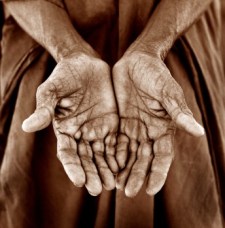 Sometimes, God chooses the most unlikely candidate as His teaching vessel. Here, and again in New Testament, we find poor widows, with almost no resources, being used to illustrate the principle of giving.
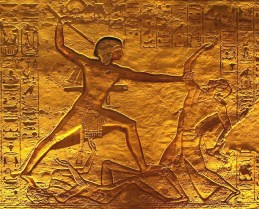 This Psalm is fulfilled in at least three ways. First, it expresses an actual time in the life of David. His enemies have mounted up against him with such great force that he feels like one who is drowning in a mighty flood. The enemies he faces are those who have sided with Saul, to seek his life; those who were against him because he had chosen to follow God, and finally, and perhaps his greatest enemy, is his own sin. In the midst of the battle for his own life, sin had mounted up like an army, seeking to destroy him. David’s victory over these enemies is found as He seeks the mercy of God. He writes, “Hear me, O Lord, for Your lovingkindness is good; turn to me according to the multitude of Your tender mercies.” Psalm 69:16
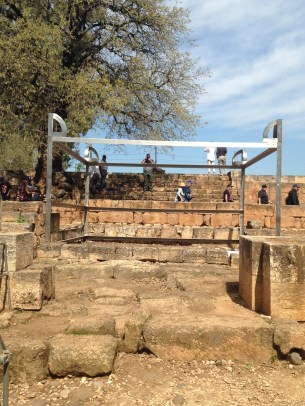 If a traveler from a distant land were to arrive in Israel during the reign of Ahab, there would be little to convince him that these were a people chosen by God. If he entered from the north, the first thing to catch his eye would have been a massive altar built on a high hill in the area of Dan. This altar was erected to give worship to a massive golden cow the people revered as their god. If he came from the south, he would see a similar site erected in Bethel. If he made his way into the heart of the nation, to the newly built city of Samaria, he would find the focal point of the city was an altar built to Baal, the god of fertility. If our traveler were to continue through the towns and villages of Israel, he would see a wide variety of altars and high places built to almost every imaginable god under the son. Essentially, Israel had deteriorated from a nation whose purpose was to glorify YHWH, and be a beacon of light to the world, to a nation just like their neighbors. They had all the same problems, and addressed them with all the same solutions, as those who had never met the Lord.
 We recently had a friend visiting who we had not seen in a number of years. One of his first comments was how much our children had grown. When he last saw them, they were pre-teens, now they are young men. He was shocked at how they had changed, in what seemed to be such a brief period of time. For us, the changes do not seem quite as drastic, because we are watching what happens from day to day. It is only when we bring up a photo or video that we see how much things have really changed.
 The physical battles Israel faced illustrates the spiritual battles the Christian faces.
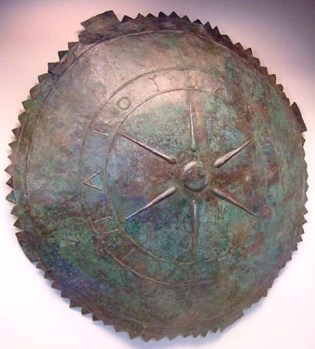 Rehoboam is known for being the king that split the nation of Israel. His greed drove him to make decisions that ultimately divided the kingdom. Sadly however, this was not the worst policy he implemented. During his seventeen year reign, he continued to ignore the Word of God and to introduce idolatry to the nation. As a result, this once powerful nation fell prey to their enemies. Like a shark smelling blood in the water, Egypt saw the weakness of Israel and sent troops to Jerusalem. Their armies easily overcame any and all resistance and began to loot the city. Just a few short decades after the Temple was completed, it was ransacked by foreigners and its prize articles were stolen. Among the items Shishak took, were the golden shields that hung as a symbol of Israel’s strength. Rather than turning to God, Rehoboam decided to hang bronze shields in their place. After all, from a distance, who would really be able to tell the difference. What a different story this would have been if Rehoboam would have fallen on his knees and turned back to the Lord.
 Jim Gallagher