Zephaniah 1:5
“Those who worship the host of heaven on the housetops; those who worship and swear oaths by the Lord, but who also swear by Milcom”
 Zephaniah was commissioned by the Lord to warn the people of coming judgment. In order to prepare the people for what was ahead, he explained the reason they were facing judgment. His message was both clear and simple, they must change their ways if they were to avoid what was ahead.
The first infraction the people were guilty of was worshipping the hosts of heavens on their rooftops. In ancient times rooftops were considered a part of the house and were used for family gatherings. It was on a rooftop where Bathsheba bathed, Peter rested and had a vision from heaven, where husbands are exhorted to flee from a contentious wife, and where the people of Judah were practicing idolatry.
Zepheniah’s ministry took place during the reign of King Josiah, who had brought about great reforms in the nations. Much of the idolatry that had plagued Judah for generations had been removed from the public sector. The problem was, while these idols had been removed publicly, they still remained in the private life of the people. God’s judgment would come because public reform was not affecting private living.
We are told the people continued to worship Baal, the sun, moon and stars, and Milcom, the false god of the Ammonites. Essentially, they were turning worship into syncretism by blending the worship of the true God with idols. Tragically, this is a common practice today. Many who claim to be followers of Christ, seem to pick and choose verses they like while ignoring others. By doing so, they are essentially creating a god of their liking, rather than submitting to the God of Scripture. This synchronistic idolatry ultimately caused Judah to turn back from following the Lord. When public commitment does not change private living, we will ultimately turn our backs on the Lord as well. It is in private where the real roots of the Christian life are developed.
What you do with your early mornings will chart the course for your entire day. Jesus rose a long while before daylight, departed from others, and spent time alone with the Father. His life was a pattern set for the rest of us to follow. It is important to begin each day with the Lord, in His Word, allowing Him to remove from your private life anything that does not belong.
Pastor Jim

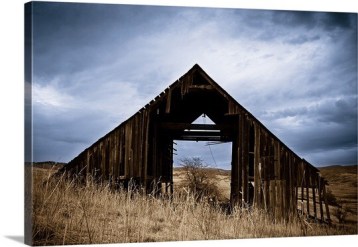 It is not uncommon today, to hear messages in the church making it sound as though walking with Jesus will mean we will no longer face difficulty, and our life will be filled with increase. This teaching is referred to as “prosperity doctrine”, and while catchy, it is clearly not Biblical. The saints of old did not expect to walk through life without trial, difficulty or opposition. Instead, they expected that in he midst of whatever life threw at them, they would find help, comfort, consolation and strength from the Lord. Perhaps no one more clearly expresses this than the prophet, Habakuk. He paints the darkest picture a farmer could ever imagine and declares, in spite of it all, he would continue to rejoice in the God of his salvation.
 Habakkuk struggled to understand what was happening in his life, because his theology did not allow for the wicked to prosper and the righteous to suffer. His definition of holiness meant that those he considered to be wicked, could never prosper above the righteous. The prophet is not alone in the struggle to reconcile life experiences with what we think to be true of God.
 t is remarkable how we all think we are the exception to the rule. We believe wrong should be made right, injustice should be corrected, and sin should be punished, but we also believe that our wrongs are not that bad and should be overlooked. This is not a modern problem this is a human problem. Almost three thousand years ago, the inhabitants of Nineveh thought they could go on behaving however they wanted and would not face the judgment of God. They believed, others deserved it, but they themselves, were not as bad as their neighbors.
 Nahum wrote to warn Assyria of the destruction that was coming upon them, because of their violent and immoral rebellion against God, His word, and His ways. He foretold of a time when the ancient city of Nineveh would be razed to the ground. Like Jonah before him, his message reveals the mercy of God, as the people are warned in advance and told how to be prepared. They are told to man the fort, watch the road and fortify the city. This is good advice no matter what enemy we are facing. In ancient times, cities were defended by being surrounded by high walls. The less defensive the terrain, the higher the walls had to be. If a city sat on a hilltop surrounded by steep cliffs, it’s walls did not have to be nearly as high as a city situated in the plains.
 Jim Gallagher